






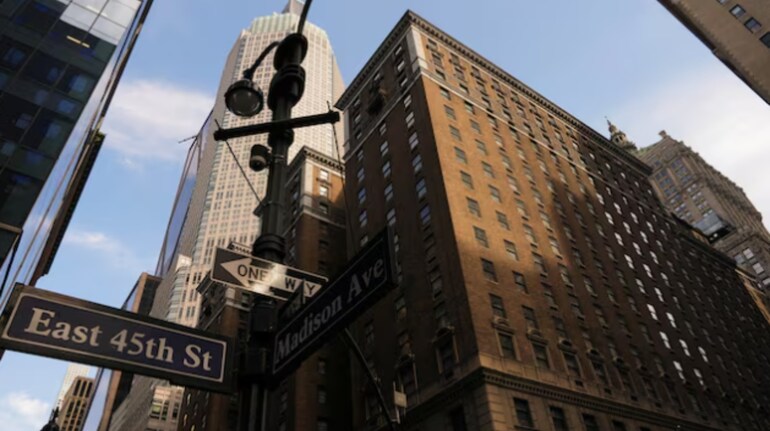

In the heart of Midtown Manhattan, just steps away from Grand Central Terminal, stands a property that has become far more than a dormant hotel for Pakistan.
The Roosevelt Hotel, a century-old landmark, has turned into one of Islamabad’s most consequential overseas assets -- financially, politically and diplomatically. As Pakistan struggles with mounting debt and limited fiscal space, the fate of the building has become tied to broader efforts to unlock value from state assets.
Recent developments have shown how contested and complicated the future of the property has become. Interest from major financial institutions such as JPMorgan Chase collided with Islamabad’s plans to redevelop the site, highlighting both the value of the asset and the difficulty Pakistan faces in deciding how best to use it.
A prime Manhattan asset
Few overseas properties owned by Pakistan sit on land as valuable as the Roosevelt Hotel.
Located only a short walk from Grand Central Terminal, the property occupies a strategic block in Midtown Manhattan -- an area increasingly sought after for high-end office towers and luxury developments.
Opened in 1924 and named after former US president Theodore Roosevelt, the hotel eventually became part of Pakistan’s portfolio after the national carrier Pakistan International Airlines first leased it in 1979 and later purchased it outright.
For decades the hotel operated as a prominent hospitality venue, but its fortunes changed in recent years. The building shut down in 2020 after pandemic-related losses made continued operations unsustainable.
New York City later leased the property for use as a migrant reception and shelter centre, an arrangement that provided temporary income but also accelerated wear on the ageing structure. The building now requires extensive refurbishment or a complete redevelopment.
Despite the deterioration, the land itself remains extremely valuable. Pakistani officials estimate the property could be worth more than $1 billion, making it one of the country’s most significant assets abroad.
A financial lifeline amid economic stress
Pakistan’s interest in extracting value from the Roosevelt Hotel cannot be separated from its broader financial challenges.
The country faces substantial debt pressures and ongoing fiscal constraints. Public debt has climbed to roughly Rs80.5 trillion, or about $288 billion, pushing the debt-to-GDP ratio close to 71 percent. Interest payments alone consume a large portion of government revenue, leaving limited fiscal room for new investment.
Foreign exchange reserves remain thin relative to Pakistan’s external financing requirements. Officials estimate reserves at around $16.2 billion -- covering only a few months of imports -- while external funding needs for the coming fiscal year could reach between $19.4 billion and $25 billion.
Islamabad is currently implementing reforms tied to a $7 billion programme with the International Monetary Fund. The release of additional funds depends on meeting conditions that include tax increases and higher electricity tariffs.
Within this economic backdrop, monetising overseas assets has become an attractive option. The Roosevelt Hotel stands out because of both its location and potential redevelopment value.
Officials have framed the redevelopment plan as part of a broader privatisation strategy. Pakistan’s finance division has said, “The objective remains to secure maximum value for this property in alignment with the government’s privatisation strategy while strengthening Pakistan-United States economic ties.”
Debt and the legacy of the national airline
The property is also tied to the financial problems of Pakistan’s national airline.
Over time, liabilities from Pakistan International Airlines accumulated to hundreds of billions of rupees. The government eventually absorbed more than Rs600 billion in debt linked to the carrier while attempting to restructure and privatise it.
A 75 percent stake in the airline was sold in December, but Pakistan retained ownership of several assets previously held by PIA -- including the Roosevelt Hotel.
Officials see redevelopment as a way to extract value that could help offset these financial burdens. Islamabad hopes that turning the property into a modern high-rise complex through a joint venture could generate significant returns over time.
This thinking explains why Pakistan has resisted selling the hotel outright despite repeated interest from investors.
Why Pakistan rejected a potential sale
Interest in the property has come from major players in finance and real estate.
JPMorgan Chase spent more than a year exploring the possibility of acquiring the hotel. The building sits next to the bank’s growing office cluster in Manhattan, including its new headquarters tower at 270 Park Avenue.
According to people familiar with the discussions, “JPM was aggressively chasing the Roosevelt hotel.” The bank viewed the site as a natural extension of its expanding New York campus.
However, negotiations eventually collapsed because Islamabad preferred redevelopment rather than a direct sale.
Pakistani officials have repeatedly stressed that the government intends to retain an ownership stake while partnering with outside investors. Muhammad Ali, chair of Pakistan’s privatisation commission, said, “We are not engaged in discussions with any entity about sale of Roosevelt property and discussions on the joint venture will begin in March after appointment of our new financial adviser.”
Another adviser, Khurram Schehzad, reinforced that position, saying the government has “no plans to sell it outright” and that the decision reflects cabinet policy.
The strategy is based on the belief that redevelopment could generate greater long-term returns than a one-time transaction.
Diplomatic and strategic considerations
The Roosevelt Hotel has also taken on a diplomatic dimension in Pakistan’s relationship with the United States.
Earlier this year, Pakistan announced a cooperation framework with the United States General Services Administration aimed at collaborating on the hotel’s upkeep, refurbishment and redevelopment.
The initiative was negotiated by US special envoy Steve Witkoff and signed by officials from both governments. Pakistan described the arrangement as a “strategic economic initiative” designed to help manage the regulatory and development complexities associated with a major Manhattan project.
The finance ministry said that because of the property’s location and regulatory environment, “institutional co-ordination aims to reduce execution risk, enhance regulatory clarity and maximise transaction value.”
Still, critics note that the agreement contains no clear funding commitments or timelines, raising doubts about how quickly redevelopment could move forward.
A high-stakes decision
Ultimately, the Roosevelt Hotel has become a symbol of Pakistan’s economic dilemma.
Selling the property could provide immediate financial relief but might undervalue an exceptionally valuable piece of Manhattan real estate. Redevelopment offers the possibility of far higher returns, yet it requires capital, expertise and time -- resources Pakistan may struggle to mobilise.
The property’s prime location ensures strong interest from investors and developers. But without clear financing or execution plans, the project could remain stuck between ambition and reality.
For Islamabad, the Roosevelt Hotel is therefore more than just a shuttered building abroad. It represents a rare financial asset that could help ease economic pressure -- if Pakistan can successfully turn its location and legacy into a viable redevelopment strategy.

Discover the latest Business News, Sensex, and Nifty updates. Obtain Personal Finance insights, tax queries, and expert opinions on Moneycontrol or download the Moneycontrol App to stay updated!
Find the best of Al News in one place, specially curated for you every weekend.
Stay on top of the latest tech trends and biggest startup news.





