






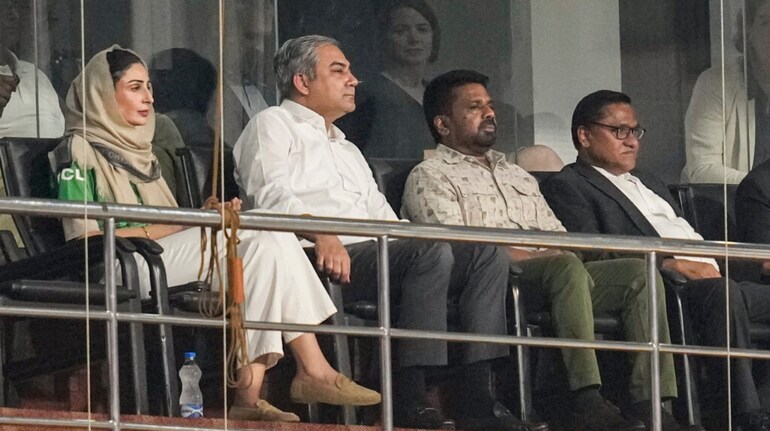

Pakistan cricket’s latest humiliation at the hands of India has triggered more than just outrage among fans. The 61-run defeat in Colombo has exposed the rot at the top of Pakistan’s cricket administration, dragging civil-military fault lines into the open and placing Mohsin Naqvi, chairman of the Pakistan Cricket Board, on the brink of an ignominious exit.
Naqvi, who also serves as Pakistan’s Interior Minister, now finds himself cornered not because of Pakistan’s predictable collapse on the field or years of administrative decay, but for a far more serious misstep in Pakistan’s power structure. By publicly invoking the name of Asim Munir, the country’s Army Chief and de facto power centre, Naqvi appears to have crossed an unwritten red line. What was meant to be chest-thumping bravado ahead of a high-profile India clash has reportedly enraged the military leadership and deepened scrutiny of Naqvi’s political overreach, administrative incompetence, and misplaced arrogance.
The comment that crossed the line
The controversy erupted hours before Pakistan quietly abandoned its threat to boycott India’s match in the T20 World Cup 2026. While the U-turn was inevitable given the enormous financial implications of skipping an India fixture, Naqvi chose confrontation over caution during a press interaction.
Asked whether Pakistan was under pressure from the International Cricket Council led by Jay Shah, Naqvi dragged the military into cricket diplomacy.
“You know we are not ones to be afraid of these threats at all. Everyone knows our Field Marshall (Asim Munir). We are not worried about any sanctions,” Naqvi said.
According to multiple reports, this unauthorised reference to Munir without military clearance was viewed as an unacceptable attempt to use the army chief’s stature as a shield for PCB decisions. In Pakistan’s tightly controlled civil-military ecosystem, such freelancing is rarely forgiven.
Asim Munir reportedly complains to PM
The backlash was swift and severe. Reports suggest that Asim Munir conveyed his displeasure directly to Shehbaz Sharif through official military channels.
News18 quoted sources indicating that Munir conveyed his concerns to Prime Minister Shehbaz Sharif through the Prime Minister’s Military Secretary. The message is said to have highlighted what the army chief considers mishandling within the PCB, ranging from team preparation issues to unnecessarily combative public statements.
The episode has been widely described within Pakistan as an “overreach” by Naqvi, reinforcing the perception that the PCB chairman has consistently confused political theatrics with sports governance.
From boycott bravado to on-field collapse
Naqvi was at the forefront of the decision to initially boycott the India match, framing it as a matter of national pride. That bravado collapsed within hours as Pakistan reversed course, exposing the move as hollow posturing rather than a principled stand.
What followed on the field only worsened matters. Pakistan’s performance against India was listless, disorganised, and devoid of intent. The batting crumbled without resistance, the bowling lacked strategy, and the team appeared mentally defeated long before the final overs.
'Incompetent and jaahil': Why Pakistan’s loss to India has turned Mohsin Naqvi into a lightning rod
Adding to the optics disaster, Naqvi reportedly left the stadium midway through Pakistan’s collapse, a move that drew widespread criticism at home. Former cricketers and analysts openly questioned his commitment and credibility.
“Incompetent and jaahil”
The backlash from within Pakistan’s cricketing ecosystem was unusually blunt. Former fast bowler Shoaib Akhtar publicly labelled Naqvi “incompetent” and "jaahil," reflecting growing anger over administrators prioritising politics over performance.
Naqvi later sent a stern message to players, questioning their fighting spirit. Critics, however, argue that the environment created by PCB leadership has been anything but conducive to competitive cricket.
With constant political interference, inconsistent selection policies, and administrators chasing headlines instead of accountability, Pakistan’s decline has appeared inevitable.
Military shadow over Pakistan cricket
The episode has also laid bare the uncomfortable truth about Pakistan cricket. It does not function as an autonomous sporting institution but as an extension of the country’s chaotic civil-military power struggle.
Ironically, Asim Munir’s own name being dragged into cricket politics has backfired, raising uncomfortable questions about the military’s indirect influence over sports administration. While Munir may be unhappy with Naqvi’s indiscretion, the crisis underscores how deeply politicised Pakistan cricket has become.
The controversy has embarrassed both the PCB and the military establishment, with Naqvi emerging as the expendable link.
Is Naqvi’s exit inevitable?
With pressure mounting from all sides, Naqvi’s position looks increasingly untenable. Reports suggest Prime Minister Shehbaz Sharif may be forced to remove him to placate the military leadership and contain further fallout.
Naqvi’s dual role as Interior Minister and PCB chairman has long been criticised as a conflict of interest. His latest miscalculation may finally tip the balance against him.
For Pakistan cricket, his exit may not solve structural problems overnight, but it could mark the end of an era where bluster replaced planning and politics trumped professionalism. After the India defeat and the Asim Munir controversy, Mohsin Naqvi’s gamble appears to have failed on every front.
Discover the latest Business News, Sensex, and Nifty updates. Obtain Personal Finance insights, tax queries, and expert opinions on Moneycontrol or download the Moneycontrol App to stay updated!
Find the best of Al News in one place, specially curated for you every weekend.
Stay on top of the latest tech trends and biggest startup news.





