







Pakistan’s crushing loss to India cricket team in the T20 World Cup has triggered far more than sporting disappointment. What unfolded on the field has spilled into Pakistan’s political system, cricket administration and even its civil-military power structure. The one-sided defeat has exposed chronic mismanagement, blurred lines between governance and sport, and an establishment that increasingly struggles to escape scrutiny even in cricket.
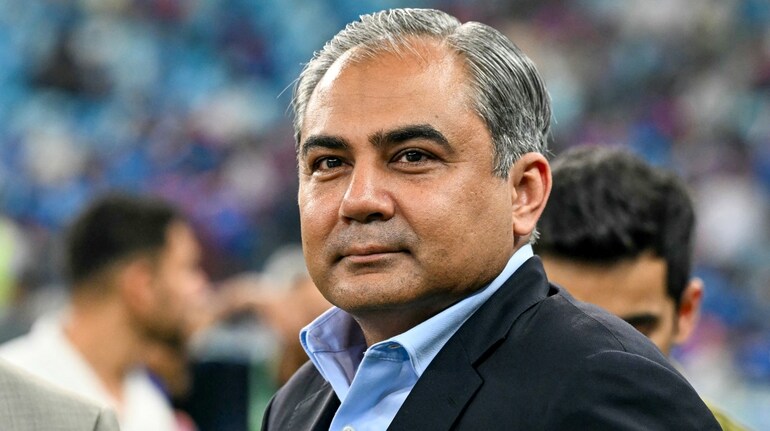
As Pakistan’s batting collapsed under pressure, public anger found a convenient focal point in Mohsin Naqvi, who currently serves as both Interior Minister and Chairman of the Pakistan Cricket Board. In Pakistan, where cricket is inseparable from national identity, the defeat has become a referendum on leadership failure, institutional decay and misplaced authority.
Mohsin Naqvi under fire
Naqvi’s dual role has come under fierce criticism following the defeat. The optics worsened when television cameras captured him leaving the stadium midway through the match as Pakistan’s innings unravelled. Critics saw it as symbolic of abandonment rather than leadership.
A senior opposition politician, speaking on condition of anonymity, called for his immediate removal.
“Mohsin Naqvi has failed as Chairman PCB and as Interior Minister,” the leader said. “Mohsin Naqvi has destroyed Pakistan’s cricket.”
The lawmaker argued that holding two powerful offices was indefensible.
“He should hold only one portfolio either Interior Minister or PCB chief.”
The criticism went beyond cricket. “It’s the worst security era of Pakistan and he has failed to maintain law and order in the country too,” the politician said, adding, “I am in contact with other parliamentarians to move a motion against Mohsin in the next session.”
Political anger spills over
The humiliation against India has intensified domestic political infighting. Some voices even questioned the decision to play the match at all.
“Boycott’s decision was better than losing like this,” one political figure said, reflecting the depth of public embarrassment.
Former federal minister Fawad Chaudhry mocked the situation on X with biting sarcasm.
“An appeal to Faisal Vawda: Please add the eleven cricketers along with the 500 politicians, and also include the spoons and ladles of the cricket board in your list as well. Thank you.”
The post went viral, underlining how ridicule has replaced pride in Pakistan’s cricket discourse.
Senior Pakistan Tehreek-e-Insaf leader Shireen Mazari also took aim at Naqvi’s dual charge.
“Running the Interior Ministry and the PCB together was a bad idea from day one. Cricket cannot be managed like bureaucracy,” she wrote.
Cricket legends join the backlash
Former players have been unsparing in their assessment. Ex-fast bowler Shoaib Akhtar delivered one of the harshest verdicts on PCB leadership.
“Now one guy who does not know anything has become the Pakistan Cricket Board’s chairman. How will the team run now?” Akhtar said.
He went further, adding, “The biggest crime in the world is to give a big job to an incompetent and jaahil (ignorant) person.”
Former batting great Mohammad Yousuf described the current phase as “the darkest period in our cricketing history,” suggesting the loss reflected systemic rot rather than a single bad performance.
Military discomfort enters the picture
The controversy has reportedly unsettled Pakistan’s powerful military leadership as well. Asim Munir, now Field Marshal, is said to be displeased not just by the defeat but by Naqvi’s earlier press conference comments in which he invoked Munir’s name while responding to questions on India and the ICC.
Observers say dragging the army chief into a cricketing controversy without prior clearance was viewed as an overreach.
According to well-placed sources, Munir conveyed his concerns to Shehbaz Sharif, flagging poor preparation and rhetoric that unnecessarily escalated tensions around the match. In Pakistan’s civil-military hierarchy, such signals rarely go unnoticed.
A familiar pattern of deflection
The episode reflects a recurring pattern in Pakistan. Cricket failures are rarely treated as sporting setbacks alone. They expose deeper institutional dysfunction where accountability is blurred, authority is politicised, and even the military shadow looms large over sport.
The defeat to India has stripped away the usual excuses. From politicians to former players to sections of the establishment, blame is being openly traded. Whether this outrage leads to meaningful reform at the PCB or merely another reshuffle remains uncertain.
What is clear is that Pakistan’s cricket crisis is no longer just about runs and wickets. It is about governance failure playing out in front of a global audience.
Discover the latest Business News, Sensex, and Nifty updates. Obtain Personal Finance insights, tax queries, and expert opinions on Moneycontrol or download the Moneycontrol App to stay updated!
Find the best of Al News in one place, specially curated for you every weekend.
Stay on top of the latest tech trends and biggest startup news.





