






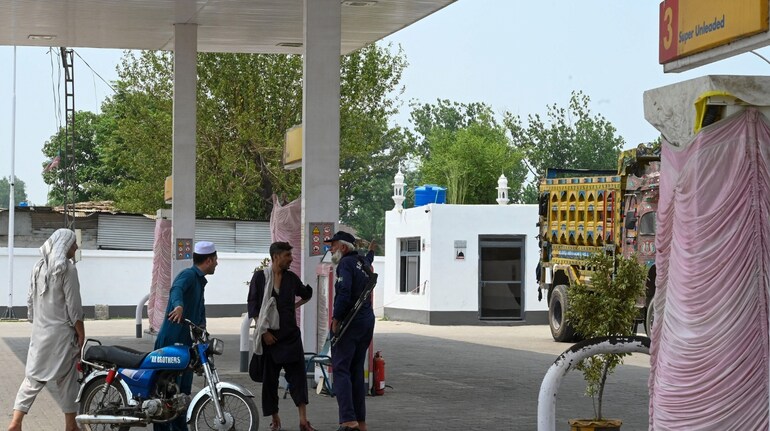

Cash-strapped Pakistan is planning austere measures to conserve fuel and "keep markets liquid" as the ongoing conflict in West Asia and the possibility of a prolonged closure of the Strait of Hormuz have triggered a surge in global fuel prices.
According to a report in Dawn, Pakistan is mulling mandatory work from home for employees, weekly petroleum price revision and a compensation for oil companies for elevated costs of insurance and import premiums.
A summary is being prepared for submission to the federal cabinet’s Economic Coordination Committee (ECC) for urgent action as petroleum prices surge, the report said.
Sources said that Pakistan is looking for "action without delay" as petroleum prices appeared to surge.
On Wednesday, brent crude settled at $81.40 per barrel, at its highest since January 2025.
Ahead of the possible measures, the state-run Pakistan State Oil (PSO), with the government’s approval, has issued two import tenders each for petrol and diesel from suppliers located outside the Strait of Hormuz as a precaution.
The move comes despite Pakistan currently holding relatively comfortable fuel reserves, the report said.
Officials said the country has more than 500,000 tonnes of petrol and diesel each in stock — enough to cover roughly 26 days and 25 days of consumption respectively. Islamabad has also asked Saudi Arabia to route future oil shipments through an alternative Red Sea route.
At the same time, the government is discussing possible energy conservation steps, including mandatory work-from-home arrangements wherever feasible in the public and private sectors.
Officials have warned that diesel supplies face greater risks than petrol.
Pakistan relies heavily on long-term diesel supplies from Kuwait through PSO, and those cargoes must pass through the Strait of Hormuz. Officials also said more than 20 percent of global oil cargoes are reportedly stuck inside the Strait, creating shortages of available vessels.
Shipping costs have surged sharply amid the crisis.
Officials said insurance costs for oil cargoes have jumped from around $30,000 to nearly $400,000 per ship, while import premiums for petroleum products have also climbed.
Freight costs have also spiked, with ship charter rates rising beyond $4 million compared with around $900,000 before the crisis.
Officials told Dawn that the combination of these factors is placing mounting pressure on oil marketing companies and refineries.
Unless compensated for these additional costs, OMCs could avoid imports and declare force majeure, they warned.
The government is therefore considering a mechanism to compensate companies so that fuel imports continue and supply chains remain intact.
Authorities are also planning to shift petroleum price revisions from a fortnightly to a weekly basis to pass on rising costs faster and avoid financial strain on suppliers.
One official said the price gap had already widened sharply since the crisis began.
“The price gap has risen to Rs 45-50 for diesel and around Rs 25-26 for petrol in the first week of the crisis and could grow over the next 15 days, and hence needed to be nipped in the bud,” the official said.
Despite official reassurances, supply management measures are already being implemented.
Meanwhile, Finance Minister Muhammad Aurangzeb chaired a meeting to review petroleum stock levels and supply chains amid the evolving regional energy situation.
Discover the latest Business News, Sensex, and Nifty updates. Obtain Personal Finance insights, tax queries, and expert opinions on Moneycontrol or download the Moneycontrol App to stay updated!
Find the best of Al News in one place, specially curated for you every weekend.
Stay on top of the latest tech trends and biggest startup news.





