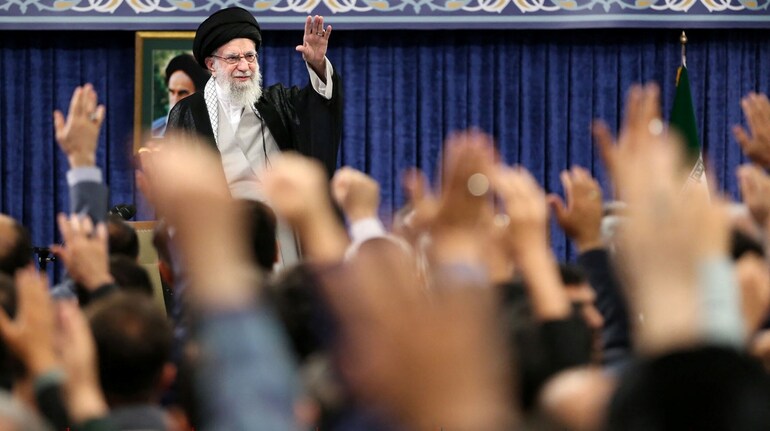

Iran’s Supreme Leader Ayatollah Ali Khamenei has a contingency plan to flee Tehran for Russia if protests spiral beyond the control of his security forces, The Times reported, citing an intelligence source.
The report lands as demonstrations spread across Iran amid a sharp economic squeeze and a collapsing currency, unrest that rights groups say has already turned deadly.
What The Times report claims
According to The Times, an intelligence source said Khamenei, 86, would leave with up to 20 aides and family members if it becomes clear that the army and security forces tasked with suppressing protests are defecting, refusing orders, or failing to hold the line.
The “plan B,” the source told the newspaper, includes Khamenei’s son Mojtaba, described as his nominated heir apparent.
The same report says preparations include an exit route out of Tehran and steps to assemble assets and cash to facilitate an escape.
Why Moscow, not anywhere else
The Times report frames Moscow as the most plausible destination because Russia remains one of Tehran’s most consequential strategic partners, and because it has historically provided political cover to embattled allies.
A useful comparison point: The Times describes the alleged plan as echoing Moscow’s role as a refuge for leaders under pressure, a pattern that has shaped regional power calculations in recent years.
Protests, casualties, and the trigger point
The protests have largely centred on the currency collapse and economic distress, but chants reported by international media show that in some places the anger has widened into direct anti-regime slogans.
On casualties, counts vary by source: Reuters cited a rights group estimate of at least 16 dead over a week of protests (as of January 4). Reuters The Guardian, citing human rights organisations, reported children among those killed and described allegations of “indiscriminate targeting.”
The regime’s red line, per The Times’ account, is not simply large protests, it is loss of command: the moment security forces stop obeying or start peeling away.
What Iran’s president is saying publicly
President Masoud Pezeshkian has urged dialogue and promised reforms aimed at stabilising the monetary and banking system and protecting purchasing power, according to reports carried by international outlets.
The original angle: the “defection test”
Most protest stories track crowd size and casualty counts. The Times’ claim is about something more specific, and more revealing about regime fragility: the state is watching its own forces. If the crackdown depends on obedience, then the political centre of gravity shifts from the streets to barracks, police ranks, and the internal-security chain of command.
For now, this remains an intelligence-sourced report, not a statement from Tehran. But it sharpens the stakes of the current unrest: protests become existential when the security apparatus starts to wobble.
Discover the latest Business News, Sensex, and Nifty updates. Obtain Personal Finance insights, tax queries, and expert opinions on Moneycontrol or download the Moneycontrol App to stay updated!
Find the best of Al News in one place, specially curated for you every weekend.
Stay on top of the latest tech trends and biggest startup news.