
Peter Navarro’s latest remarks on artificial intelligence add to a growing list of claims that misread how global digital services actually function. Speaking on Real America’s Voice, the US trade adviser questioned why Americans should bear the cost of AI services used overseas, specifically naming India. His comments came amid already strained India-US ties over tariffs, energy purchases, and immigration policy, and they risk conflating legitimate domestic policy debates with flawed assumptions about global technology markets.
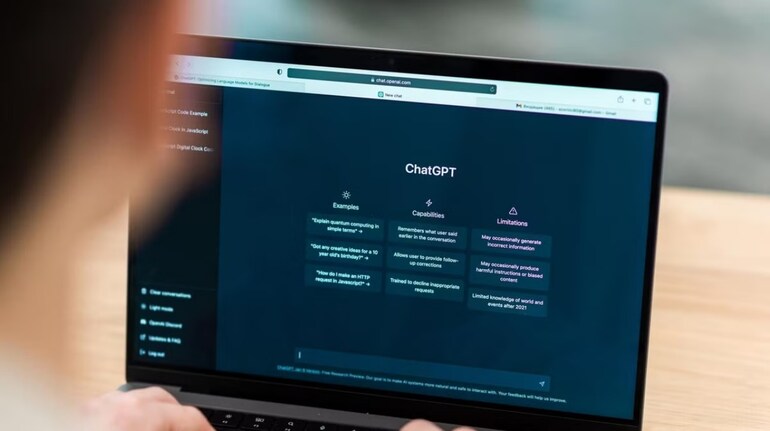
AI platforms like ChatGPT are not public utilities funded by US taxpayers for foreign consumption. They are commercial products that grow through global demand, subscriptions, and scale. India’s role in this ecosystem is not that of a free rider but of a fast-growing and increasingly revenue-generating market that directly benefits companies like OpenAI. A closer look at usage data, subscription growth, and pricing models shows why Navarro’s argument does not hold up.
What Navarro said in his latest anti-India rant
In the interview, Navarro asked, “Why are Americans paying for AI in India? Chat GPT is operating on US soil, using American electricity, servicing large users of Chat GPT, for example, in India and China and elsewhere around the world.” He went on to warn that the Trump administration was examining the impact of AI data centres on US electricity costs, adding, “You can expect strong action from President Trump on this.”
By framing global AI usage as a burden on Americans, Navarro implied that Indian users benefit at the expense of US consumers. This assumption, however, ignores how AI companies earn revenue and how international markets contribute to their growth and profitability.
Why Navarro is factually mistaken
India is not a passive consumer of AI services subsidised by Americans. It is one of OpenAI’s largest and fastest-growing markets. As of April 2025, India accounted for about 7.86 percent of total ChatGPT users, both free and paid, making it the second-largest user base globally after the United States, which stood at 19.04 percent, according to Livemint.
Global ChatGPT paid subscribers reached 35 million by July 2025, sharply higher than earlier estimates of 10 to 15.5 million. Applying India’s share of total users to this figure suggests roughly 2.75 million paid ChatGPT subscribers in India, even after accounting for market-specific conversion differences, according to a report by The Economic Times.
These numbers directly contradict the claim that Americans are footing the bill for India’s AI usage. Indian users are paying customers who form a meaningful and growing share of OpenAI’s global subscriber base.
India as OpenAI’s fastest-growing paid market
India’s importance to OpenAI became even clearer after the launch of ChatGPT Go, a lower-priced subscription plan at Rs 399 per month, introduced in August 2025. According to reports, paid subscriptions in India more than doubled within a month of the plan’s launch, making India OpenAI’s fastest-growing paid market.
The success of the India-first Go plan was so pronounced that OpenAI later expanded it to global users. This move directly undercuts the idea that serving India is a cost burden. Instead, it shows that India is a testing ground for scalable pricing and a key driver of future revenue growth.
Beyond subscriptions and revenue, India also plays a crucial role in strengthening AI systems like ChatGPT through the sheer scale of usage and data diversity. With millions of users across languages, professions, and socio-economic backgrounds, India provides an unparalleled volume of real-world prompts, queries, and interaction patterns.
This diverse engagement helps AI models improve contextual understanding, multilingual performance, and accuracy across domains such as education, coding, healthcare, and governance. While models are trained on a mix of licensed data, human-created data, and publicly available information, ongoing user interactions are essential for refining performance and identifying gaps. India’s massive digital population therefore contributes significant value to the evolution and robustness of AI systems, reinforcing its role not just as a consumer but as a key contributor to global AI development.
The revenue reality Navarro ignores
AI companies operate on scale. Hosting services in the US while selling subscriptions globally is standard practice in the digital economy. Indian users paying for ChatGPT do not raise US electricity bills for free. Their subscriptions help fund infrastructure, research, and expansion.
OpenAI itself has projected 220 million paying ChatGPT users globally by 2030, highlighting how international markets like India are central to its long-term business model. Far from draining US resources, global demand strengthens the commercial viability of US-based AI firms.
A flawed argument rooted in protectionism
Navarro’s comments reflect a broader pattern in his rhetoric, which often frames trade and technology in zero-sum terms. By portraying India’s AI usage as something Americans are unfairly paying for, he overlooks how US companies benefit from India’s scale, talent, and willingness to pay for digital services.
India’s rapid AI adoption is not a liability for the United States. It is evidence that US-developed technology remains globally competitive and commercially successful. The facts suggest that if anyone benefits from India’s AI boom, it is companies like OpenAI, not the other way around.
Discover the latest Business News, Sensex, and Nifty updates. Obtain Personal Finance insights, tax queries, and expert opinions on Moneycontrol or download the Moneycontrol App to stay updated!
Find the best of Al News in one place, specially curated for you every weekend.
Stay on top of the latest tech trends and biggest startup news.