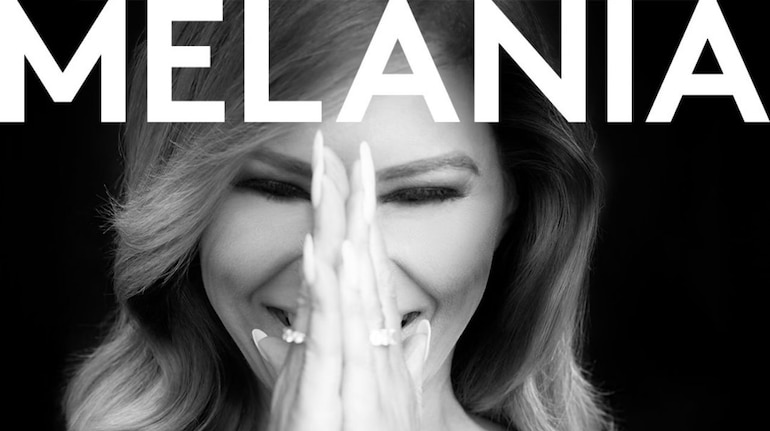

The new documentary “Melania” closes with a telling sequence. After the inauguration festivities end and the Trumps settle back into the White House, portraits of three former first ladies appear on screen: Eleanor Roosevelt, Mamie Eisenhower and Jacqueline Kennedy.
The implication is clear. These are women whose legacies still shape how Americans think about the role. The film seems to suggest that Melania Trump belongs in that lineage — or at least aspires to, the New York Times reported.
But the choices are curious.
Eleanor Roosevelt transformed the role of first lady into something overtly political and globally engaged. Mamie Eisenhower was known for warmth and domestic charm. Jacqueline Kennedy became a symbol of elegance and cultural refinement. Of the three, Kennedy feels like the closest stylistic match to Melania Trump’s carefully curated public persona.
Throughout the film, Melania Trump is presented as a woman of taste and precision. Designers emphasise her input. Event planners remind viewers that every fabric and setting was chosen with her approval. Repeated visual motifs — a stiletto stepping from a car, a slow camera reveal — frame her almost like a fashion icon stepping onto a runway.
The documentary leans heavily into this aesthetic narrative. Melania Trump appears poised, controlled and largely apolitical. She speaks of evolving the role of first lady beyond ceremonial duties, yet much of what the film shows her doing involves precisely those formal obligations. Her “Be Best” initiative is referenced, but not explored in depth.
One absence stands out.
Nancy Reagan does not appear in that closing montage.
The omission is striking. Politically and stylistically, the parallels between the two women are arguably stronger than with Roosevelt or Eisenhower. Reagan, like Trump, was closely associated with a president who reshaped conservative politics. She cultivated a distinct fashion identity, became known for a signature colour and was widely seen as an influential behind-the-scenes presence.
Reagan also understood performance. A former actress, she was often described as self-conscious in front of cameras, aware of the power of staging and presentation. Observers at the time sometimes criticised that theatrical quality, suggesting she treated politics like a set.
In that sense, the comparison might have been uncomfortable.
The documentary portrays Melania Trump as both participant and producer of her own narrative. She served as a producer on the project and appears keenly aware of the camera. Conversations sometimes feel rehearsed. Scenes unfold with a certain gloss. The film is less an observational portrait than a controlled image exercise.
That may explain why Reagan is absent. The connection invites too many questions — about influence, performance and the blending of celebrity culture with politics.
The Trumps have long moved comfortably in the language of spectacle. Donald Trump’s career in entertainment preceded his presidency, and reality television has often shaped perceptions of his governing style. Melania Trump, a former model, appears equally fluent in image management.
In the end, “Melania” seems less interested in probing the role of first lady than in polishing it. The film positions its subject among historical figures but avoids comparisons that might complicate the story.
The result is a portrait that feels carefully composed — elegant, controlled and selective.
And sometimes, what is left out speaks as loudly as what is shown.
Discover the latest Business News, Sensex, and Nifty updates. Obtain Personal Finance insights, tax queries, and expert opinions on Moneycontrol or download the Moneycontrol App to stay updated!
Find the best of Al News in one place, specially curated for you every weekend.
Stay on top of the latest tech trends and biggest startup news.