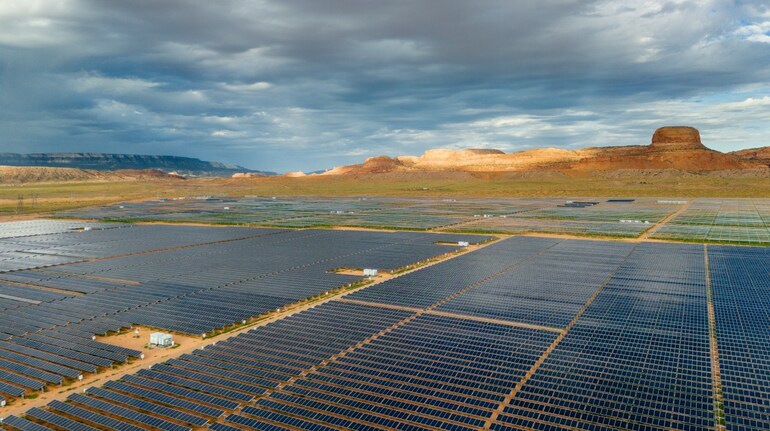

Across the United States, hundreds of wind and solar projects are facing unexpected delays as the Trump administration tightens federal oversight of renewable energy approvals. Industry leaders describe the shift as a de facto blockade that is reshaping investment decisions and, in some cases, killing projects outright, the New York Times reported.
One prominent casualty is the proposed Jackalope Wind project in Wyoming, backed by NextEra Energy. The massive wind farm was expected to supply power to Idaho’s largest utility under a 35-year contract. But after a key environmental review by the US Department of the Interior stalled for months, the utility cancelled its agreement. NextEra has since scrapped the project and is considering natural gas alternatives for the site.
A broader permitting slowdown
Developers say Jackalope is far from alone. More than 60 large wind and solar projects planned on US federal land are reportedly stuck in extended review processes. Hundreds more projects on private land are also affected because they require federal consultations, often involving the US Army Corps of Engineers or the US Fish & Wildlife Service.
Even projects that primarily sit on private property frequently need federal water permits for wetlands, wildlife assessments or aviation clearances. Developers say approvals that once took weeks now stretch into many months, with some staff unsure how to proceed under new review rules.
The administration has defended the changes as necessary oversight. Officials argue that renewable projects previously benefited from favourable treatment and that stricter scrutiny levels the playing field for oil and gas producers. President Trump has repeatedly criticised wind turbines and has signalled a desire to curb their expansion.
Rising demand, shrinking options
The timing is significant. After decades of flat consumption, US electricity demand is climbing again, driven in part by data centres, electrification and manufacturing growth. Renewable developers argue that wind and solar remain among the fastest and lowest cost options to add new capacity.
The Solar Energy Industries Association estimates that tens of thousands of megawatts of land based solar capacity are at risk from prolonged permitting uncertainty. Some companies are redesigning projects to avoid federal triggers such as wetland disturbances. Others are shifting capital toward natural gas plants, which face fewer obstacles under current policy.
Economic and political ripple effects
States with ambitious clean energy targets are feeling the strain. Nevada, which relies heavily on solar, has seen reviews slow for projects on both federal and private land. Meanwhile, some energy analysts warn that delayed renewables could tighten supply and push electricity prices higher.
Even parts of the fossil fuel industry have expressed concern that expansive executive discretion over permitting could be used against them in the future. For now, renewable developers say the greatest challenge is uncertainty. Financing becomes harder when timelines are unclear and federal sign offs unpredictable.
As US Congress debates broader permitting reform, the fate of many wind and solar projects remains in limbo. For companies racing to meet rising demand, the question is no longer just about cost. It is about whether projects can move forward at all.
Discover the latest Business News, Sensex, and Nifty updates. Obtain Personal Finance insights, tax queries, and expert opinions on Moneycontrol or download the Moneycontrol App to stay updated!
Find the best of Al News in one place, specially curated for you every weekend.
Stay on top of the latest tech trends and biggest startup news.