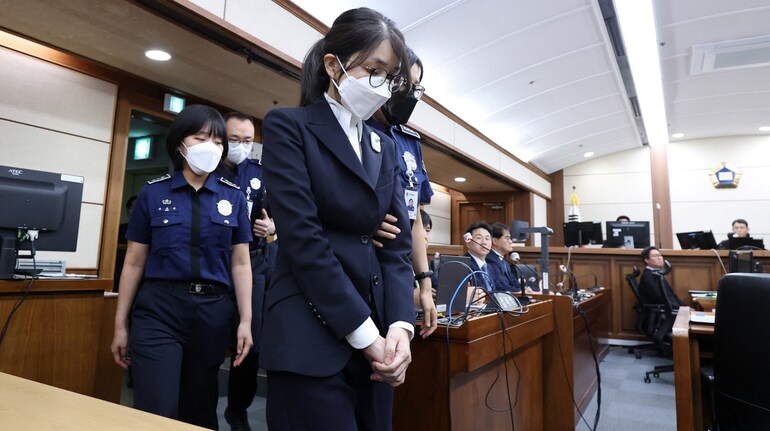

South Korea’s former first lady Kim Keon Hee has been sentenced to 20 months in prison, bringing a dramatic end to a political rise that once placed her at the centre of power alongside her husband, former president Yoon Suk Yeol.
On Wednesday, the Seoul Central District Court found Kim guilty of corruption for accepting luxury gifts from the Unification Church in return for political favours. The court ordered her to serve 20 months in jail, pay a fine of 12.8 million won, and surrender a Graff diamond necklace that was among the gifts she received.
According to the court, Kim accepted high-end items including a Chanel bag, a diamond necklace, a luxury watch and other valuables. In its ruling, the bench said she had “exploited her position to seek personal gains”.
“A person who was in such a position might not always be a role model, but the person must not be a bad example to the public,” the lead judge said while delivering the verdict.
The court, however, acquitted Kim of separate charges related to stock price manipulation and violations of South Korea’s political funding laws, Sky News reported.
Her lawyers said in a statement that Kim “humbly accepts the court’s stern criticism” and is “sorry for causing public concern”.
The conviction comes amid a wider collapse of the political fortunes of the Yoon family. Yoon Suk Yeol, who was ousted from office after attempting to impose martial law in December 2024, is already serving a five-year prison sentence. He was convicted for mobilising the presidential security service to block authorities from executing an arrest warrant against him. Last year, Yoon became the first sitting South Korean president to be arrested.
Investigators have alleged that Yoon’s declaration of martial law, which lasted just six hours before being rolled back under domestic and international pressure, was partly aimed at diverting attention from mounting calls for an independent probe into corruption allegations involving his wife.
Kim Keon Hee, born Kim Myeong-sin, rose to prominence after marrying Yoon in 2012, when he was a senior prosecutor. She later founded Covana Contents, an art exhibition company, and cultivated a high-profile public image once Yoon entered politics. During his presidential campaign, she was often described as a key political partner rather than a ceremonial first lady.
“Staying close to a president, a first lady can exert significant influence on him and is a symbolic figure who represents the country together with a president,” the court said in a live broadcast of the verdict. “But the defendant exploited her position to seek personal gains.”
Over the years, Kim was repeatedly embroiled in controversies, ranging from allegations of academic plagiarism, which led to the revocation of her master’s and doctoral degrees, to accusations of wielding informal power within the presidential office. Critics also accused her of entitlement and overreach, claims that intensified public scrutiny during Yoon’s presidency.
Her legal downfall was accelerated by revelations that she had accepted a series of luxury gifts linked to requests from the Unification Church. As quoted by Yonhap, the court said, “The defendant misused her position as a means to seek profit. She failed to reject high-end luxury goods shared in connection with the Unification Church’s requests and focused on her own adornment.”
With both Kim and Yoon now behind bars, the case has become one of the most striking examples in recent South Korean history of how power, privilege and influence can unravel under judicial scrutiny.
Discover the latest Business News, Sensex, and Nifty updates. Obtain Personal Finance insights, tax queries, and expert opinions on Moneycontrol or download the Moneycontrol App to stay updated!
Find the best of Al News in one place, specially curated for you every weekend.
Stay on top of the latest tech trends and biggest startup news.