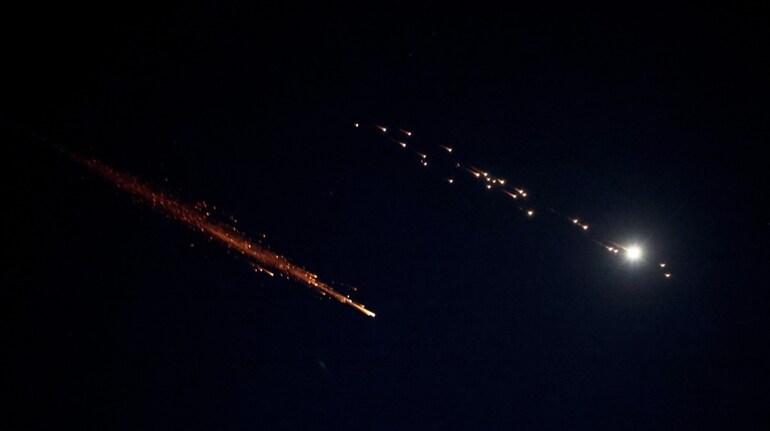

As the war between Iran on one side and the United States and Israel on the other intensifies, attention has largely focused on the military confrontation unfolding across the Middle East. Yet behind the scenes, another major power has significant stakes in the conflict.
China has emerged as perhaps the most important silent player in the unfolding war.
Iran’s Foreign Minister Abbas Araghchi suggested as much last week when he said that “China and Russia are supporting us politically and otherwise.” In an interview with NBC News, Araghchi did not elaborate on the exact nature of this support.
There has been no official confirmation that Beijing is providing intelligence or operational assistance to Tehran. However, analysts believe China’s deep economic, strategic and geopolitical interests in Iran mean it cannot remain merely a passive observer in the conflict.
From energy security to regional influence and even Beijing’s long term strategy toward Taiwan, China has a great deal at stake in Iran’s survival and stability.
The war that has engulfed the Middle East
The conflict began on February 28 when the United States and Israel launched coordinated strikes on Iran. The attacks killed Iran’s Supreme Leader Ayatollah Ali Khamenei, with Washington and Tel Aviv alleging that Tehran was pursuing nuclear weapons that threatened Israel and several Arab countries.
Iran responded with large scale retaliatory attacks against both Israel and US positions in the region. Since then, the conflict has escalated across multiple theatres in the Middle East.
US President Donald Trump has acknowledged that the war with Iran could continue for weeks, raising fears that the confrontation could destabilise the entire region.
Signals of possible Chinese and Russian support
While China has avoided making any explicit statements about aiding Iran militarily, speculation about external support has intensified.
“It is possible that Iran has got help from some of its ‘friends’... It's not like China or other countries that maintain good relations with Iran have done much to support them in this [war], but it is possible that they have passed them information,” Jon Finer, American security analyst and former Principal Deputy NSA of the United States, told news agency ANI.
Analysts believe that if any assistance is being provided, it would likely remain covert. Direct involvement could risk a broader confrontation with the United States.
Still, the scale of China’s strategic interests in Iran suggests Beijing has strong incentives to quietly back Tehran.
Iran is critical to China’s energy security
One of the biggest reasons China cannot afford to lose Iran is energy.
More than 55 percent of China’s crude oil imports come from the Middle East. Iran alone accounts for about 13 percent of Beijing’s oil supply.
China is also the largest buyer of Iranian crude. More than 80 percent of Iran’s oil exports are believed to be shipped to China, often at discounted prices due to international sanctions.
This arrangement has been economically beneficial for both sides. China gains access to relatively cheap energy supplies while Iran secures a crucial buyer that keeps its sanctioned economy afloat.
China’s dependence on Gulf energy extends beyond oil. About 31 percent of its liquefied natural gas imports also come from the Middle East. Qatar alone accounts for roughly 28 percent, while additional supplies come from Oman and the United Arab Emirates.
If Iran’s political system collapses or if Washington gains stronger control over regional energy flows, China’s energy security could face serious disruption.
The Strait of Hormuz factor
Another key factor linking China’s interests to Iran is geography.
The Strait of Hormuz is one of the most important maritime chokepoints in the world. A significant portion of global oil shipments passes through the narrow corridor connecting the Persian Gulf to the Arabian Sea.
Iran sits directly along this strategic route.
For China, which relies heavily on Gulf energy shipments, access to this sea lane is critical. Strong ties with Tehran provide Beijing with influence over one of the world’s most important energy corridors.
Some analysts have even suggested that in the event of a major regional crisis, Iran could potentially allow Chinese shipments to pass through while restricting supplies to rival countries.
China has helped Iran withstand sanctions
Iran has faced extensive sanctions from the United States and the European Union for years, largely over its nuclear programme and military activities.
China has played a major role in helping Tehran cope with this economic pressure.
Since 2021, China’s purchases of Iranian crude oil have exceeded 140 billion dollars in value. These purchases have provided Iran with a vital economic lifeline and helped prevent a deeper financial collapse.
Beijing has also invested heavily in Iran’s infrastructure.
In 2021, China announced a long term strategic cooperation agreement that included plans to invest about 400 billion dollars in Iran’s energy, banking, telecommunications and infrastructure sectors over a 25 year period.
Chinese technology companies have also played a major role in building Iran’s communications network. Huawei has been a major supplier of telecommunications equipment in the country, while another Chinese company, ZTE, helped expand Iran’s telecom infrastructure.
In 2010, ZTE signed a 130 million dollar contract that provided surveillance capabilities for Iran’s telephone and internet networks.
Chinese firms have also supplied artificial intelligence powered surveillance systems, including facial recognition cameras, which have strengthened Iran’s internal monitoring capabilities.
Iran’s state controlled National Information Network, a domestic internet system designed to limit access to the open global internet, was developed with Chinese technical assistance and modelled in part on China’s Great Firewall.
Chinese components in Iran’s missile and drone arsenal
China’s influence on Iran extends beyond economics and technology.
Iran’s growing missile and drone capabilities have also reportedly benefited from Chinese support over the years.
For decades, Beijing has supplied Tehran with dual use components that can be used in military systems.
Just days before the United States and Israel launched their attacks, Iran was reportedly finalising a deal to acquire a Chinese made supersonic anti ship cruise missile.
“Iran has military and security agreements with its allies, and now is an appropriate time to make use of these agreements,” an Iranian foreign ministry official told Reuters while referring to the potential deal.
A report by Middle East Eye also suggested that China has provided Iran with both weapons and additional defensive equipment.
Senior journalist and defence expert Sandeep Unnithan told India Today Digital that without Chinese support, Iran might not have achieved its current drone and missile capabilities.
According to Unnithan, Iran’s arsenal includes domestically produced weapons but many systems rely on Chinese components.
The Taiwan angle in China’s calculations
China’s support for Iran may also be linked to its long term strategy regarding Taiwan.
Beijing considers Taiwan part of its territory and aims to bring the island under its control. Taiwan, however, maintains its own government and relies heavily on US military support to deter any Chinese attack.
The United States has spent enormous sums defending its interests and allies in the Middle East.
According to an Associated Press report, the US provided 17.9 billion dollars in military aid to Israel following the Hamas attack on October 7, 2023.
Research from Brown University indicates that Washington spends roughly 31 to 34 billion dollars annually on security operations related to the Middle East.
Every dollar the US spends in the region is a dollar that cannot be directed toward strengthening Taiwan’s defence.
From Beijing’s perspective, a prolonged crisis in the Middle East could stretch American military and financial resources thinner across multiple fronts.
China’s quiet but critical role
Taken together, these factors explain why China has such a strong interest in Iran’s position in the current conflict.
Iran is vital to China’s energy security, its influence in the Middle East and its broader geopolitical rivalry with the United States.
Beijing may not openly enter the war, but its economic support, technology transfers and long standing strategic ties make it one of the most important external players shaping the conflict.
For now, China remains largely in the background. Yet its interests and influence ensure that it is far from a neutral spectator in the war unfolding across the Middle East.
Discover the latest Business News, Sensex, and Nifty updates. Obtain Personal Finance insights, tax queries, and expert opinions on Moneycontrol or download the Moneycontrol App to stay updated!
Find the best of Al News in one place, specially curated for you every weekend.
Stay on top of the latest tech trends and biggest startup news.