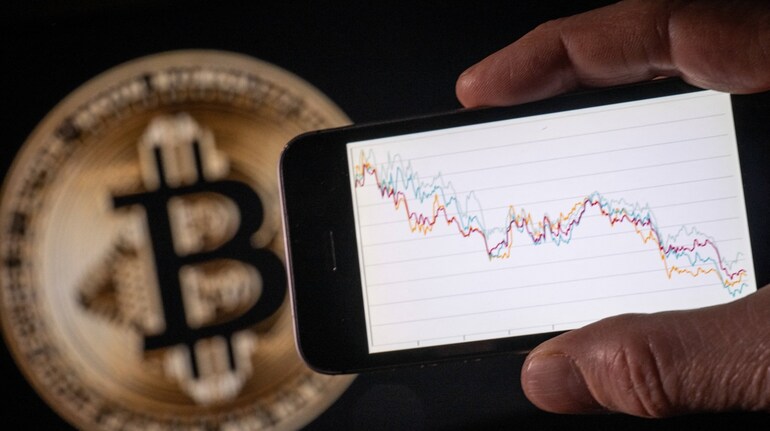

Bitcoin suffered its sharpest single-day decline since late 2024 on Thursday as a combination of risk aversion, heavy liquidations, weakness in tech stocks and fears of tighter US monetary policy rattled investors.
The world’s largest cryptocurrency slid as much as 12.6 percent to around $63,300, its lowest level since October 2024. The fall wiped out billions of dollars in value in hours and marked the steepest daily drop since the market turmoil of November 2022.
Liquidations accelerate the fall
One of the biggest drivers of the sell-off was forced liquidation. According to CoinGlass data, nearly $1 billion worth of bitcoin positions were liquidated in just 24 hours as leveraged traders were forced out when prices fell sharply.
Once liquidation levels were breached, selling intensified, creating a domino effect across crypto markets. Bitcoin has now fallen 17 percent this week and is down 28 percent so far this year.
Ether, the second-largest cryptocurrency, also came under pressure, falling more than 13 percent in a day. It has lost nearly 38 percent in value in 2026 so far.
Risk sentiment turns sharply negative
Crypto markets were hit at a time when global investors were already pulling back from risky assets. Volatility in precious metals and a broad selloff in technology stocks worsened sentiment.
Silver fell as much as 18 percent in a single session, while gold also became more volatile due to leveraged and speculative trades unwinding. In equities, the S&P 500 dropped to a seven-week low, and the Nasdaq slid to its weakest level in more than two months as enthusiasm around artificial intelligence stocks faded.
“It’s clear the crypto market is now in full capitulation mode,” said Nic Puckrin, investment analyst and co-founder of Coin Bureau. “If previous cycles are anything to go by, this is no longer a short-term correction, but rather a transition from distribution to reset and these typically take months, not weeks.”
Fear of a hawkish Federal Reserve
Another major trigger was growing concern over US monetary policy. Markets reacted nervously to President Donald Trump’s decision to pick Kevin Warsh as his choice for the next Federal Reserve chair.
Analysts said investors fear Warsh could take a more hawkish approach, including shrinking the Fed’s balance sheet. Cryptocurrencies have historically benefited from abundant liquidity and low interest rates.
“The market fears a hawk with him,” said Manuel Villegas Franceschi from Julius Baer. “A smaller balance sheet is not going to provide any tailwinds for crypto.”
Institutional investors pull back
Beyond daily price moves, longer-term pressure has been building from institutional investors exiting crypto-related products.
Deutsche Bank analysts said the broader decline was being driven by sustained withdrawals from institutional exchange traded funds.
“We believe this broader decline is mainly driven by massive withdrawals from institutional ETFs,” the analysts wrote. “These funds have seen billions of dollars flow out each month since the October 2025 downturn.”
They added that US spot bitcoin ETFs saw outflows of more than $3 billion in January, following withdrawals of about $2 billion in December and $7 billion in November.
“This steady selling in our view signals that traditional investors are losing interest, and overall pessimism about crypto is growing,” the note said.
Tech sector weakness spills into crypto
Bitcoin’s price has increasingly moved in line with technology stocks, especially during periods of strong interest in artificial intelligence.
This week’s sharp selloff in global software and AI-linked stocks intensified losses across crypto markets. As tech valuations corrected, investors reduced exposure to digital assets as well.
Market participants are now warning of potential stress among crypto miners if prices continue to fall.
“Concerns are being raised around the crypto miners and whether we could be looking at forced liquidations if prices continue to fall, which could lead to a vicious cycle,” said Jefferies strategist Mohit Kumar.
Kumar added that crypto’s popularity among retail investors makes such downturns especially risky. “It is also an asset class that is heavily owned, particularly by retail investors, and hence adds to the overall market risk,” he said.
What happens next
With more than $2 trillion wiped off the global crypto market since its October peak, investors are questioning whether the current slide marks the start of a deeper and longer correction.
For now, analysts say the combination of falling liquidity, institutional exits, and weak risk appetite suggests crypto markets could remain under pressure for months rather than days.
Discover the latest Business News, Sensex, and Nifty updates. Obtain Personal Finance insights, tax queries, and expert opinions on Moneycontrol or download the Moneycontrol App to stay updated!

| 1W returns8.95% |
| 1W returns8.42% |
| 1W returns7.06% |
| 1W returns3.61% |
Find the best of Al News in one place, specially curated for you every weekend.
Stay on top of the latest tech trends and biggest startup news.