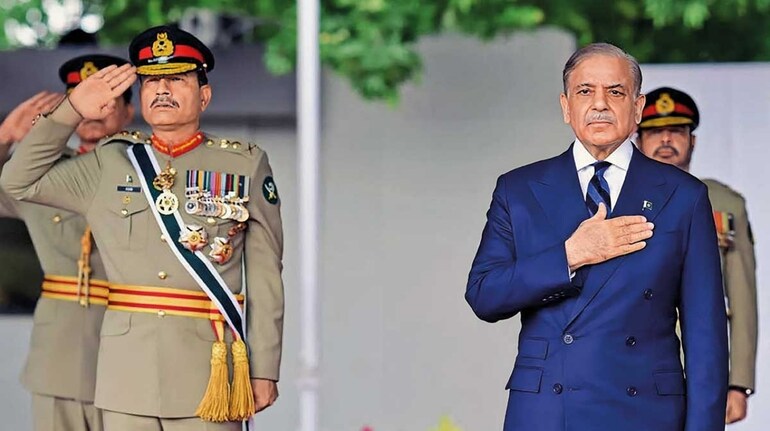

Pakistan’s civilian and military leadership used the World Economic Forum in Davos to signal renewed diplomatic activism, but the optics once again underlined a familiar reality. Prime Minister Shehbaz Sharif and Chief of Defence Forces Asim Munir appeared side by side in a series of informal engagements, reinforcing perceptions that Pakistan’s foreign policy remains tightly steered by its military establishment even in economic forums meant for reform and investment.
Against the backdrop of Pakistan’s deep economic distress and its controversial outreach to the Trump administration on Gaza, the Davos meetings reflected Islamabad’s search for relevance and leverage rather than confidence.
Meetings with Rubio and Aliyev
According to an official statement from the Prime Minister’s Office, Shehbaz Sharif and Asim Munir met Marco Rubio and Ilham Aliyev on the sidelines of the World Economic Forum. They also interacted with Saudi Foreign Minister Prince Faisal bin Farhan.
While Pakistan framed the engagements as routine diplomacy, the context tells a more complicated story. Islamabad is currently under pressure at home and abroad over its decision to align with US President Donald Trump’s Gaza “Board of Peace,” a move critics inside Pakistan have described as submission rather than strategy. The Davos outreach appears aimed at reassuring Washington while seeking economic and political cover.
Azerbaijan angle raises red flags
The meeting with President Ilham Aliyev is also being watched closely in New Delhi. Azerbaijan has emerged as a new international platform for narratives hostile to India, including attempts to globalise the Khalistan issue with backing from the Pakistan-Turkey axis. Pakistan’s growing proximity to Baku is being seen by analysts as part of a broader effort to open alternative diplomatic fronts against India even as it seeks Western goodwill.
Economic pitch amid structural weakness
Shehbaz Sharif used Davos to repeat familiar talking points about export-led growth, falling inflation and improving macroeconomic indicators. He also met IMF Managing Director Kristalina Georgieva, stressing fiscal discipline and reform commitments. However, these claims sit uneasily with Pakistan’s dependence on IMF bailouts, ongoing debt rollover negotiations and the military’s expanding role in economic decision-making.
Despite the investment-friendly rhetoric, Pakistan’s presence at Davos highlighted a deeper contradiction. The country is seeking foreign capital while projecting a civil-military “teamwork” model that has historically undermined transparency, civilian authority and investor confidence.
In Davos, Pakistan appeared busy. But beneath the meetings and sound bites, the core problems remain unresolved.
Discover the latest Business News, Sensex, and Nifty updates. Obtain Personal Finance insights, tax queries, and expert opinions on Moneycontrol or download the Moneycontrol App to stay updated!
Find the best of Al News in one place, specially curated for you every weekend.
Stay on top of the latest tech trends and biggest startup news.