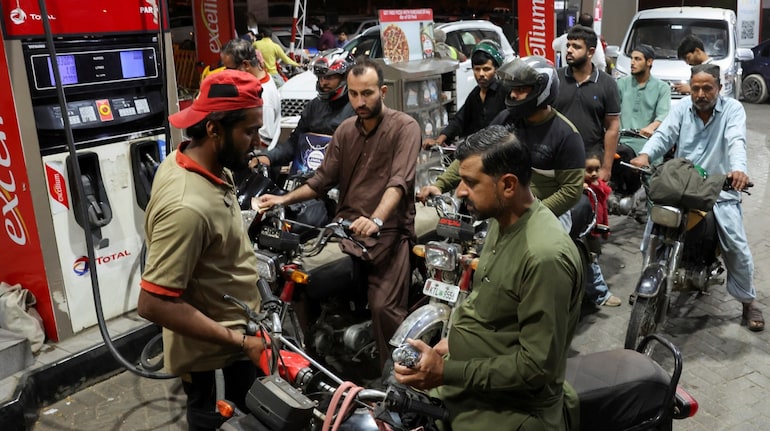

The war in West Asia has begun to ripple far beyond the battlefield, and few countries are feeling the shock as sharply as Pakistan. Already grappling with weak finances, heavy imports and persistent inflation, Islamabad now faces a fresh crisis as disruptions in oil and gas supplies push fuel prices sharply higher. The government has scrambled to impose austerity measures, including work-from-home orders, school closures, and salary cuts for ministers, in an attempt to conserve fuel.
While Pakistan struggles to manage rising energy costs and public panic, India has remained relatively insulated from the immediate price shock thanks to stronger energy management and a more diversified supply strategy. Here is a closer look at how the Iran war has pushed Pakistan into a fuel crisis and what it reveals about the fragile state of its economy.
Why the Iran war is hitting Pakistan hard
Pakistan depends heavily on imported oil and gas to run its economy. With global oil prices rising sharply following the United States and Israel’s war against Iran, countries dependent on imports have been forced to adjust quickly.
For Pakistan, which already runs a fragile balance of payments and limited foreign exchange reserves, the sudden surge in prices has triggered a serious economic strain.
Reports indicate that the country’s monthly oil import bill could rise to nearly 600 million dollars due to the conflict and resulting supply disruptions. This comes at a time when Pakistan is already dealing with economic instability, inflation and debt pressures.
Unlike stronger regional economies, Pakistan has limited financial room to absorb such shocks. The result has been immediate price hikes, emergency government measures and public anxiety.
Fuel prices in Pakistan have surged
The most visible impact of the crisis has been a sharp jump in fuel prices. Last Friday, March 6, the Pakistani government announced a Rs 55 per litre increase in petrol and high speed diesel prices.
As a result:
Previously petrol was priced at Rs 266.17 per litre, meaning the increase represents about a 17 per cent jump. It is one of the steepest increases in recent years.
Cooking fuel has also become expensive. As of Saturday, the price of a 14.2 kilogram Liquefied Petroleum Gas cylinder in Pakistan stood at around Rs 1,046.
Pakistan’s Petroleum Minister Ali Pervez Malik attempted to reassure the public, saying the country currently has enough fuel stock to last 28 days, adding that three oil tankers carrying additional supplies are expected to arrive soon.
Pakistan saw the steepest fuel price rise
Comparative data shows Pakistan has experienced the largest petrol price increase among several countries following the global oil shock.
Deputy Prime Minister Ishaq Dar admitted the government had little choice but to pass the burden to consumers.
He said Islamabad had “little choice” but to pass on the impact of global oil price increases.
According to figures shared by Khurram Shehzad, adviser to Pakistan’s federal finance minister, petrol prices rose from $0.95 per litre before the war to $1.15 per litre afterward, a rise of more than 21 per cent.
Other regional countries saw much smaller increases:
India, in contrast, has so far seen little impact on fuel prices despite the global turmoil.
As of March 11:
The contrast highlights how stronger economic buffers and diversified supply chains have helped India avoid immediate price shocks.
Panic buying and rising costs
The sudden price surge triggered panic among Pakistani consumers.
In major cities including Karachi, Lahore and Islamabad, hundreds of people rushed to petrol pumps to fill their tanks, forming long queues amid fears of shortages.
Prime Minister Shehbaz Sharif warned against hoarding and urged citizens to conserve fuel.
The rising fuel costs have also begun to affect other sectors.
Air travel in Pakistan has become more expensive. Domestic ticket prices have increased by PKR 2,800 to PKR 5,000. Tickets that earlier cost PKR 10,000 to PKR 15,000 are now priced between PKR 17,000 and PKR 20,000.
Economists warn that higher fuel prices will likely push up transportation costs, food prices and electricity bills, worsening inflation in a country already struggling with rising living costs.
Emergency austerity measures announced
Facing the prospect of a prolonged crisis, the Pakistani government has introduced several austerity measures aimed at conserving fuel.
Prime Minister Shehbaz Sharif said the measures were necessary because “The entire region is currently in a state of war.”
Key steps include:
Political leaders and officials have also been asked to share the burden.
Educational institutions have also been affected. Schools have been shut and college classes have shifted online.
Authorities have even asked citizens to limit social events. Weddings and parties are now capped at 200 guests with only one main dish allowed.
Public reaction: Mockery and frustration
The austerity measures triggered widespread reactions on social media, with many Pakistanis expressing frustration.
One user wrote on X, “Imagine a beggar nation can’t survive one week into a war happening outside the country. Now imagine a war in their own country.”
Another mocked the closure of schools, writing, “Two weeks of vacation to solve an oil crisis? Someone tell the PM that turning off the school lights won’t refill the tanks.”
A third comment read, “Sab to bandh kar diya, chacha.”
The reactions reflect growing public anxiety over the government’s handling of the crisis and the broader fragility of Pakistan’s economy.
A crisis that highlights Pakistan’s economic vulnerability
The current fuel shock underscores how exposed Pakistan remains to global energy disruptions.
Heavy dependence on imports, weak financial reserves and chronic economic instability mean even external crises quickly translate into domestic emergencies.
India, meanwhile, has largely avoided immediate price spikes despite the same global oil shock, reflecting stronger economic resilience and more stable energy management.
As the West Asia war continues, Pakistan faces a difficult question. Whether it can weather the crisis on its own or will once again be forced to seek external financial assistance remains uncertain.
Discover the latest Business News, Sensex, and Nifty updates. Obtain Personal Finance insights, tax queries, and expert opinions on Moneycontrol or download the Moneycontrol App to stay updated!
Find the best of Al News in one place, specially curated for you every weekend.
Stay on top of the latest tech trends and biggest startup news.