






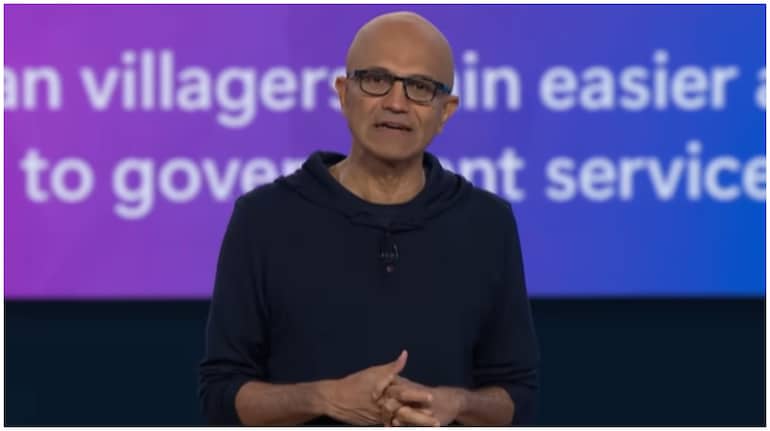

“Slop” may have been Merriam-Webster’s word of the year for 2025, but Satya Nadella wants it retired. In a blog post published towards the end of the year, the Microsoft CEO argued that the AI industry has moved past its novelty phase and now faces a more difficult challenge: proving that any of this actually works in the real world.
Nadella framed 2025 as a transition year, one where the gap between flashy demos and practical value became impossible to ignore. According to him, the focus now needs to shift from debating whether AI output is impressive or embarrassing to understanding how the technology should be applied, designed and governed.
Microsoft says it’s time to stop talking about AI ‘slop’
Central to his argument is a revival of Steve Jobs’ idea of computers as “bicycles for the mind”. Nadella suggested AI should be viewed not as an autonomous intelligence, but as a cognitive amplifier that helps people achieve their goals. In that framing, raw model power matters less than product design and how humans interact with these tools in daily life.
That assumption is contentious. The very reason “AI slop” entered the mainstream vocabulary is because much of what these systems produce is low-quality, repetitive or misleading. There is also growing research suggesting that heavy reliance on AI tools may reduce critical thinking rather than enhance it, including work co-authored by Microsoft itself. Against that backdrop, the idea of AI as a universal cognitive upgrade remains unproven.
Beyond philosophy, Nadella outlined a more technical shift. He said the industry must move from standalone AI models to complex systems that combine multiple models, agents, memory layers and permissions. In simple terms, Microsoft believes the future lies in wrapping today’s unreliable outputs in enough structure and safeguards to make them useful at scale.
The final pillar of Nadella’s vision was arguably the most revealing. He acknowledged that AI’s expansion comes with real costs, from energy consumption to compute resources, and said companies must be more deliberate about where and why they deploy the technology. For AI to earn what he called “societal permission”, it needs to deliver measurable real-world benefits, not just excitement.
Read between the lines, and the tone feels more cautious than triumphant. Microsoft has poured tens of billions of dollars into AI, yet much of the public response has ranged from indifference to outright hostility, particularly when half-baked features land in products people rely on every day. Nadella’s emphasis on “messy discovery” and conditional success reflects an industry that is still searching for a convincing endgame.
Whether AI evolves into the profound computing shift Nadella hopes for, or remains defined by the slop it produces today, will depend less on bigger models and more on restraint, design choices and honesty about what the technology can realistically do. 2026, by Microsoft’s own admission, will be the real test.


Discover the latest Business News, Sensex, and Nifty updates. Obtain Personal Finance insights, tax queries, and expert opinions on Moneycontrol or download the Moneycontrol App to stay updated!
Find the best of Al News in one place, specially curated for you every weekend.
Stay on top of the latest tech trends and biggest startup news.







