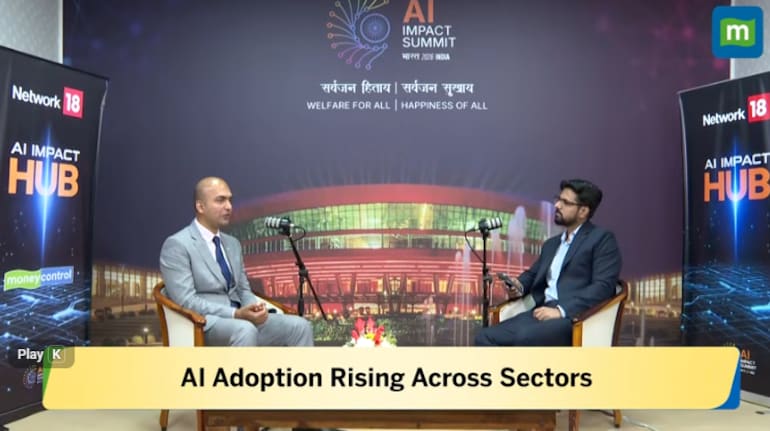
Mubadala-backed G42, the Abu Dhabi-based AI firm chaired by UAE National Security Adviser Sheikh Tahnoon bin Zayed Al Nahyan, is intensifying its India strategy with a strong push into AI infrastructure and a flagship supercomputing partnership under the IndiaAI Mission.
In an interaction with Moneycontrol, Manu Jain, CEO of G42 India, said the company is building core capabilities in the country, spanning data centres, large-scale compute clusters and local-language LLMs. Globally, G42 operates major supercomputing clusters and is developing a 5-gigawatt AI campus in Abu Dhabi. The India deployment, Jain said, is aimed at accelerating AI adoption across sectors. The cluster — to be rolled out under the IndiaAI Mission — will be accessible to IITs, IISc, AI startups and enterprises with significant AI workloads.
While it will support both training and inferencing, Jain expects inferencing demand to dominate, enabling organisations to run existing AI models at scale in a faster and more cost-efficient manner, providing a meaningful boost to India’s AI ecosystem. At the heart of the strategy is an 8-exaflop AI supercomputing cluster — poised to be among the largest in India — powered by the latest CS-3 chips from Cerebras Systems.
Edited excerpts.Q: Could you give us some colour on G42 India’s operations in India?
G42 is a holding company for various operating companies. We work in deep tech. We have companies in data centres, cloud, compute, applications, analytics, genome sequencing, satellites, autonomous training, and much more.
In India, as we expand, the focus is primarily on building the base infrastructure — things like data centres, compute clusters — and helping build local language large language models (LLMs). We have launched a few Hindi-English models. And we just announced a very large AI supercomputing partnership with the Government of India.
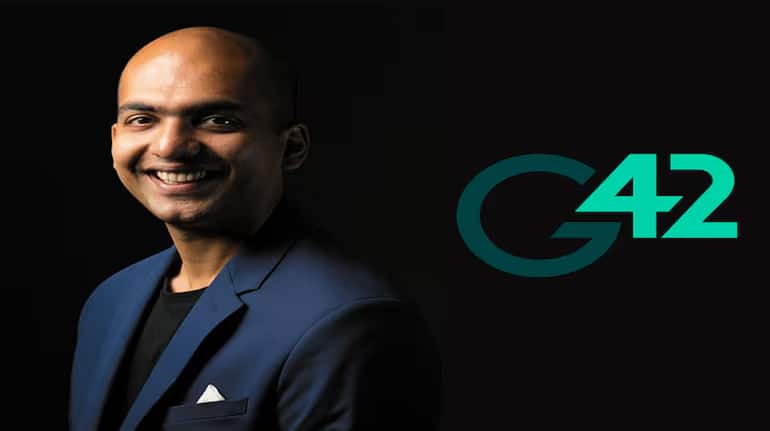 G42 India CEO Manu Jain
Q: Can you share more details? What sort of partnership is this going to be?
G42 owns various large supercomputing clusters in the US and other parts of the world. We are also building a pretty big 5-gigawatt campus in Abu Dhabi. This particular one will be one of the largest supercomputing clusters deployed in India. It’s an 8-exaflop machine and will use the latest Cerebras CS-3 chips.
This is in partnership with Cerebras, a US-based company. We are using their chips, and this has been done in partnership with the Government of India.
This will be deployed in the country, and I really hope it helps accelerate the adoption of AI.
Q: Which companies or startups are going to use it? Is there a special arrangement with the government to allow access to the supercomputer?
This will be part of the IndiaAI Mission. When the Prime Minister visited the UAE recently, it was announced that this would be part of the IndiaAI Mission. The government will make this available to various entities including research organisations like IITs and IISc, startups and companies working in AI and enterprises that require AI workloads.
This will help accelerate the ecosystem. You can do both training and inferencing on this cluster, but my guess is it will be used more for inferencing — where AI models already exist and are deployed at scale. They can run extremely fast and in a very cost-efficient way.
Q: Last year, you spoke about Nanda, the Indic LLM. What is the update? Are you seeing adoption?
Last year, we launched the first version — a 3-billion-parameter model. This year, we updated it to a much more advanced 8.7-billion-parameter model. It is trained on trillions of tokens.
The solution is primarily designed for enterprise clients, especially those that require Hindi or English language capabilities and need data sovereignty, enabling them to host the model on their own devices, cloud, or servers and build applications on top of it.
Q: Many companies at the event talked about affordable AI for countries like India. What is your perspective?
I think it is absolutely required. India has a massive population — more than a billion people. During the summit, Sam Altman spoke about India being one of the largest markets for OpenAI. Anthropic’s team also mentioned India as one of their fastest-growing markets.
For any AI company, India is a large opportunity. But real mass adoption — especially in smaller towns and villages — will come when AI becomes more affordable and more colloquial.
People should be able to interact in their own local language — probably through voice and not just text. On affordability, this large supercomputing cluster will help. It will allow inferencing much faster and cheaper. Since it is part of the government cluster, I believe it will be made available to startups, companies, and research institutes at an affordable price. That should help scale adoption.
Q: When it comes to technology, a lot of IP is not owned by India. With AI, do we need to change that?
If you look historically, many chips were developed in one part of the world — Silicon Valley. That region has significant innovation in chip design and related technologies. Having said that, India has started taking steps in the right direction. During the conference, the Honourable Minister spoke about chip manufacturing in India.
There is also a new data centre policy — if a foreign company sets up a local data centre in India, they can get tax incentives for the next few years. So the right steps are being taken.
My guess is that India will build strong, locally relevant use cases — applications that are accurate, based on local languages, and hosted in India. Those use cases and applications can become significant markets, even globally.
Q: You’ve transitioned from building consumer products to leading an AI infrastructure company, working more with governments and enterprises. How has that transition been?
It is definitely very different — not good or bad — just very different. Earlier, I worked in consumer tech. The objective was to build products that millions of consumers could use individually and then scale the business.
Here, we build AI infrastructure and applications, but a lot of the work is for enterprises and governments. It is very exciting because we are at the centre of cutting-edge technology — artificial intelligence.
We are building data centres, compute clusters, and large-scale AI infrastructure. The nature of the business is different, but at the core, what I’ve always done — and what I’m doing now — is working with technology.
Q: Do you miss being closely attached to consumers? Many consumers still remember you and engage with you on social media.
I think there are pros and cons to everything. On one hand, it is very rewarding when a lot of people know and follow you. On the other hand, you lose some privacy. The way I think about my life and career is that I want to be where the latest and best technology is. Earlier, it was e-commerce. Then it was mobile. Now it is artificial intelligence. Whether it is consumer or enterprise, as long as I am at the intersection of the latest technology, that excites me.



Discover the latest Business News, Sensex, and Nifty updates. Obtain Personal Finance insights, tax queries, and expert opinions on Moneycontrol or download the Moneycontrol App to stay updated!
Find the best of Al News in one place, specially curated for you every weekend.
Stay on top of the latest tech trends and biggest startup news.