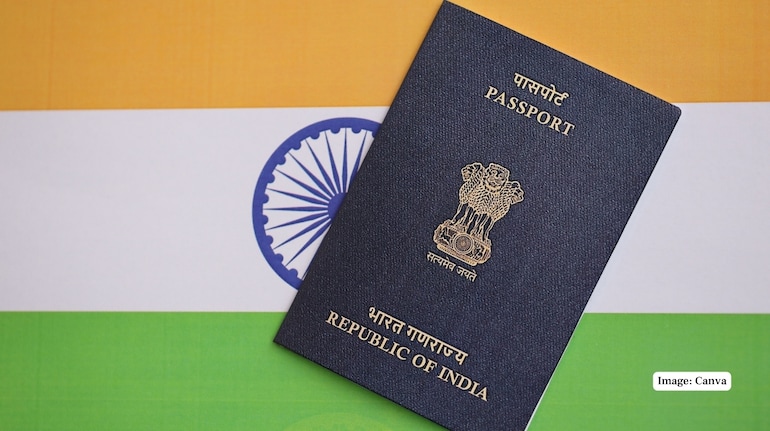
India has begun issuing e-passports under the Passport Seva 2.0 programme, marking a major upgrade from the traditional booklet to a secure, chip-enabled document. The introduction of RFID-based passports aims to strengthen identity protection, reduce fraud, and offer faster, more efficient travel verification at global borders. With passport offices across the country gradually becoming technically enabled, citizens applying for fresh passports or reissues will increasingly receive an e-passport.
Here is a detailed explainer covering what an e-passport is, how it works, the documents you need, how to apply, and what existing passport holders should know.
What is an e-Passport?
An e-Passport is a passport that contains both paper and electronic components. It features an RFID chip and antenna embedded within the cover inlay, and is easily recognised by a gold-coloured chip symbol printed on the front. The chip stores the passport holder’s personal particulars and biometric information, including name, date of birth, passport number, photograph, and fingerprints.
The digital data stored in the chip is secured using Public Key Infrastructure (PKI), ensuring it cannot be altered without detection. The chip is tamper-resistant and can be read contactlessly at immigration counters, allowing quicker and more accurate verification compared to manual checks.
Benefits of an e-passport
The biggest advantage of the e-passport is enhanced security. Since the biometric and personal data is digitally signed, global immigration systems can authenticate it instantly. This makes it significantly harder to forge, duplicate, or misuse a passport.
The information is stored in two forms — printed on the booklet and digitally within the chip — allowing border systems to cross-verify authenticity. PKI safeguards ensure the integrity and origin of the stored data, protecting it from tampering or manipulation. For travellers, this translates to smoother passage through automated gates and reduced waiting time during border checks.
Is it mandatory for existing passport holders to switch?
No. All valid passports issued by the Government of India remain valid until their expiry. There is no requirement for anyone to replace their current passport immediately. The rollout of e-passports across India is happening in phases, depending on when each passport office becomes technically equipped. Applicants will receive an e-passport only when their respective Passport Seva Kendra or POPSK is enabled to issue it.
What documents are required for e-Passport
The documentation process remains the same as for a traditional passport. Applicants must provide:
Proof of address such as an Aadhaar card or utility bill
Proof of date of birth such as a birth certificate or PAN card
Identity proof
Existing passport for reissue applications
Carrying both originals and photocopies is important for verification during the appointment.
How to apply for an e-passport: Step-by-step guide
1. Visit the Passport Seva website
Go to www.passportindia.gov.in to begin the application.
2. Register or log in
New users must create an account. Existing users can sign in using their credentials.
3. Fill the application form
Choose “Apply for Fresh Passport” or “Reissue of Passport” and enter all details accurately in the form.
4. Book an appointment
Select a suitable date and time at your nearest Passport Seva Kendra (PSK) or Post Office Passport Seva Kendra (POPSK).
5. Pay the application fee
Make the payment online through UPI, net banking, or debit/credit cards.
6. Visit the PSK or POPSK
On your appointment day, visit the centre for biometric capture, photograph collection, and document verification.
Once these steps are completed, the application proceeds to police verification and printing. The e-passport will be issued after all checks are cleared.


Discover the latest Business News, Sensex, and Nifty updates. Obtain Personal Finance insights, tax queries, and expert opinions on Moneycontrol or download the Moneycontrol App to stay updated!
Find the best of Al News in one place, specially curated for you every weekend.
Stay on top of the latest tech trends and biggest startup news.