






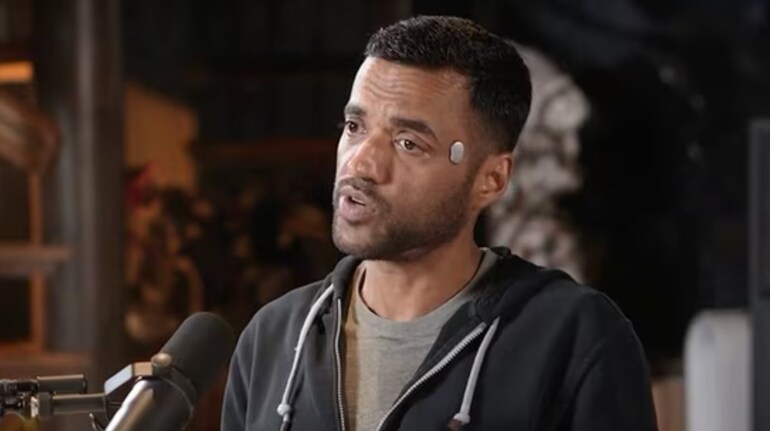

Deepinder Goyal recently appeared on Raj Shamani’s popular Figuring Out podcast, but it wasn’t his theories or startup wisdom that stole the show. It was a mystery device sitting quietly on his temple that caught everyone’s attention. The tiny metallic gadget sparked instant curiosity, and the internet did what it does best: zoom in, speculate wildly, and meme relentlessly. Some compared it to chewing gum, others called it an external SSD plugged into his brain for storing business ideas. The guesses ranged from funny to borderline sci-fi, but the truth, as it turned out, was far more ambitious than humorous.
The device is called Temple. It’s an experimental wearable built to track brain blood flow in real time. The idea driving it is simple, yet audacious: continuously monitor how blood circulates through the brain to better understand neurological health and ageing. Brain blood flow is considered a major marker of cognitive well-being, especially as the body grows older. But before anyone gets carried away imagining this as the next smartwatch moment, here’s the fine print — Temple is not a consumer product.
Goyal’s interest in the device is not a podcast stunt. He has been testing it himself for almost a year. He also revealed that the idea for Temple emerged while his team was exploring something called the Gravity Ageing Hypothesis, a theory that suggests gravity’s pull over decades might influence blood circulation to the brain and potentially play a role in ageing. The hypothesis has sparked intrigue and debate in equal measure, with many scientists and commentators pointing out that ageing is far more complex and can’t be pinned on gravity alone.
Then comes the investment behind the idea. Reports say Goyal has put in about $25 million of his personal wealth — roughly Rs 225 crore — into a research initiative called Continue Research. He has been clear that this funding is personal and experimental in nature, meant to push curiosity-driven science forward, not launch a product line.
Not everyone is convinced by the promise. Dr. Datta M.D., an AIIMS Delhi physician-scientist known for early research in arterial stiffness and pulse wave velocity, publicly dismissed the device’s current relevance. He said it holds “zero scientific standing as a useful tool” and advised people not to spend their savings on “fancy billionaire toys.” His statement added a much-needed reality check to a conversation that had already left science behind and entered meme territory.
So for now, Temple stands where it always did — in the research zone, not your Zomato cart. Whether it eventually becomes a breakthrough in brain health monitoring or stays a personal experiment, one thing is certain: the internet will continue to watch closely. And meme faster.



Discover the latest Business News, Sensex, and Nifty updates. Obtain Personal Finance insights, tax queries, and expert opinions on Moneycontrol or download the Moneycontrol App to stay updated!
Find the best of Al News in one place, specially curated for you every weekend.
Stay on top of the latest tech trends and biggest startup news.







