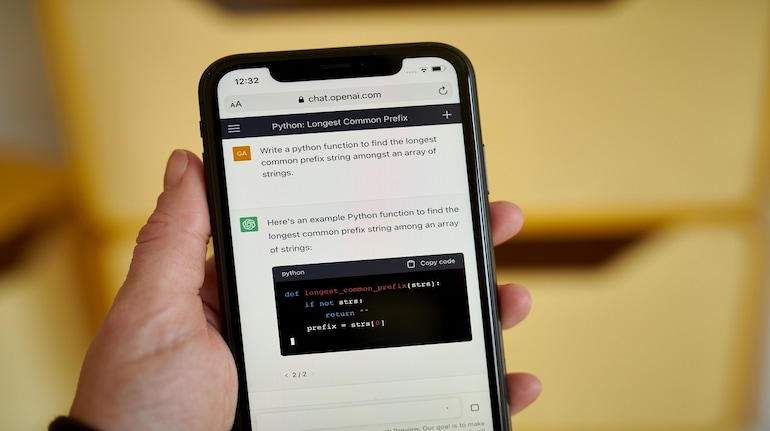
Remember that time you poured your heart out to ChatGPT? Whether it was a messy breakup, a confusing job offer, or just a silly midnight thought, you shared it all with an AI chatbot that listened, gave you advice, and never judged you. It felt private, like talking to a diary with brains.
But imagine opening Google and suddenly finding your own ChatGPT conversation or someone else’s, right there, indexed for the world to read. Chats about awkward dating experiences, CV rewrites, and even someone asking how to microwave a steak. Sounds wild, but that’s exactly what happened.
So, how did this leak happen?
OpenAI, the company behind ChatGPT, had a feature that let users share their conversations through a special “share” button. When you clicked this button and then chose to “create link,” ChatGPT would generate a URL (usually something like chat.openai.com/share/...) that you could share with others.
What most users didn’t realize is that if they didn’t turn off a tiny setting, their shared chats could get picked up by search engines like Google and Bing. This means anyone could stumble upon your chats just by Googling the right thing.
Did ChatGPT make your chats public by default?
No. Only chats that you chose to share manually were affected. But the problem is that even when people shared them intentionally, they didn’t expect them to show up on Google.
Who spotted this?
A TechCrunch report first brought this issue into the spotlight. Curious users had been Googling “chat.openai.com/share” and found hundreds of conversations, many of which revealed personal information.
What did OpenAI do about it?
Hours after the report went live, OpenAI admitted it was part of a short-lived “experiment.” They were testing how people share chats and whether making them easier to discover would be useful. Turns out, it was a privacy disaster waiting to happen. OpenAI quickly pulled the feature that allowed these links to be indexed by search engines.
They also clarified that while users could still share links, those links would no longer be discoverable on platforms like Google.
So how long were the chats exposed?
It’s unclear exactly how long, but enough time passed for several personal chats to be indexed and viewed by strangers. OpenAI didn’t give a specific timeline, but they were quick to act after the story came out.
Can Google or Bing stop this from happening?
Not really. Search engines like Google only index what’s publicly available on the internet. If a link is live and open, they may include it in results. It’s up to the site owners (in this case, OpenAI) to make sure sensitive content doesn’t get out.
If you ever shared a ChatGPT conversation using that “share” button, your chat might have been viewable through search, especially if you didn’t disable the “make public” toggle. Thankfully, that feature has now been removed. But it’s a reminder that even with AI, privacy is something we need to stay alert about.



Discover the latest Business News, Sensex, and Nifty updates. Obtain Personal Finance insights, tax queries, and expert opinions on Moneycontrol or download the Moneycontrol App to stay updated!
Find the best of Al News in one place, specially curated for you every weekend.
Stay on top of the latest tech trends and biggest startup news.