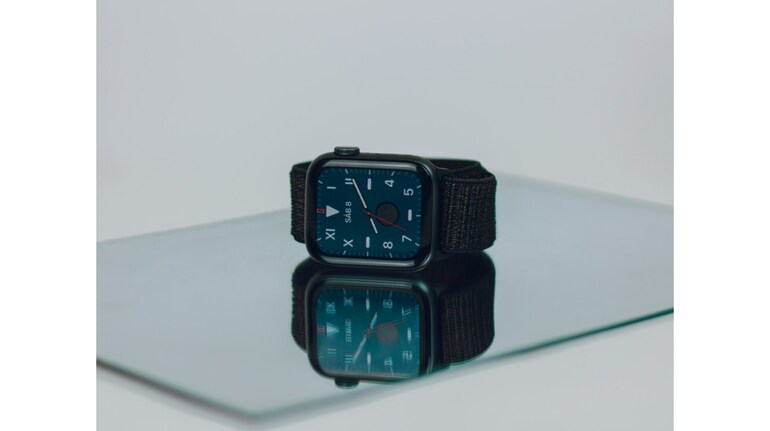

Blood sugar monitoring has long been one of the most ambitious health goals linked to the Apple Watch. Reports dating back to 2023 suggested that Apple originally wanted non-invasive glucose tracking to be a headline feature of the very first Apple Watch. More than a decade later, that vision still has not materialised, despite repeated claims that the feature was just a generation or two away. Now, the emergence of a new medical device entering human trials suggests that the underlying technology Apple needs may finally be maturing.
The importance of blood sugar monitoring is difficult to overstate. According to the International Diabetes Federation, more than 10 percent of the global adult population is living with diabetes, and nearly half of those affected are unaware of their condition. Diabetes contributes to millions of deaths every year, with risks rising sharply for people who develop type 2 diabetes earlier in life. Early detection can dramatically reduce complications, but current monitoring tools rely on invasive methods that discourage widespread use among people who do not already consider themselves at risk.
This is why non-invasive glucose monitoring has become a kind of holy grail in health technology. A solution that removes needles from the equation could encourage routine testing and early diagnosis on a scale that is currently impossible. For a product like the Apple Watch, which is already worn daily by millions of people, the implications would be enormous.
One of the most promising approaches does not involve blood at all, but breath. People with diabetes often exhibit elevated levels of acetone in their breath, a by-product that correlates with rising blood glucose levels. Wired recently highlighted a new device built around this principle that is now undergoing clinical trials in the United States. The device, called Isaac, is worn as a small pendant around the neck and analyses volatile organic compounds in exhaled breath to detect biomarkers associated with glucose changes.
Isaac has entered active human trials at Indiana University, where researchers are comparing its readings with those produced by traditional blood-based glucose monitors. The trials began with adolescents who have type 1 diabetes and are expanding to include adults with type 2 diabetes. The aim is to generate enough evidence to support a regulatory review by the U.S. Food and Drug Administration within the next year.
Unlike continuous glucose monitors, this approach is designed for periodic testing rather than constant measurement. Users hold the device near their mouth and breathe out, with each test taking only a few seconds. While this limits its ability to provide real-time tracking, it still represents a significant step forward in accessibility and ease of use, especially for people who would never consider finger-prick testing.
This is where the Apple Watch connection becomes interesting. In principle, breath-based glucose detection could be adapted for a wearable device. The main obstacle today appears to be size. The current Isaac prototype is roughly comparable in footprint to an Apple Watch itself, making direct integration impractical. However, Apple has a long track record of shrinking sensors and components once the underlying science is proven and approved.
If Isaac or similar devices receive FDA approval, it would validate a detection method that Apple could refine and miniaturise over time. That does not mean blood sugar monitoring is imminent for the Apple Watch, but it does suggest the industry is finally closing in on a viable non-invasive solution. For Apple, which has consistently framed the Watch as a health device first and a gadget second, this kind of breakthrough could eventually unlock one of its most ambitious promises yet.


Discover the latest Business News, Sensex, and Nifty updates. Obtain Personal Finance insights, tax queries, and expert opinions on Moneycontrol or download the Moneycontrol App to stay updated!
Find the best of Al News in one place, specially curated for you every weekend.
Stay on top of the latest tech trends and biggest startup news.