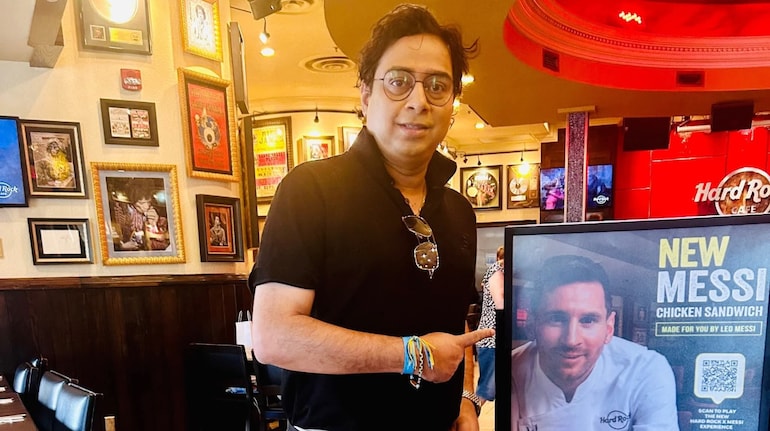
When Lionel Messi landed in India as part of the much-publicised GOAT Tour, the moment was meant to be historic, a rare, emotional touchpoint between one of football’s greatest icons and Indian fans. Instead, as events unfolded, attention quickly shifted away from Messi to the man credited with making the tour happen: Satadru Dutta.
For many, Dutta emerged almost overnight as a central figure in the story. In reality, he has spent over a decade operating in India’s sports marketing and events space. Based in West Bengal, Satadru Dutta is a sports promoter and entrepreneur who has positioned himself as a bridge between global football icons and Indian audiences. His work has revolved around athlete appearances, branding exercises, fan engagement programmes and sports-linked events rather than competitive fixtures.
Also Read | 'What is happening?': Lionel Messi enraged with Kolkata organisers amid chaos at Salt Lake StadiumBefore the Messi tour, Dutta had been involved in bringing several celebrated football personalities to India, including legends from different eras of the game. These appearances, often centred on ceremonial events, brand activations and fan interactions, helped him build credibility within a niche but growing ecosystem of privately organised sports experiences. The Messi GOAT Tour, however, was easily the most ambitious project of his career, both in scale and expectations.
Conceptually, the tour was never designed as a match or training camp. It was pitched as a celebration: a chance for Indian fans to see Messi in person, hear him speak, and feel connected to a global sporting great. That ambition resonated deeply in a football-loving city like Kolkata, where anticipation reached fever pitch well before the event day.
Also Read | Lionel Messi's Kolkata event 'chief organiser arrested', police inform 'ticket fee will be returned'What followed, however, exposed the fragile balance between vision and execution. Overcrowding, security lapses and confusion on the ground overshadowed the brief public appearance by Messi. Scenes of unrest inside the stadium left fans disappointed and authorities scrambling for answers. In the aftermath, Dutta found himself facing intense scrutiny, including police action, as officials began investigating whether adequate planning and crowd-control measures had been in place.
To some, the episode highlighted systemic weaknesses, limited experience in handling mega-events of this nature, coordination gaps between private organisers and authorities, and the dangers of underestimating public emotion when a global icon is involved. To others, Dutta remains an ambitious entrepreneur who dared to attempt what few in Indian sport have tried: bringing the world’s biggest football name to the country outside a competitive fixture.
Satadru Dutta’s story, for now, sits at the intersection of aspiration and accountability. He is neither just a villain nor merely a visionary. He represents a growing class of Indian sports promoters operating in uncharted territory, where global ambition meets local realities. How this chapter concludes may well shape the future of privately driven global sporting events in India.
Discover the latest Business News, Sensex, and Nifty updates. Obtain Personal Finance insights, tax queries, and expert opinions on Moneycontrol or download the Moneycontrol App to stay updated!
Find the best of Al News in one place, specially curated for you every weekend.
Stay on top of the latest tech trends and biggest startup news.