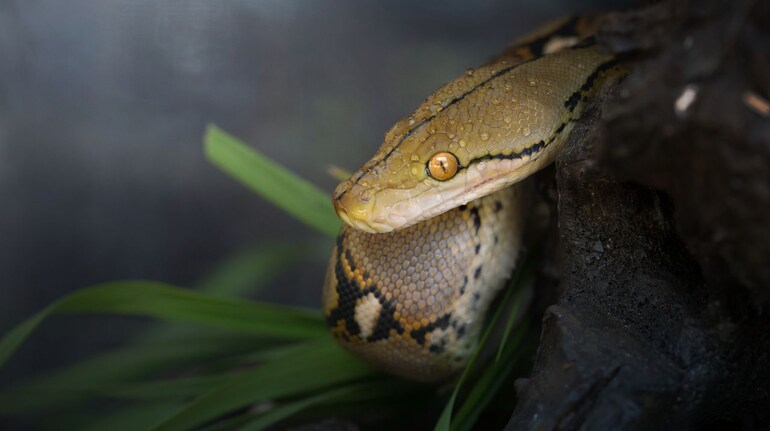
A rare study reported on 2025-12-16 shows Cuban boas hunting cooperatively inside caves, challenging long-held beliefs about snakes as solitary predators.
Snakes have long been viewed as instinct-driven and solitary hunters. New observations from a Cuban cave question that assumption. Researchers found Cuban boas coordinating movements while hunting bats. The behaviour was recorded during repeated nighttime observations.
What scientists observed inside Cuban caves
The research documented activity over eight nights inside one cave. Up to 9 Cuban boas hunted simultaneously near cave entrances. They positioned themselves deliberately along narrow exit paths. Snakes adjusted spacing and angles relative to nearby individuals. This arrangement limited bat escape routes during emergence.
As bats exited, snakes intercepted them more efficiently. Capture rates exceeded those recorded for solitary boas. Researchers said this met accepted cooperative hunting criteria. Each snake altered behaviour based on neighbouring predators. Hunting success improved for all involved individuals.
The observations were made by researcher Dinets during fieldwork. The study was later reported through scientific publication. Cooperative hunting is common among mammals like wolves. Among snakes, such behaviour is considered extremely rare.
What it means for reptile intelligence
Cuban boas are nocturnal and generally difficult to observe. Scientists believe spatial awareness enabled this coordinated behaviour. The snakes were not communicating socially or forming groups. Each individual appeared aware of shared hunting advantages. Coordination occurred without signs of complex planning.
Researchers say this shows behavioural flexibility in reptiles. The findings challenge assumptions of limited reptile cognition. Similar Cuban boa species have shown pattern recognition abilities. They have also demonstrated awareness of social cues. These traits suggest adaptive intelligence beyond traditional expectations.
Snakes do not plan hunts like mammals do. However, they exploit ecological opportunities very efficiently. Cave environments provide confined spaces and predictable prey movement. The boas used these conditions to maximum advantage.
Why Cuban boas succeed as predators
Cuban boas, Chilabothrus angulifer, are among the largest Caribbean snakes. Adults typically measure between 4 and 5 metres. They are found exclusively across Cuba’s varied habitats. Dense forests, rocks, and caves support their ambush strategy.
The species is primarily nocturnal and sometimes crepuscular. Strong camouflage helps them remain unseen by prey. Sensory abilities allow detection of movement and heat. These traits support both solitary and cooperative hunting.
Despite their size, Cuban boas are non-venomous snakes. They kill prey through powerful constriction alone. Muscular strength cuts off oxygen until prey suffocates. Researchers say this combination defines their ecological dominance.
Scientists believe further studies could reveal similar behaviours elsewhere. Such findings may reshape understanding of reptile intelligence.
Discover the latest Business News, Sensex, and Nifty updates. Obtain Personal Finance insights, tax queries, and expert opinions on Moneycontrol or download the Moneycontrol App to stay updated!
Find the best of Al News in one place, specially curated for you every weekend.
Stay on top of the latest tech trends and biggest startup news.