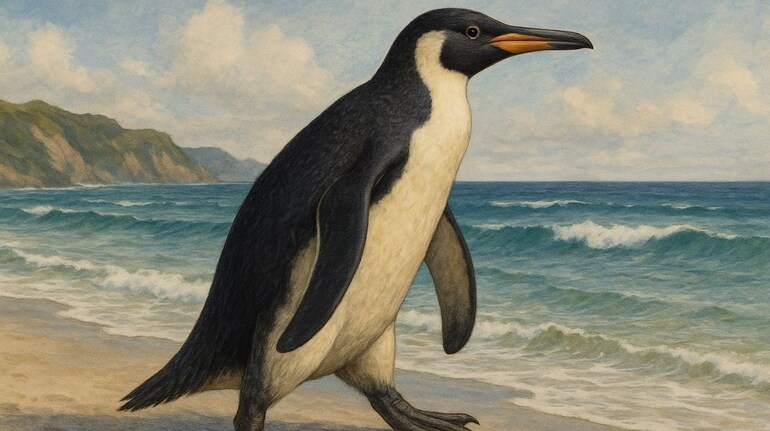
Fossils have a way of being time machines, ever so softly rewriting our knowledge. It was in a gusty corner of southern New Zealand that scientists chanced upon a penguin unlike any other—giant, old and lost to the ages. This recently discovered species, Kumimanu fordycei, weighed 154 kilograms and is thought to have been taller than any penguin living today.
A Monster Bird From Millions of Years AgoResearchers at the University of Cambridge and the Museum of New Zealand Te Papa Tongarewa announced the discovery in the Journal of Palaeontology. The fossil was from a penguin that waddled the shores 57 million years ago, soon after dinosaurs went extinct. Found in big rocks on Otago's coastline, its remains were studied with laser scans and computer modelling methods.
Kumimanu's flipper bones were larger than any penguin ever known. Their weight alone suggested a bird heavier than even the largest penguin alive today. Scientists report this species was comparable to Palaeeudyptes klekowskii, previously thought to be the largest penguin. Its flippers were thicker and longer, which aided in estimating the penguin's record size.
Ancient Giants Came Earlier Than We ThoughtThis finding rewrites our prior notions about penguin history. Kumimanu existed only 5 to 10 million years following the origin of penguins. That implies these birds became large long before we thought. In addition to it, researchers discovered a large species, Petradyptes stonehousei, weighing approximately 50 kilograms—not as heavy as the contemporary penguins, though.
Both existed in the same location and era, demonstrating that giant penguins existed in large numbers, not as exceptions. These birds would have dominated the sea, diving deep, devouring large animals, and enduring slowly cooling seas after the dinosaur era.
Why Getting Big Helped These Penguins ThriveSize provided these early penguins with an advantageous benefit. Larger bodies enabled them to dive for longer periods, pursue larger prey and maintain a warmer environment in colder waters. Being large most likely kept them safer from predators, too. Their Māori name, Kumimanu, means "monster bird"—an appropriate moniker for size and reputation.
Interestingly enough, Kumimanu retained evidence of its airborne past. Although it had already adjusted to life on the ocean floor, its bone structure retained remnants of flight-capable forebears. Evolution hadn't yet refined them into the sleek swimmers familiar to us.
The Disappearance of the Penguin GiantsThese massive penguins wandered over New Zealand, Antarctica and even South America. But 20 million years ago, they disappeared. Competition from marine mammals such as seals and toothed whales is a likely reason. These newer animals might have preyed on young penguins or taken over prime feeding areas.
In the meantime, there was a selective advantage for smaller penguins—they were speedy, supple, and flexible. Eventually, they endured, and the giants declined. Today, only 18 species of penguins exist, and none as powerful as Kumimanu, the ancient king of the shore.
Discover the latest Business News, Sensex, and Nifty updates. Obtain Personal Finance insights, tax queries, and expert opinions on Moneycontrol or download the Moneycontrol App to stay updated!
Find the best of Al News in one place, specially curated for you every weekend.
Stay on top of the latest tech trends and biggest startup news.