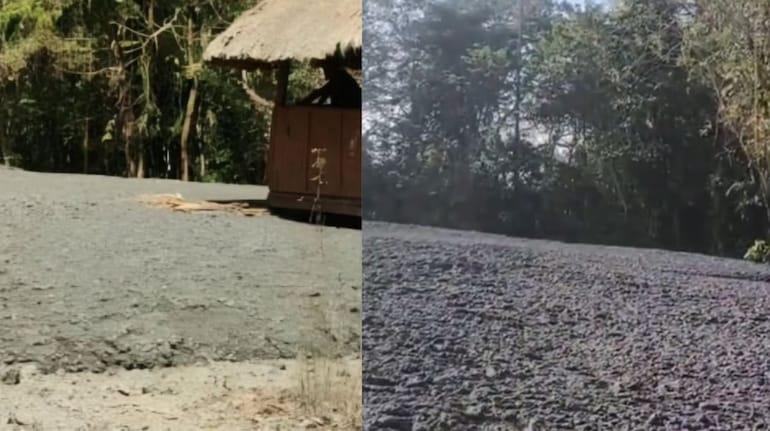

A mud volcano suddenly erupted in Diglipur, Andaman Islands. The eruption was reported on 8th January near Jol Tekri. It triggered concern among locals and visitors alike. Officials quickly responded to the unexpected geological event. Public access to the area was immediately restricted.
What Happened at the Site?
Before the eruption, a loud rumbling was heard nearby. Local residents reported the noise from forested areas. Soon after, mud started flowing across parts of the site. The mud discharge confirmed active volcanic movement underground. No injuries or structural damage were reported so far.
What Is a Mud Volcano?
Mud volcanoes are geological features that eject mud and gas. They do not spew molten rock like true volcanoes do. Instead, they release muddy material, gases and water slowly. The process relates to underground pressure and fluid movement. The Diglipur site is one of the region’s distinctive formations.
Why Scientists Are Watching Mud Volcanoes closely?
Experts say such volcanoes are significant geological indicators. Mud volcano activity can reveal underground fluid and gas movement. They can help scientists understand tectonic pressures beneath the islands. Andaman Islands lie near the convergence of several tectonic plates which makes the region prone to seismic and volcanic features.
Massive mud #Volcano eruption in Shyam Nagar, Diglipur, North #Andaman. Huge mud deposits formed as spectators flocked to witness the unusual natural event 🌋 pic.twitter.com/x177RK63sR— DJ Venkatesh (@djdiglipur) February 8, 2026
Monitoring the Geological Pulse
Geologists may soon collect samples from the eruption area. They hope to analyse gases and sediments released by the volcano. This can reveal deeper crustal processes beneath the islands. Such information could help predict future geological phenomena. Monitoring may include satellite imagery and ground-based sensors.
How Is Nature Reacting to the Eruption?
The eruption has affected nearby forest areas temporarily. Fresh mud has covered patches of soil and vegetation. Small plants and grasses were buried under thick layers. Forest officials are monitoring wildlife movement closely. No major animal casualties have been reported so far. Trees remain largely unharmed outside the central site. Scientists say such ecosystems are resilient. Similar sites have regenerated after past eruptions.
Is This Eruption a Real Threat from Climate Change?
Experts say mud volcanoes are mainly driven by underground pressure. They are linked to tectonic activity and gas buildup. Climate change does not directly cause such eruptions. However, changing rainfall patterns may influence underground water pressure. This may indirectly affect mud volcano activity. Scientists caution against drawing quick conclusions. One eruption does not indicate long-term climate trends. Long-term monitoring is needed to detect real patterns.
Discover the latest Business News, Sensex, and Nifty updates. Obtain Personal Finance insights, tax queries, and expert opinions on Moneycontrol or download the Moneycontrol App to stay updated!
Find the best of Al News in one place, specially curated for you every weekend.
Stay on top of the latest tech trends and biggest startup news.