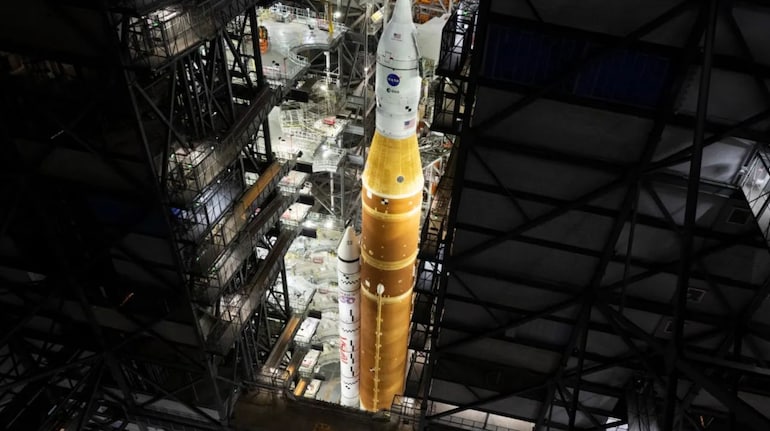

NASA has outlined detailed launch opportunities for its historic Artemis II mission. This mission will carry astronauts around the Moon for the first time in decades. The officials have confirmed launch windows is from 6th to 11th February 2026. The crew will test spacecraft systems in deep space before future lunar landings.
The giant Space Launch System rocket now stands on the pad. Final checks and fuelling tests are underway at Kennedy Space Centre. Engineers are preparing for a possible February liftoff attempt.
February 2026: First Chance for Lunar Return
The first launch window opens on 6th February 2026. This window remains open until the 11th February. These dates could be possible launch days of Artemis II. Each day offers a short and precise launch opportunity.
The launch times will depend on weather and system readiness. NASA will confirm timings after the wet dress rehearsal test. This rehearsal simulates real fuelling and countdown conditions.
We are going—again! Artemis II is set to depart on its 10-day crewed flight around the Moon no earlier than Feb. 6, with plenty of activities scheduled at @NASA_Johnson around the launch.Find media accreditation information here: https://t.co/EmIkC9xNNwpic.twitter.com/KXh8TkE6ju — NASA (@NASA) January 13, 2026
Who Is Flying on Artemis II?
Four astronauts will travel aboard the Orion spacecraft. Three crew members are from NASA. One astronaut represents the Canadian Space Agency. The crew will spend around 10 days in deep space. They will orbit the Moon without landing on its surface. Their mission focuses on testing human systems beyond Earth. This includes life support, navigation and communication equipment.
Why Artemis II Matters for Lunar Exploration?
Artemis II is a critical stepping-stone for future Moon landings. It follows the uncrewed Artemis I mission’s successful flight. The next mission, Artemis III, aims to land astronauts on the Moon.
NASA plans to build a long-term human presence there. The Moon may support science, technology and future Mars missions. Understanding deep-space travel risks remains a top priority.
Why Launch Windows Are So Limited?
Moon missions require precise timing and perfect orbital alignment. Earth and Moon positions must match exact navigation requirements. Even minutes of delay can affect return trajectories. Fuel limits restrict how long launch delays can last. Lighting conditions must suit spacecraft sensors and cameras.
What Artemis II Will Bring to the World?
Artemis II is a crewed test mission to orbit the Moon and prepare humanity for future lunar and Mars exploration. It shows that humans can safely travel beyond Earth again.
It brings back crewed lunar missions after more than 50 years. So, 6th February 2026 is currently the earliest targeted launch opportunity, but NASA has not fixed a final launch date yet. It will be decided closer to liftoff.
Discover the latest Business News, Sensex, and Nifty updates. Obtain Personal Finance insights, tax queries, and expert opinions on Moneycontrol or download the Moneycontrol App to stay updated!
Find the best of Al News in one place, specially curated for you every weekend.
Stay on top of the latest tech trends and biggest startup news.