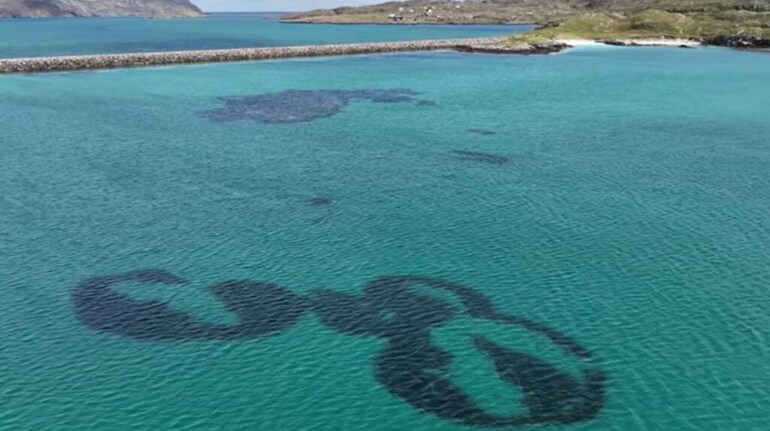

It began with drone footage showing calm waters and clear sunlight Then something unexpected appeared. Scientists recently noticed strange circles beneath Scotland’s shallow coastal waters. The patterns appeared suddenly in aerial and underwater survey images.
They looked like rings carefully drawn across the seabed floor. Local communities shared photographs across social media platforms. Experts realised something unusual was happening beneath the waves.
What Exactly Are These Circles?
The mysterious rings are linked to fragile underwater seagrass meadows. Seagrass grows slowly in calm, shallow coastal environments worldwide. It forms dense green carpets beneath clear, sunlit waters. These carpets suddenly showed circular gaps and strange formations. No artificial tools or human activity caused these patterns.
Scotland’s Lost Underwater Forests
Scotland once had vast seagrass beds along its coastline. A deadly wasting disease struck during the twentieth century. Pollution and coastal development worsened the decline. Large areas never fully recovered after the collapse. Scientists feared some habitats were lost forever.
Why Seagrass Is Scientifically Important?
Seagrass supports thousands of marine species across coastal ecosystems. Fish, crabs, shellfish and seahorses depend on it. It traps carbon and helps fight climate change naturally. Its roots hold sediment, reducing coastal erosion risks. Healthy seagrass means healthier oceans and fisheries.
Are These Circles Signs of Recovery or Warning?
Some researchers believe the rings signal slow ecosystem recovery. New seagrass shoots may be spreading outward in circles. Older plants might die at the centre first.
This creates hollow rings over time underwater. The circles might show stress from temperature changes. Rising sea temperatures affect plant growth and survival. Nature sometimes rebuilds itself in surprising geometric patterns.
What Might Be Creating These Rings?
Some experts suggest grazing animals may shape patterns. Sea urchins and fish sometimes eat central patches first. Others blame slow-moving underwater currents. These currents redistribute sand and nutrients unevenly.
Microbial activity could also influence plant survival. Scotland’s seas still hold many secrets and science is only beginning to decode them.
Discover the latest Business News, Sensex, and Nifty updates. Obtain Personal Finance insights, tax queries, and expert opinions on Moneycontrol or download the Moneycontrol App to stay updated!
Find the best of Al News in one place, specially curated for you every weekend.
Stay on top of the latest tech trends and biggest startup news.