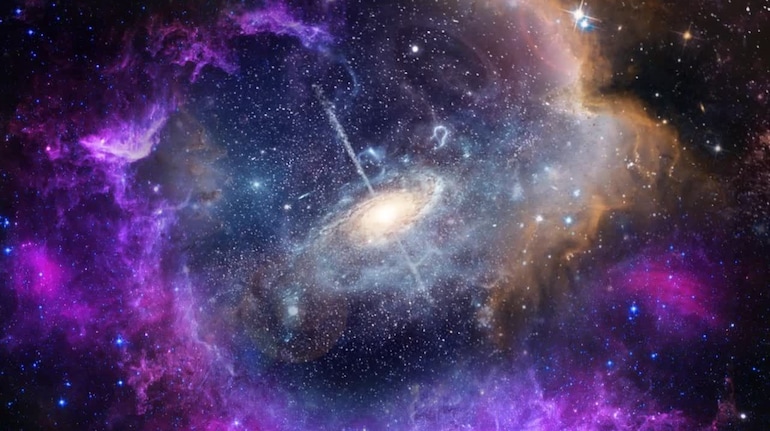
The universe’s expansion continues to puzzle scientists with new discoveries. Recent observations by NASA's James Webb Space Telescope (JWST) have supported findings from the Hubble Space Telescope, deepening the mystery of the cosmos' accelerating expansion rate.
Hubble Tension: A Cosmic DiscrepancyJWST’s largest survey examined the universe's expansion, focusing on "Hubble tension." This term refers to conflicting measurements of the Hubble constant, the rate of cosmic expansion. Hubble’s data shows a faster expansion than theoretical models predict, sparking scientific debates.
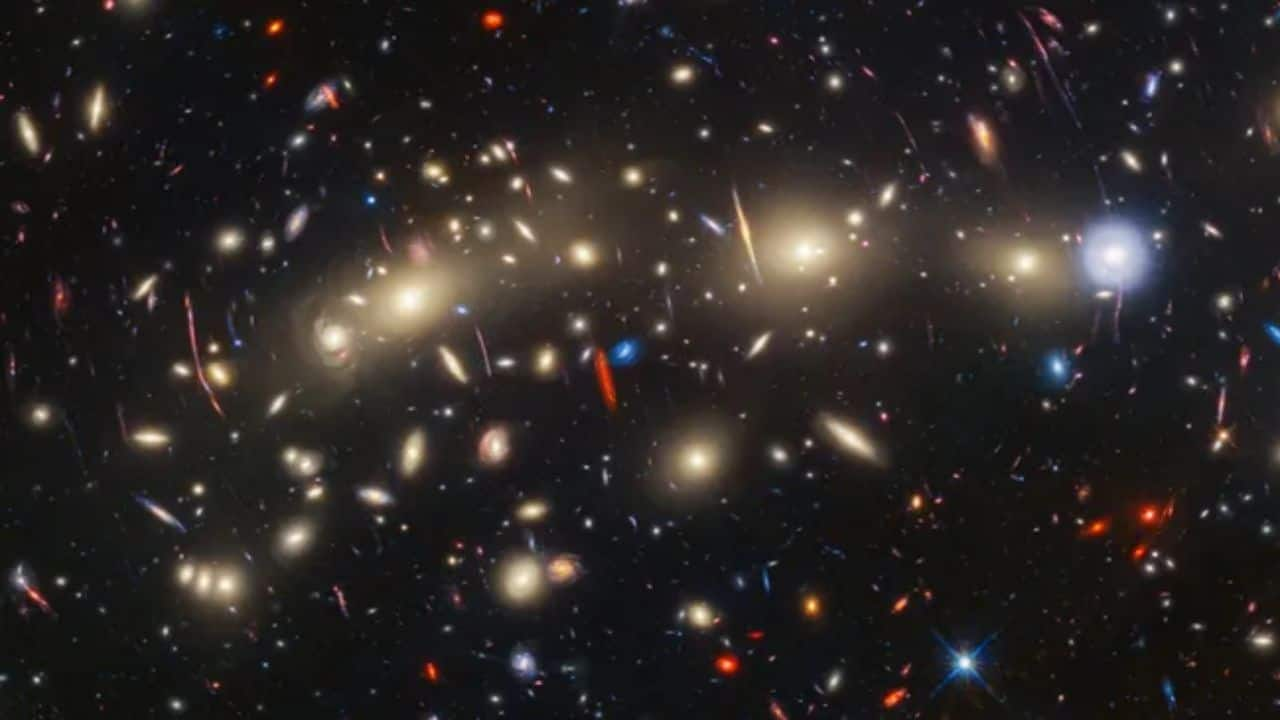 A glimpse into deep space and distant galaxies captured by the JWST (Image credit: NASA/ESA)
Two methods calculate the Hubble constant differently, creating this conflict. Observations of "standard candles," like supernovas, measure distances to galaxies, giving one result. Alternatively, models of the early universe predict a slower expansion rate. Both approaches yield incompatible values, highlighting gaps in our understanding.
Read Also: NASA reveals the closest look at a monster black hole; see image here
JWST Strengthens Hubble's CaseUsing data from JWST, researchers confirmed Hubble's measurements. The team analysed Cepheid variable stars, carbon-rich stars, and red giants to estimate galactic distances. They focused on Messier 106, a galaxy located 23 million light-years away, to cross-check results. These findings confirm that Hubble's observations are not flawed but emphasise the unresolved tension.
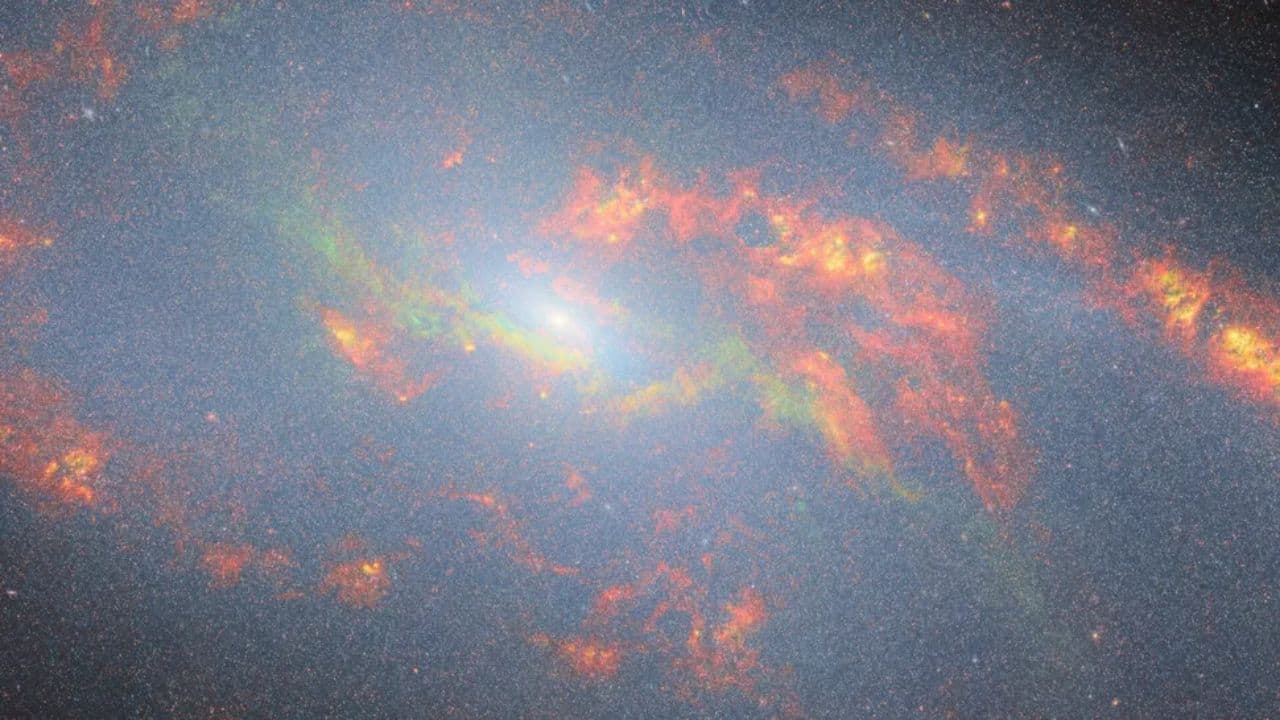 Galaxy M106, observed by the JWST, was used to verify Hubble's measurements.(NASA/ESA)
Adam Reiss, Nobel laureate and lead researcher, acknowledged the challenge. "With both telescopes agreeing, we must take this problem seriously. It’s a chance to refine our understanding of the universe," he said.
Potential Explanations for the TensionSolving the Hubble tension may require new cosmic models. Theories suggest early dark energy, exotic particles, or changes in fundamental constants could explain the discrepancy. Cosmologist Marc Kamionkowski proposed, "A missing element, like primordial magnetic fields or unusual dark matter, might be key."
The study, published in The Astrophysical Journal, offers fresh perspectives but leaves critical questions unanswered. What fuels the faster expansion? Could dark energy hold the answer? As JWST continues its work, researchers hope to unravel the secrets of the cosmos.
Discover the latest Business News, Sensex, and Nifty updates. Obtain Personal Finance insights, tax queries, and expert opinions on Moneycontrol or download the Moneycontrol App to stay updated!
Find the best of Al News in one place, specially curated for you every weekend.
Stay on top of the latest tech trends and biggest startup news.