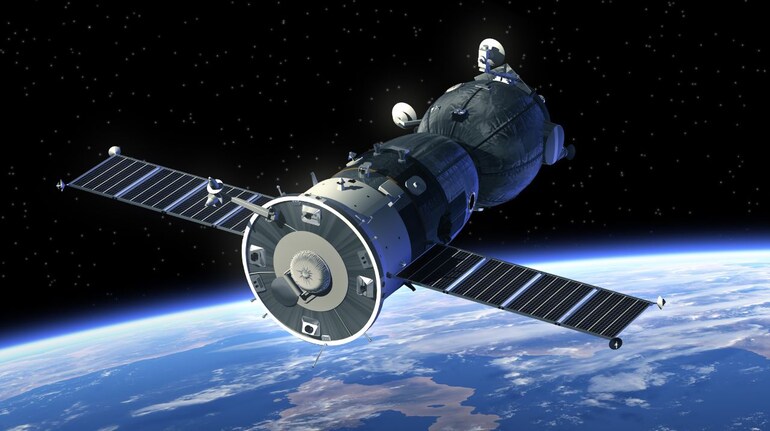
The rapid surge in satellites and growing debris in low Earth orbit (LEO) is pushing humanity toward a potential space catastrophe. Without international cooperation to manage orbital congestion, this vital region for communication, navigation, and scientific discovery could become unusable, warn experts.
In October, a United Nations panel stressed the urgency of creating a global framework to track and manage orbital objects. The panel proposed a shared database to monitor over 14,000 satellites, including 3,500 inactive ones, and approximately 120 million pieces of debris, ranging from large fragments to tiny, untraceable shards.
A Growing Threat to Space Safety
"Time is running out for space traffic coordination," said Aarti Holla-Maini, co-chair of the U.N. panel and director of the U.N. Office for Outer Space Affairs. She emphasized the need for open information sharing between public and private entities to avoid costly and dangerous collisions.
Despite the urgency, geopolitical tensions and commercial secrecy hinder efforts to create a centralized system. Many countries fear sharing data could compromise national security, especially with dual-use satellites serving both civilian and military purposes. Similarly, private enterprises are reluctant to reveal proprietary details that could give competitors an edge.
Collision Risks Multiply
Incidents like the August explosion of a Chinese rocket stage and the June disintegration of a Russian satellite are adding thousands of debris fragments to LEO. Such events pose increasing risks to active satellites and astronauts, forcing collision-avoidance maneuvers and emergency measures aboard the International Space Station (ISS).
LEO, a critical zone for the booming commercial space sector, has seen a 17% rise in close approaches per satellite over the past year, according to Slingshot Aerospace. SpaceX’s Starlink alone performed nearly 50,000 collision-avoidance maneuvers in the first half of 2024, doubling its previous record.
Economic and Environmental Costs
Projections estimate that collisions could result in financial damages of $556 million over five years if left unmanaged. Beyond economics, defunct satellites and debris threaten the delicate balance of LEO’s ecosystem. Most retired satellites remain in orbit for years before burning up in Earth’s atmosphere or being moved to graveyard orbits.
A Call for Action
Global cooperation remains the only viable solution, experts say. The U.N.’s October panel aims to unite public and private stakeholders to craft enforceable rules for space traffic, akin to air traffic regulations by the International Civil Aviation Organization. Enhanced tools like radars, telescopes, and shared databases will be crucial in tracking objects and improving collision prevention.
However, challenges like mistrust between nations and the slow pace of consensus-building threaten progress. “Speed is our biggest enemy, but there’s no alternative,” said Holla-Maini. “We must act now to preserve the future of low Earth orbit.”
As satellite launches escalate, the stakes are higher than ever. Without immediate action, Earth's orbit could become a hazardous junkyard, jeopardizing not only our technological advancements but also humanity’s dreams of exploring the final frontier.
(With inputs from Reuters)
Discover the latest Business News, Sensex, and Nifty updates. Obtain Personal Finance insights, tax queries, and expert opinions on Moneycontrol or download the Moneycontrol App to stay updated!
Find the best of Al News in one place, specially curated for you every weekend.
Stay on top of the latest tech trends and biggest startup news.