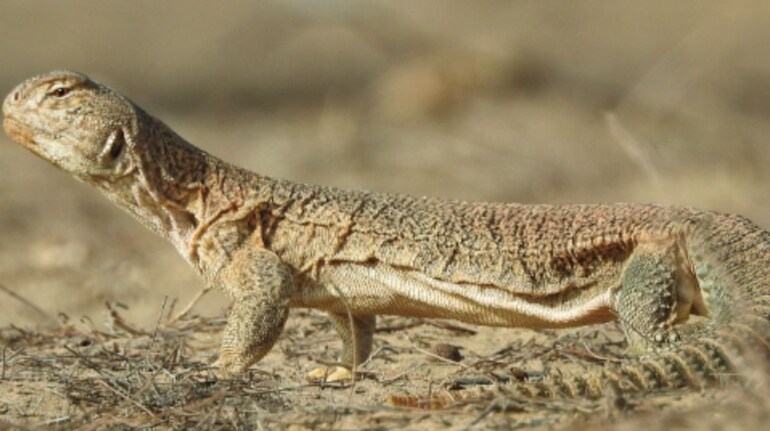

Researchers in India have found that desert lizards carefully adjust their diets to survive extreme seasonal conditions, according to a recent study examining nutritional behaviour in harsh environments. The research focuses on how spiny-tailed lizards living in resource-poor deserts balance energy needs for survival and reproduction despite limited food availability.
Animals in the wild must closely match nutrition with biological demands to remain fit and productive. Carbohydrates provide energy for movement and survival, while proteins support growth and reproduction. When animals cannot access appropriate nutrients, their overall fitness often declines. Previous laboratory studies have shown that animals can regulate nutrient intake when food choices are abundant, but little evidence exists from extreme natural habitats.
Tracking nutrition in desert environments
To address this gap, researchers from the Indian Institute of Science and collaborating institutions studied spiny-tailed lizards inhabiting arid desert regions. These environments experience severe temperature changes and scarce food resources throughout the year. The team combined long-term field observations with measurements of carbon and nitrogen composition to understand dietary intake and nutrient retention patterns.
By analysing the elemental content of consumed food and comparing it with faecal matter, scientists assessed how nutrients were processed across different seasons. This approach allowed researchers to determine not only what the lizards consumed, but also which nutrients their bodies retained during key biological periods.
Seasonal diet changes reveal survival strategies
The study found that lizards consumed and retained higher amounts of carbon before entering hibernation periods. This carbon storage helped them survive extended winters when food was unavailable. During the breeding season, however, nitrogen intake increased significantly, reflecting the higher protein demands required for reproduction and growth.
Although typically herbivorous, the lizards showed surprising dietary flexibility. Researchers observed that insects were added to their plant-based diet during breeding periods only. This temporary shift provided essential protein at a time when reproductive investment was highest.
Why this research matters
The findings demonstrate that desert animals can fine-tune both behaviour and physiology to meet changing nutritional needs. Even in environments with limited food options, species can adapt feeding strategies to align with biological priorities. Scientists say this challenges assumptions that extreme habitats restrict dietary flexibility entirely.
Researchers believe similar nutritional strategies may exist among other desert species worldwide. Understanding how animals adapt to nutritional stress could improve conservation planning as climate conditions become increasingly unpredictable. The study highlights how survival in extreme ecosystems depends on precise timing, dietary flexibility, and efficient nutrient use.
Discover the latest Business News, Sensex, and Nifty updates. Obtain Personal Finance insights, tax queries, and expert opinions on Moneycontrol or download the Moneycontrol App to stay updated!
Find the best of Al News in one place, specially curated for you every weekend.
Stay on top of the latest tech trends and biggest startup news.