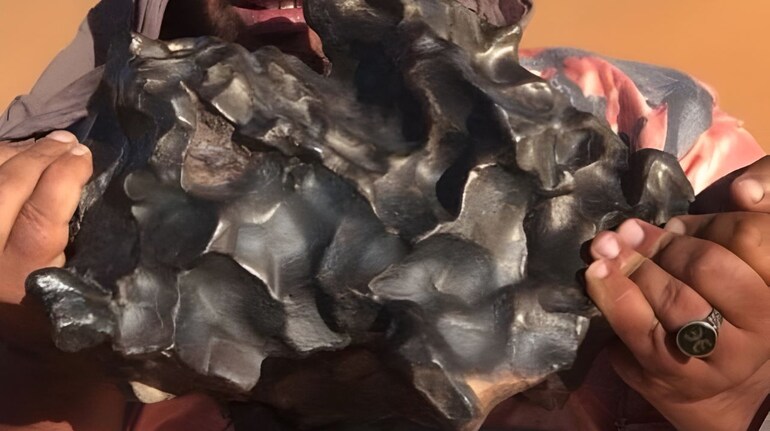

Ali Benamar, a well-known meteorite hunter, discovered something remarkable. During a recent Sahara expedition, he spotted a dark, metallic fragment. The meteorite is unusually large for the region, capturing attention globally. His experience and knowledge helped him locate it amidst vast sands. Such finds are extremely rare and scientifically valuable. Experts are eager to study the specimen in controlled laboratories. The Sahara continues to reveal secrets of the solar system.
Who Found It?
Ali Benamar is a well-known meteorite hunter in North Africa. He has spent years searching deserts for fragments from space. His experience allows him to recognise rare specimens quickly. During a recent expedition, he noticed an unusual metallic rock. Its dark surface and heavy weight caught his attention immediately.
Where Was It Found?
The meteorite was discovered deep inside the Sahara Desert. This region stretches across several North African countries. Its dry climate preserves space rocks for thousands of years. Open sandy landscapes make dark meteorites easier to locate. Wind erosion sometimes exposes buried fragments naturally.
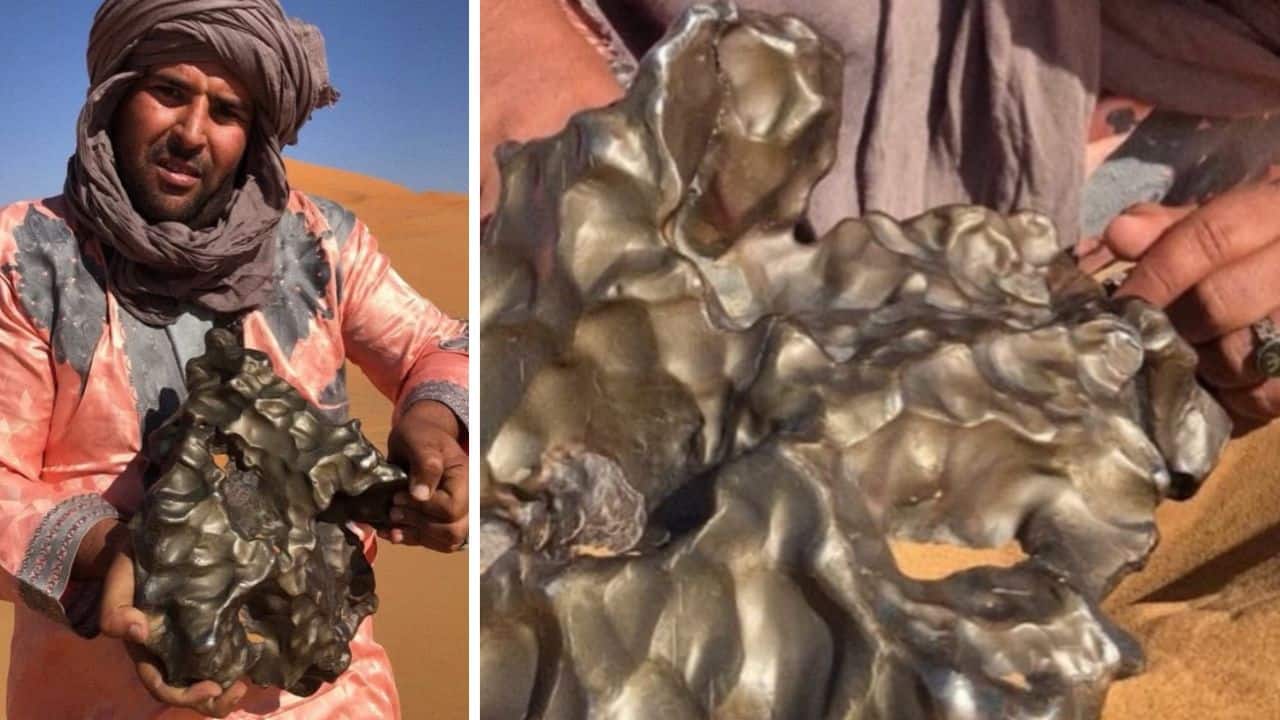 Ali Benamar, a well-known meteorite hunter, discovered Iron meteorites in Sahara Desert. (Image: Instagram/@africa)
At this stage, the meteorite has not been classified officially. Its exact weight, composition and origin remain under laboratory analysis. Independent verification can take years due to transport and research constraints. Scientists are particularly interested in isotopes to determine its formation history.
How Rare Is It?
Iron meteorites are among the rarest space rocks found. Less than five percent of known meteorites are iron-based. Large iron specimens are even more uncommon worldwide. Most meteorites that reach Earth are stony fragments. Finding a well-preserved iron meteorite is extremely valuable.
Formation of Iron Meteorites
Iron meteorites formed inside early asteroids billions of years ago. These asteroids once had molten metallic cores. Over time, heavier metals sank toward their centres. Violent collisions shattered these bodies into fragments. Some pieces travelled through space for millions of years. Eventually, a few entered Earth’s atmosphere. This meteorite represents a surviving piece of an ancient core.
Man holding up an iron meteorite found in the desert.📸: Ali Benamar pic.twitter.com/h4nd8uj2Ry — Nature is Amazing ☘️ (@AMAZlNGNATURE) January 22, 2026
How Do Scientists Study It?
Researchers first clean and photograph the meteorite carefully. Small samples are removed for laboratory testing. Chemical analysis reveals its elemental composition. Isotopic studies help determine its age and origin. X-ray imaging shows internal crystal structures. Radiometric dating estimates when it solidified. All results are reviewed before official classification.
What This Discovery Could Reveal About the Early Solar System?
The meteorite could shed light on asteroid formation and collisions. It may reveal insights into how planetary cores differentiate and cool. Comparisons with other iron meteorites might clarify early solar system dynamics. Findings could refine models of planetary formation processes globally. Such discoveries connect past cosmic events with modern scientific understanding.
Discover the latest Business News, Sensex, and Nifty updates. Obtain Personal Finance insights, tax queries, and expert opinions on Moneycontrol or download the Moneycontrol App to stay updated!
Find the best of Al News in one place, specially curated for you every weekend.
Stay on top of the latest tech trends and biggest startup news.