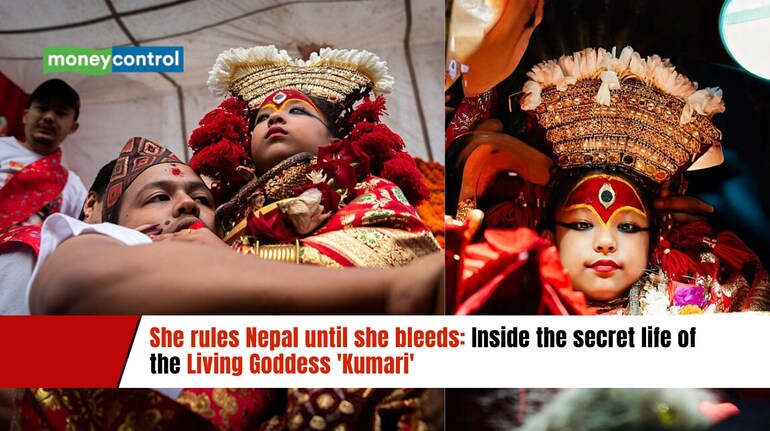

Nepal: In the historic heart of Kathmandu, a young girl sits on a golden throne, revered as a deity by both Hindus and Buddhists. She is the Kumari (Nepal’s "Living Goddess"), a divine child who holds the highest spiritual status in the land, but only until her first drop of blood falls.
The Manifestation of Taleju
The Kumari Devi is believed to be the bodily incarnation of the goddess Taleju (a manifestation of Durga). The tradition, which is particularly strong among the Newar community of the Kathmandu Valley, centers on the worship of a prepubescent girl as the source of supreme power and protection.
While there are several Kumaris throughout Nepal, the Royal Kumari of Kathmandu, who resides in the Kumari Ghar (Kumari House), is the most prominent. Her influence is so profound that traditionally, the Kings of Nepal and now the Presidents would bow before her to seek her blessing and receive tika during the festival of Indra Jatra.
The 32 Perfections: A Rigorous Selection
Becoming a Living Goddess is not a matter of lineage alone; it is a rigorous test of physical and spiritual perfection. The selection process is conducted by senior priests who search for a young girl from the Shakya caste of Newar Buddhists.
To be chosen, the child must possess the "32 Lakshanas" or physical perfections. According to traditional texts, her list of attributes includes:
Beyond physical beauty, the candidate must be fearless. In a final test to ensure she possesses the serenity of the goddess Taleju, the young girl must reportedly remain calm while observing terrifying sights. Only the child who shows no fear is deemed the true vessel of the goddess.
Once the selection is confirmed, the girl leaves her family to live in the Kumari Ghar, a palace located in Kathmandu Durbar Square. From this moment, her life changes drastically. Her feet are considered sacred and must never touch the ground.
She is carried in golden palanquins, chariots or in the arms of her caretakers. Inside the palace, she is dressed in red, her hair is pulled back in a topknot and the "Agni Chakshu" (Fire Eye) is painted on her forehead as a symbol of her perceptive powers. She leaves the palace only for specific festivals, where thousands gather to catch a glimpse of her.
The divinity of the Kumari is powerful, but it is not permanent. The spirit of the goddess Taleju is believed to reside in the girl only as long as she remains physically pure. The moment she loses blood - usually through menarche (her first menstruation) or even from a minor cut or loss of teeth, the goddess leaves her body.
Overnight, the "Living Goddess" becomes a mortal child again. She is replaced by a new successor and returns to her parents to navigate a society she has been isolated from.
A persistent superstition once claimed that men who marry ex-Kumaris are destined to die young by coughing up blood. However, this belief has largely faded in modern times, with many former Kumaris marrying and leading normal family lives after their tenure on the throne ends.

Discover the latest Business News, Sensex, and Nifty updates. Obtain Personal Finance insights, tax queries, and expert opinions on Moneycontrol or download the Moneycontrol App to stay updated!
Find the best of Al News in one place, specially curated for you every weekend.
Stay on top of the latest tech trends and biggest startup news.