
Mitch Greenblatt has spent the last 20-odd years among design-led vintage watches. Some of these are one-offs, others a result of the quartz crisis of the 1970s that nearly destroyed the Swiss watch industry. But nearly all of them are wonderful, whimsical creations. The Girard-Perregaux Casquette watch is one of them. The casket-shaped watch from the 1970s had an in-house quartz movement and displayed time on an LED array at one end. The Spaceman range of watches, introduced by Catena in the early 1970s in the wake of the Apollo 11 moon landing, is another.
Greenblatt’s search for unusual watches began in the late 1990s, and it wouldn’t be inaccurate to say that the trajectory of his life since then has been influenced by his passion for retro-cool timepieces. He dealt in vintage watches on eBay in the early dawn of the internet age; set up a website (Watchismo, now watches.com) that focuses on boutique brands; and in 2013, launched Xeric, his own design-forward watch brand.
A couple of months ago, Greenblatt, along with writer Josh Simms, brought out Retro Watches: The Modern Collector’s Guide. Published by Thames & Hudson, the book features stories of over 100 wacky creations from both established brands as well as little-known but influential watchmakers from 1960s to the 1980s. Moneycontrol spoke to the San Francisco-based Greenblatt about some of the more intriguing watches in the book recently. Edited excerpts:
What makes a watch interesting to you? And, has that changed ever since you bought your first vintage watch in the late 1990s?
The watches I am attracted to often challenge traditional watch design. In other words, watches from designers and brands with something new to say, new technologies to experiment with, and best of all, time capsules for the times they were created.
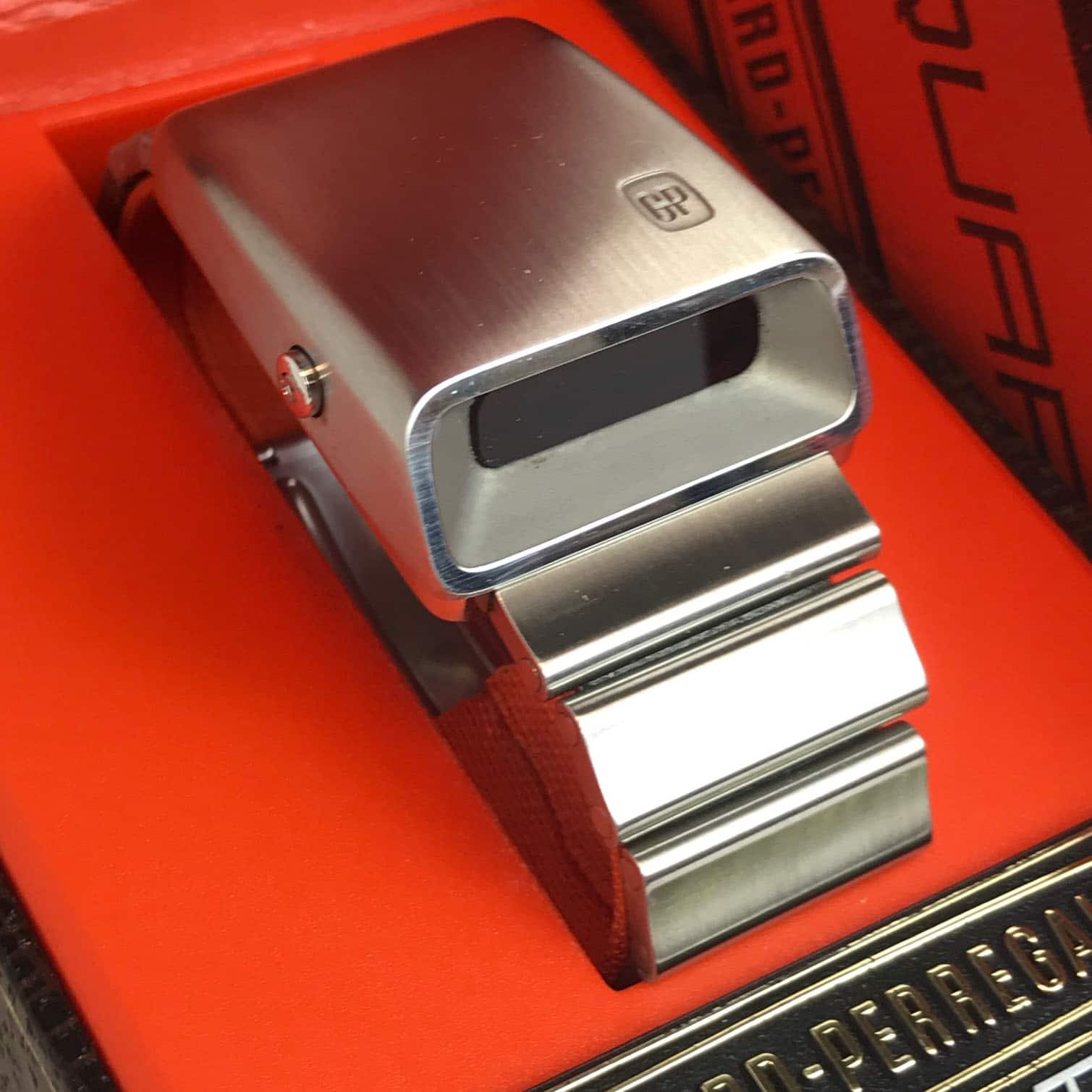 The casket-shaped Girard Perregaux from the 1970s had an in-house quartz movement and displayed time on an LED array at one end.
Which was your first vintage watch and where did you find it?
My first vintage watch is also one I never owned. To explain that better, I was travelling in London and took some time to visit the Portobello Market, a vintage and antique mecca. Since I was on the way to the airport, I was short of money to purchase an extremely groovy unknown watch that I didn't realise how much I wanted until I was on the plane. This was more about a catalyst that struck me deeply and triggered a new hunt to replace that big regret of mine. I lived in NYC at the time and subsequently visited all the flea markets in town and ultimately started buying and selling in the very early days of eBay.
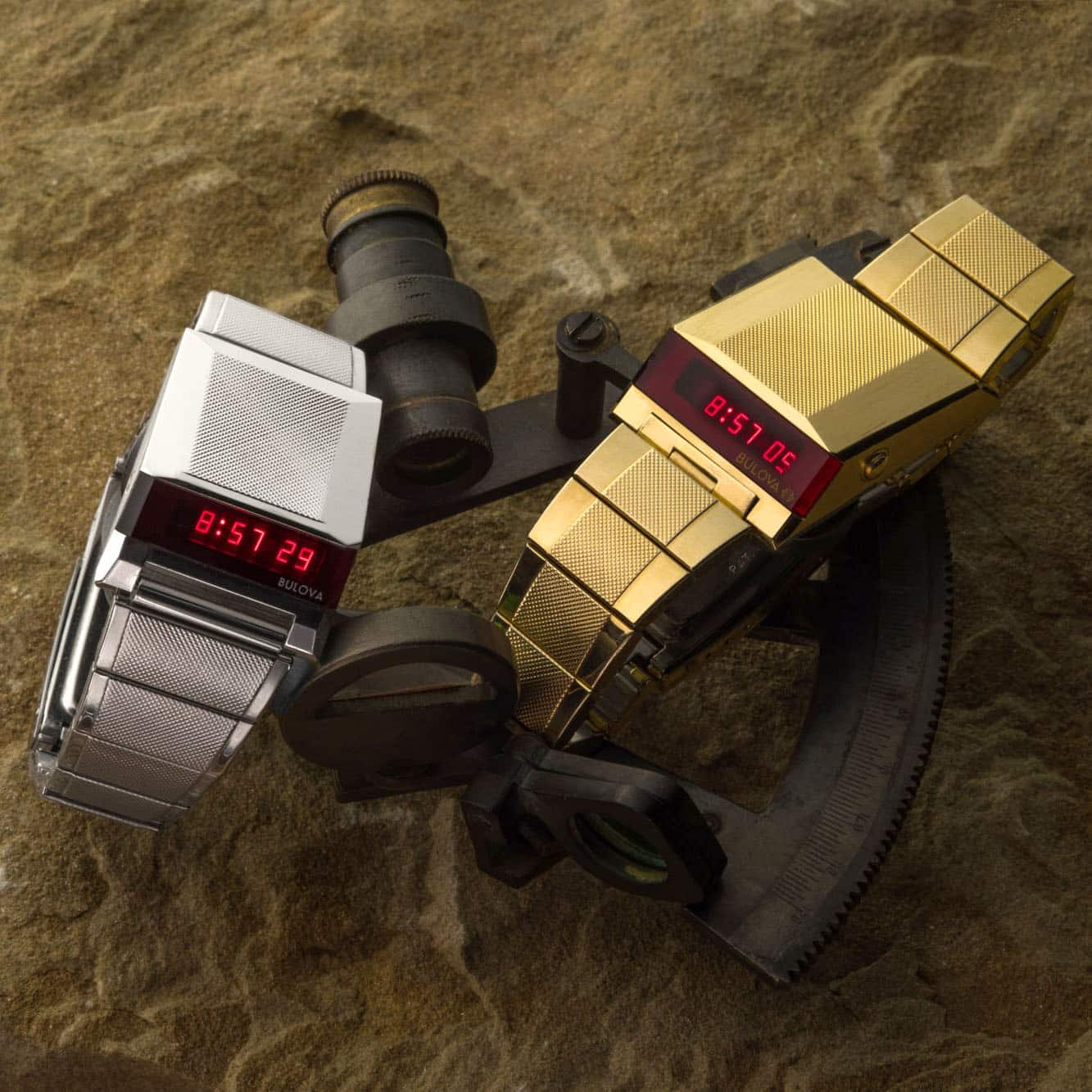 The Bulova Computron was launched in 1976,
Which among the extant—and conservative—watchmakers have shed their design inhibitions more often than others? Is Bulova one of them?
Bulova is finally catching on to the wealth of their vintage catalogue. I always felt they should reintroduce models like the Computron, Accutron, and other classic vintage watches like the Stars & Stripes. Now that they have, I hope to see much much more— though I've yet to see any design or technology innovation from most conservative brands like that.
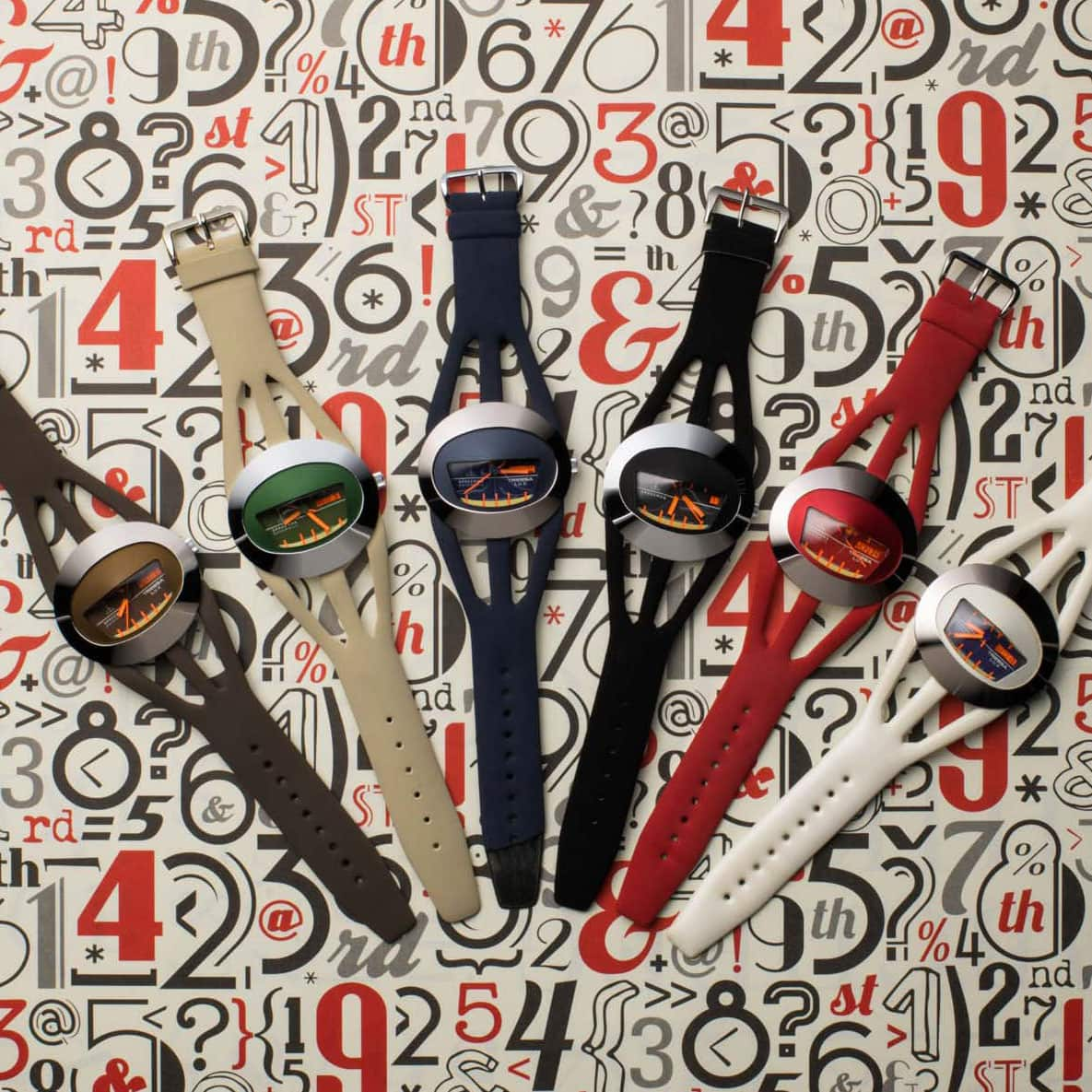 The Catena Spaceman was inspired by the space-age fashions of the late 1960s.
The intensely futuristic zeitgeist in the 1960s and 70s saw cars sprout fins. What happened at the time to watches?
Well, funny you say that because the designer of the Hamilton Electrics from the fifties and sixties was Richard Arbib who also designed cars and some give him credit for the car 'fin'. Many of the Hamilton Electrics he designed look like the cars of the same time, fins and all.
Which decade was the most whimsical one?
Everything interesting in my realm was designed between 1960 and 1975. The combination of technological advances like electronic, electro-mechanical, quartz, and digital (LED and LCD) fused perfectly with the so-called zeitgeist of that really experimental decade and a half.
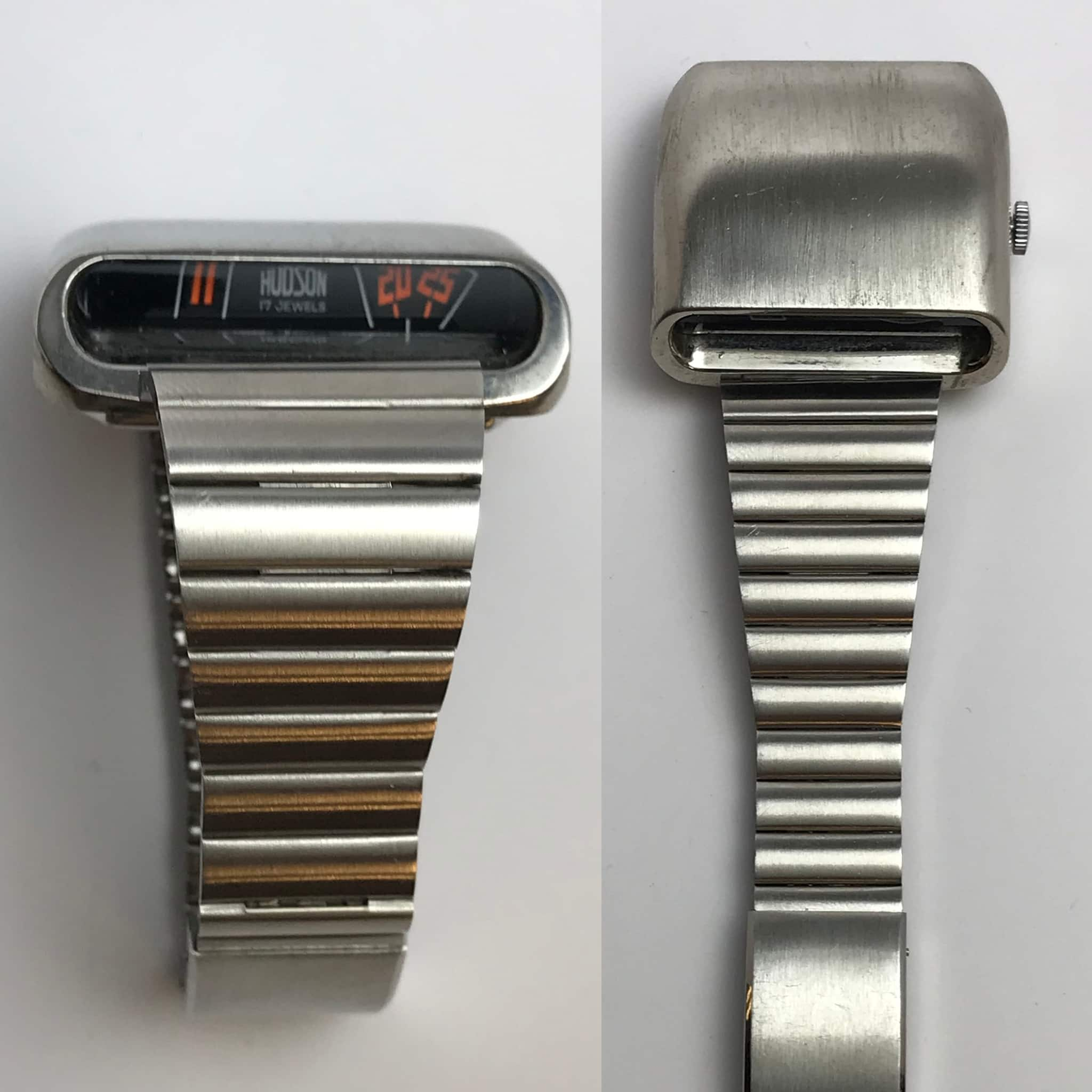 Amida Digitrend used a prism to reflect the time printed in reverse on mechanical discs.
What's the most intriguing feature you've ever encountered in a watch?
Well, that would be the Amida Digitrend that used a prism to reflect the time printed in reverse on mechanical discs. This watch perfectly captured the space-age aesthetics but used traditional mechanical function to express something digital. This opens the door to my deep fascination with mechanical-digital watches that Swiss brands were producing as a reaction to the quartz crisis of the 1970s. As a result, most of those offbeat Swiss brands didn't survive.
Which are the people who are drawn to the retro watches featured in the book? As the man behind Xeric, have you deduced a pattern yet?
It’s always mostly men but since I cover watches for both men and women that is definitely changing.
(Murali K Menon works on content strategy at HaymarketSAC.)Discover the latest Business News, Sensex, and Nifty updates. Obtain Personal Finance insights, tax queries, and expert opinions on Moneycontrol or download the Moneycontrol App to stay updated!
Find the best of Al News in one place, specially curated for you every weekend.
Stay on top of the latest tech trends and biggest startup news.