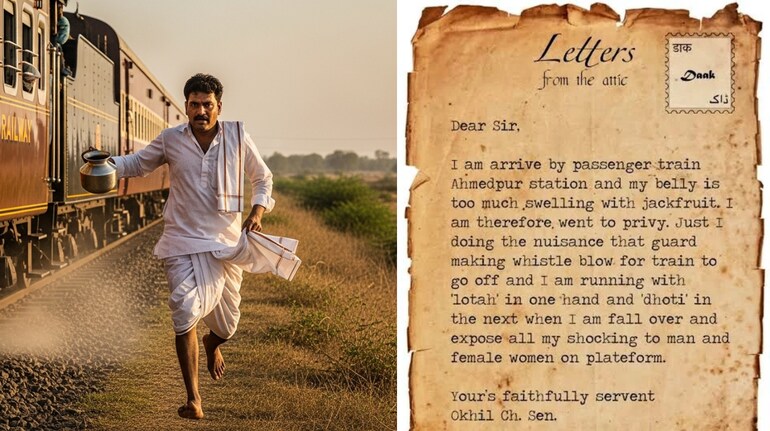
More than a century ago, long before India had bullet trains, Wi-Fi, or high-speed rail networks, a single passenger with an urgent “nature’s call” ended up changing railway history forever.
On 2 July 1909, a man named Okhil Chandra Sen wrote a letter to the Sahibganj Divisional Railway Office in West Bengal. What began as a personal complaint soon became one of the most consequential, and unintentionally hilarious, pieces of correspondence in Indian Railways’ history.
A swollen belly, a missed train… and a national problemOkhil, travelling by a passenger train, stepped off at Ahmedpur railway station to relieve himself. It was a time when Indian trains did not have toilets, even though the first passenger train had started running in 1853. For 55 long years, passengers were expected to manage on platforms or in open fields during halts.
But on that fateful day, while Okhil was squatting behind the station building, guard’s whistle blew. The train began pulling out of the station without him.
Panicking, he sprinted after it, “lota in one hand and dhoti in the other”, only to slip, fall, and be left behind on the platform, humiliated in front of onlookers.
A letter that changed everythingWhat happened next is legendary. Okhil wrote a complaint in broken yet brutally honest English, expressing fury not only at missing the train but also at the embarrassment he faced. The letter went:
Dear Sir,I am arrive by passenger train Ahmedpur station and my belly is too much swelling with jackfruit. I am therefore, went to privy. Just I doing the nuisance that guard making whistle blow for train to go off and I am running with ‘lotah’ in one hand and ‘dhoti’ in the next when I am fall over and expose all my shocking to man and female women on plateform.Your’s faithfully servent Okhil Ch. Sen.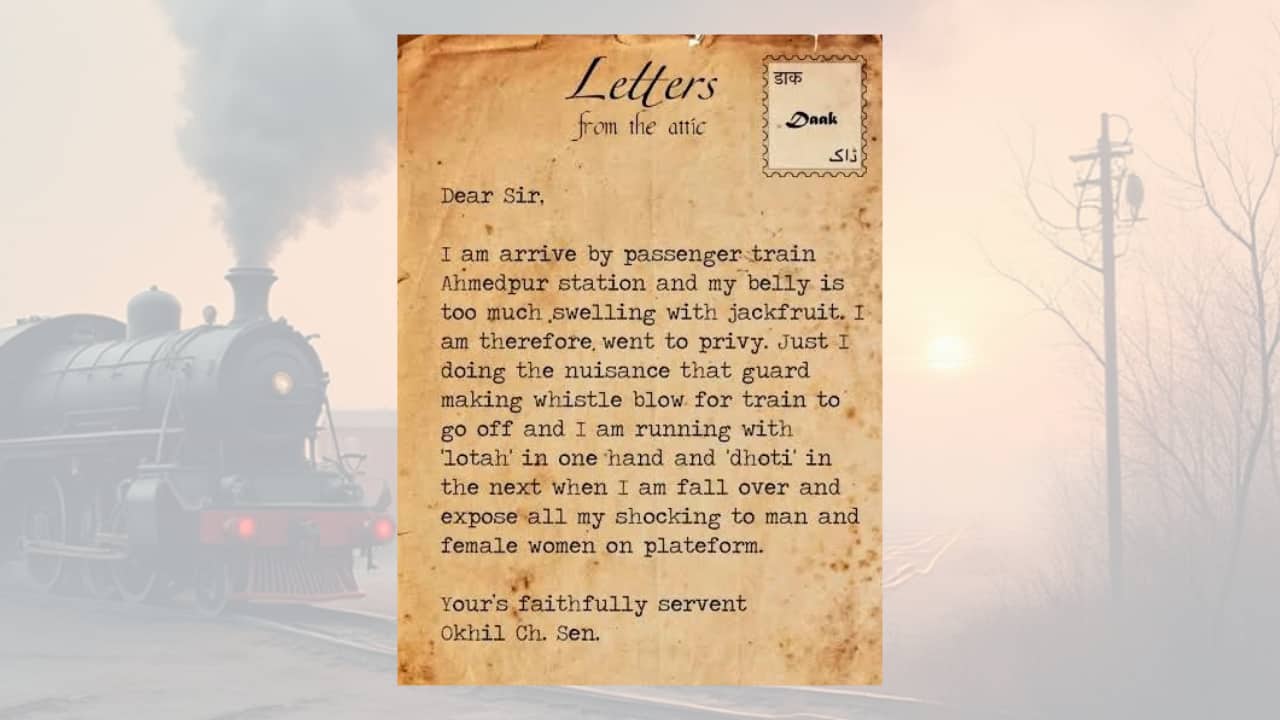
But behind the humour was a harsh reality: lakhs of Indians suffered because trains had no toilets.
The letter triggered an internal inquiry. And for the first time, railway authorities officially acknowledged that the lack of toilets in lower-class carriages was a serious problem.
The result?
Railways introduced toilets in all lower-class coaches that travelled more than 50 miles (about 80 km). It was one of the most important upgrades in railway infrastructure, sparked by one man’s extremely public misfortune.
Today, the letter is preserved as a piece of railway history at the National Rail Museum in New Delhi, where thousands read it every year, half laughing, half astonished that such a minor personal tragedy transformed public transport.

Discover the latest Business News, Sensex, and Nifty updates. Obtain Personal Finance insights, tax queries, and expert opinions on Moneycontrol or download the Moneycontrol App to stay updated!
Find the best of Al News in one place, specially curated for you every weekend.
Stay on top of the latest tech trends and biggest startup news.