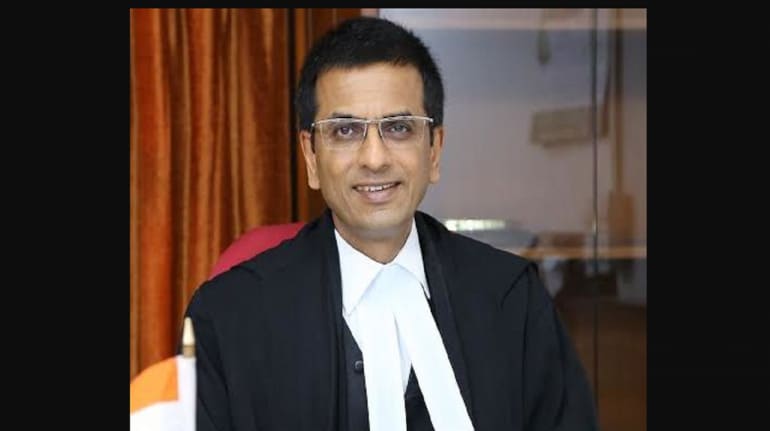
Chief Justice of India DY Chandrachud on March 22 remarked that selective quoting of speeches and judgements by journalists has become a matter of concern as it misrepresents the meaning of what the judges said in the eyes of the public.
The CJI noted that legal journalism is on the rise in recent years. Raising concern about instances of media trials, he observed that there have been instances where the media has rendered an accused guilty in the public’s eyes even before the courts can come to a judgment. He urged the media to convey information to the public without violating the rights of innocent people. Urging journalists to report responsibly, he said, “Responsible journalism is the beacon of truth and it drives the democracy forward. as we navigate challenges of the digital age.”
Fake news:The CJI called for the creation of a comprehensive mechanism to fact-check and disseminate fake news. He said, “Fake news can guide or misguide many people at once and can disturb democracy.” He noted that fake news can create tensions between communities.
Media and democracy“Vibrancy of democracy is compromised when the press is prevented from speaking truth to power. The press must remain free if the country is to remain a democracy. Newspapers have historically acted as catalysts for social and political change, ” Justice Chandrachud said.
The CJI while saying that he disagrees with some journalists, noted that disagreement must not distort into hatred and hatred must not be permitted to become violence. “No society can afford to accept hatred as the new normal,” he observed.
Justice Chandrachud also noted that social media plays a key role in modern journalism and called it a game changer. Praising the advent of digital media, the CJI said, “Online platforms have led to the democratisation of media.”
On Emergency and Ramnath Goenka:CJI Chandrachud was delivering a lecture at the Ramnath Goenka Excellence in Journalism awards presentation ceremony, organised by the Indian Express. Praising Ramnath Goenka’s role in standing up against the government during the emergency, the CJI recollected how the government of the day tried to corner the Indian Express in every possible way.
Noting that the declaration of national emergency in 1975 was a defining moment in India’s history, he said, “One of the defining moments during the period was IE’s blank editorial, it reminded us that we can be as powerful in silence as we can be in speech.”
The CJI said the emergency was a fearful time and remarked that “fearful times give rise to fearless journalists”.
Media’s reportage of COVID-19:The CJI highlighted the role that media played in reporting administrative excesses during the pandemic, which led to the High Courts and the SC taking suo motto cognisance of certain issues. Noting that local journalism plays an important role in shining a bright light on local issues, which is at times not covered by national media, he said, “Community journalism has opened avenues for the people to be their own voices.”
Lawyers and Journalists:The CJI noted that lawyers and journalists have a lot in common, as both professions believe that the pen is mightier than the sword but also bear the professional hazard of not being liked by people.
Discover the latest Business News, Sensex, and Nifty updates. Obtain Personal Finance insights, tax queries, and expert opinions on Moneycontrol or download the Moneycontrol App to stay updated!
Find the best of Al News in one place, specially curated for you every weekend.
Stay on top of the latest tech trends and biggest startup news.