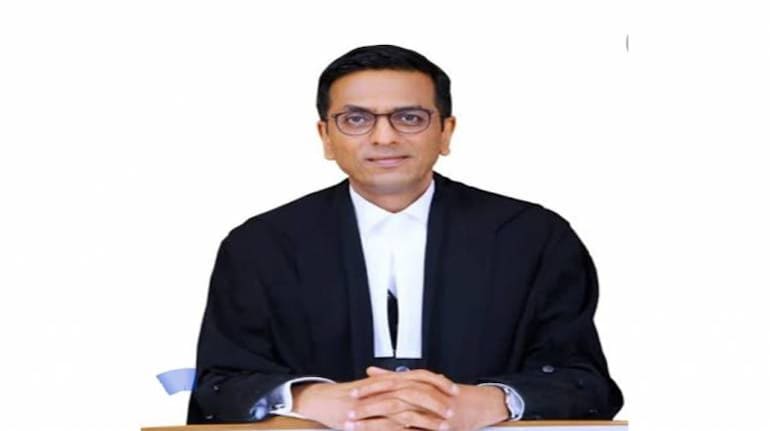
The Chief Justice of India DY Chandrachud on March 18 said that in his 23 years as a judge, he has never been told by the political arm of the government or the executive to decide a case in a particular way.
The CJI was answering a question on whether judges are put under pressure from the government when deciding cases. CJI referred to the recent judgment of the SC on the appointment of the Chief Election Commissioner and Election Commissioners and said, “If there was any pressure do you think such a judgment could have been passed?”
He further said, “State is the largest litigant in India today, we are holding against the state in such a large number of issues. We must trust our democracy and its institutions, it has developed very clear and defining lines.”
On putting out collegium resolutions citing intel reportsEarlier in the day, law minister Kiren Rijiju had spoken about the sanctity of intel reports being compromised when it is put out in the public domain.
As regards this, CJI said, “Law minister has a perception, I have a perception. We have to deal with such differences with a sense of robust constitutional statesmanship. We put it on the website in pursuance of the desire of the collegium to meet the criticism that we lack transparency and with the belief that it will bring confidence for the work we do.”
Elaborating further, CJI said that the intel information cited in the resolution on lawyer Saurabh Kripal’s appointment as a Delhi HC judge is already in the public domain and no source of the intel agency’s information was compromised. CJI said, “All that we said was, the sexual orientation of a candidate has nothing to do with the ability of a candidate to be appointed as a judge.”
Also Read: Government seeks R&AW reports for judges only in exceptional circumstances
On collegiumSpeaking on the process of appointment of judges, CJI said a detailed process is undertaken before a candidate’s name is recommended for judgeship. He said, “We look at merit and professional competence. The second is seniority. Third, need for a broader sense of inclusion & diversity, but that is not at the cost of sacrificing merit."
On the aspect of transparency in the collegium, CJI Chandrachud noted it has two facets - the process of appointment and choices made during the appointment. The process of appointment according to the CJI has to be completely transparent and the publication of collegium resolutions on the internet is to ensure that transparency is maintained. He said, “No system is perfect; this is the best that we have developed. The object of the collegium system is to maintain the independence of the judiciary.”
On social mediaCJI Chandrachud made it clear that he does not follow Twitter. He said, “It is important for us not to be affected by a cacophony of extreme views - on Twitter.”
He further noted that earlier there were court reporters from newspapers who picked out important cases in the court and wrote about them. However, now everything that happens in a case is live-tweeted and it puts pressure on judges. He said “What we have is a conversation with a lawyer. What is expressed during the course of a hearing, is not a reflection of what a judge is going to hold. A case is not decided until the judgment is written.”
Also Read: 'We live in an age where people are low on patience and tolerance', says CJI Chandrachud
On court holidaysOn being asked about the criticism that the judiciary faces on long court holidays. CJI cited statistics from court functioning in various countries to state that a judge in the Supreme Court of India works all seven days a week. He said that most of the court vacations are spent on writing judgments.
He said, “People see us sitting in court from 10:30 to 4. It’s a fraction of the work we do; we spend an equal amount of time in the evening reading for the next day. On Saturdays, judges dictate judgments that are to be delivered. On Sunday, we read for Monday. SC judges work seven days a week.”
On pendencyWhile agreeing that there is a huge backlog of cases in the courts across India, CJI said, “It reflects the faith of people in coming to court. It also shows that there is a dearth of adequate infrastructure, especially in the district judiciary. The judge-to-population ratio is not commensurate.”
CJI emphasised that the perception of the judiciary should move away from the colonial mindset and it has to give way to situations where people think justice is not just a sovereign function but an essential service.
Speaking of how the courts operated during the pandemic, the CJI said that the work Indian courts did during the pandemic is unprecedented in any part of the world. He said, “We need to look at tech beyond Covid.”
CJI clarified that the actual pendency in the Supreme Court is 42,000 cases while 26,000 cases are connected cases which will automatically be disposed of when a main case is decided.
On ‘Indianising’ judiciaryCJI noted that to Indianise the judiciary, it is important that the judiciary engages with the citizens in the language that they understand.
He said, “We are using AI and machine learning for translating judgments. We are now translating all the judgments of SC in every Indian language recognised by the constitution.”
The CJI was speaking at India Today Conclave in Delhi.
Discover the latest Business News, Sensex, and Nifty updates. Obtain Personal Finance insights, tax queries, and expert opinions on Moneycontrol or download the Moneycontrol App to stay updated!
Find the best of Al News in one place, specially curated for you every weekend.
Stay on top of the latest tech trends and biggest startup news.