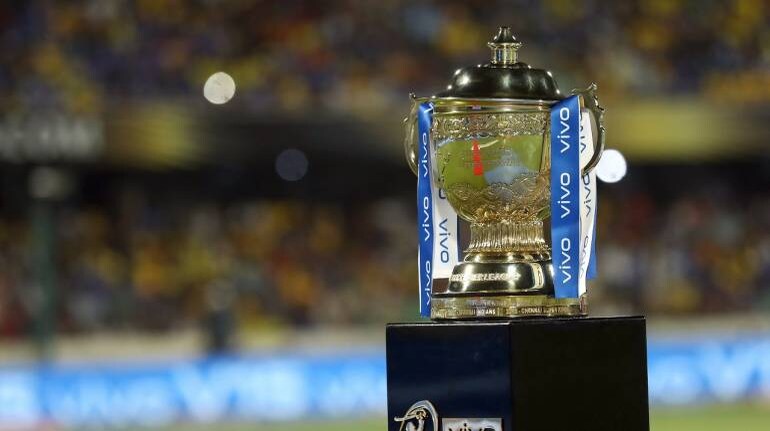
One of the world’s biggest sports leagues, the Indian Premier League (IPL) which now has two new franchises is expected to attract a strong premium for its media rights, the valuation of which will be driven by multiple factors.
From a larger focus on digital rights to sports being a key genre for TV, analysts point to different facets that will drive up the value of the media rights.
Premium pricing
Likhita Chepa, senior research analyst at CapitalVia Global Research, said the surge in demand that will drive the value of IPL's media rights.
“Sony had secured the rights to the tournament (IPL) for the first 10 years, paying roughly Rs 8,200 crore, or Rs 820 crore each tournament. In the next cycle, rival Star India acquired the rights for a five-year period for a fee of Rs 16,347 crore, nearly double that of the previous 10 years. Looking at the surge in demand, we may expect a premium of 30-40 percent for the upcoming media rights,” Chepa told Moneycontrol.
Analyst Karan Taurani, senior vice-president, Elara Capital, expects the next round of rights to be 50-60 percent higher and he is betting big on the digital segment.
Digital to drive value
“The SVOD (subscription video on-demand) and AVOD (advertising video on-demand) segments are growing at 30-40% CAGR (compound annual growth rate). Star is seeing good traction on the SVOD side. Star makes close to Rs 1,100 crore of ad revenue and Rs 700-800 crore of SVOD revenue. Out of the SVOD revenue, 80% is because of cricket and within that 60-70% is because of IPL. So, it is becoming a compelling property which is getting global players interested,” he said.
He added that currently IPL revenue is around Rs 2,500 crore from TV and another Rs 600-700 crore from digital. “The spilt is 20-25 percent and looking at the growth numbers the split can become around 40%. When the rights come into the picture they are going to factor in that 30-40%. So at least one-third of the rights have to be accounted for by digital.”
Grabbing eyeballs
Taurani also pointed out the strong viewership the league attracts. “IPL records an average of 4 billion views whereas other marquee properties like World Cup soccer, English Premier League, Wimbledon have 3.3 billion views, 2.2 billion views and 3.6 billion views, which is very low.”
According to Darshan M., founder of PLAY Sports, Media and Entertainment Pvt Ltd, a sports entertainment? firm, former CEO of IPL franchise Deccan Chargers and author of Zero to Hero: Life lessons from the journey of an IPL team, the league has got a very strong base. “If anyone wants to be a sports broadcaster, this is the crown jewel."
He said that with the audience the league attracts, advertisers will be ready to pay a premium for IPL’s ad inventory. “If you see return on investment, you could in a single IPL season build a brand in India. Without IPL, one will need a lot more money and a lot more time.”
Attracting advertisers
When it comes to advertising during IPL, a higher value for the league's media rights will mean higher ad rates for the league. Looking at IPL ad rates over the years, what started with around Rs 1 lakh for a 10-second slot on TV has now gone to as high as Rs 14 lakh.
“Scarcity premium is being created for cricket because people are moving away from other genres. That is why the (ad) pricing on other genres is flattish. TV is not doing too much of innovation in terms of content. So sports will be like a cash cow for the TV segment,” said Taurani.
New teams, many changes
The value of IPL’s media rights is set to soar also because of the addition of two new teams.
“You are going to see a 20% growth in media rights value because of more matches,” said Taurani. However, he added that more matches could get monotonous so the format of the game could be subject to change.
Darshan noted that IPL needs to be spread across a longer duration like global leagues that are a whole season and not 45 days. “This is the opportunity for BCCI (Board of Control for Cricket in India) to keep adding more days. I don't see it (more matches) as a deterrent.”
Even when it comes to more day matches, Taurani doesn't see any negative impact in terms of viewership. “Digital with catch-up TV and people watching at their convenience—that is the bigger delta here.”
IPL 2022 will have 74 matches—70 league and four playoffs. The season will follow the same format as in 2011 when IPL had 10 teams. This means that there will be around 25 day matches as against 12 day matches when IPL had eight teams.
Viewership woes
While day matches may not bring down viewership, the 14th edition of IPL did see a drop in audience numbers.
In the first half of IPL 2021, which opened with the match between Mumbai Indians (MI) and Royal Challengers Bangalore (RCB), broadcaster Star India clocked 323 million total impressions.
In comparison, the opening match last year between MI and Chennai Super Kings (CSK) recorded 11.2 billion viewing minutes. In 2019, the opening match between CSK and RCB had recorded 6.8 billion viewing minutes.
The average reach for matches 36-45 during IPL 14 was reportedly down to 72.4 million, against 82.4 million in the previous week and lower than 104.8 million in the first phase of season 14.
“IPL viewership has been a bit iffy. So future valuations need serious analysis,” said Sandeep Goyal, MD of ad agency Rediffusion.
Taurani also said that for IPL 14 the viewership has largely fallen because of the league split into two phases. “Phase I of IPL this year was flattish versus phase I last year. In the coming years the viewership numbers will at least match up to 2019 levels,” he said, adding that the negative impact of 2020 on TV will be a huge positive for digital.
Discover the latest Business News, Sensex, and Nifty updates. Obtain Personal Finance insights, tax queries, and expert opinions on Moneycontrol or download the Moneycontrol App to stay updated!
Find the best of Al News in one place, specially curated for you every weekend.
Stay on top of the latest tech trends and biggest startup news.