
In-Depth: How panic and politics marred AstraZeneca's COVID-19 vaccine rollout in Europe


In-Depth: How panic and politics marred AstraZeneca's COVID-19 vaccine rollout in Europe
As another wave of the coronavirus pandemic crashes over Europe, doubts about the safety of one of the most widely available and affordable vaccines has rattled immunisation programmes around the world even though most regulators have again given it a clean chit.
Experts also said that adverse effects such as blood clots detected after administration of the AstraZeneca shot, which triggered the alarm, are not linked to the vaccine, and are reported in a higher proportion of the general population compared with a set of people who took the jab.
Many European countries including Denmark, France, Germany, Spain, Italy, Norway and Iceland suspended AstraZeneca’s COVID-19 vaccine, which threatened to turn widespread disarray into an outright debacle.
However, many countries lifted the suspension on March 18 after the European medical regulator said the jab is safe and effective.
Yet, Norway and Sweden said they were not ready to resume the vaccine's usage. The Norwegian Institute of Public Health said it "took note" of the EMA's ruling, but it was "premature" to draw conclusions and it would announce its own opinion by the end of next week.
Concerns about the shot are based on a small number of recipients who developed blood clots or abnormal bleeding.
But health experts and drug regulators, including the European Medicines Agency (EMA), say there is no evidence to prove that the complications were linked to the vaccine. Researchers have also warned that the premature suspension and public mistrust will amplify vaccine resistance.
AstraZeneca has strongly defended its vaccine, saying review of more than 17 million people who had received its vaccine found that they were actually less likely than the general population to develop dangerous clots.

Explaining the rationale, Dr Shahid Jameel, a virologist and Director of Trivedi School of Biosciences at Ashoka University, said that according to the US Centers for Disease Control and Prevention (CDC), 1,000 to 2,000 people out of a population of one million develop a serious blood clot (called deep vein thrombosis or pulmonary embolism) every year.
“If we take CDC figures and adjust it for the population over a 10-day period. Why 10 days? Because a clot is likely to be associated with a vaccine if it develops within this period. The number comes to 27 to 55 for every one million people and so far, Europe has reported just 30 blood clots after vaccinating over five million people,” Dr Jameel told Moneycontrol.
The six reported cases of blood clots per million people is way lower than that observed in general population, he added.
Noting that European countries’ decision to pause the jab was premature, Dr Jameel said the move exposes the population to COVID-19 risk when cases are rising.
The continent’s top drug regulator, EMA, also pushed back hard against fears about the shot, saying there was no sign of its causing rare but dangerous problems, and that strong evidence of its lifesaving benefits “outweigh the risk of the side effects.”
Even the World Health Organization (WHO) was quick to react, hoping to prevent widespread panic. It repeatedly endorsed the vaccine saying there was no evidence suggesting that it was unsafe.
Echoing EMA, WHO said, "At this time, WHO considers that the benefits of the AstraZeneca vaccine outweigh its risks and recommends that vaccinations continue.”
 This December 21, 2020 file image shows the exterior of the European Medicines Agency in Amsterdam, the Netherlands. (Image: AP Photo/Peter Dejong)

The union government has said that there is "no signal of concern" regarding AstraZeneca vaccine, manufactured in India by the Serum Institute of India (SII) under the brand name 'Covishield'.
"India's committee that looks at adverse effects is seized of this issue. For the last few days, it is tracking the information that is available to us in a very systematic manner and again I assure you that we have no signal of concern in this regard. Therefore, clearly our vaccination programme with Covishield will go on with full vigour,” Dr VK Paul, NITI Aayog member (Health) said during a weekly conference.
“We are mindful of the fact to address this concern, based on the emerging situation. As of today, there is no concern at all with regard to Covishield," Paul added.
Dr Jameel also said there was no evidence that the blood clots were caused by the vaccine. “In India, the AEFI Monitoring Task Force has not found any evidence of blood clots in people who have died after vaccination. So, there should be no cause for worry based on these data,” he said.
Until March 18, India had administered over 3.89 crore doses of COVID-19 vaccines. As per reports, so far 71 people had died after receiving Covishield vaccine. However, prima facie, no deaths have been causally linked to vaccines after review by the national Adverse Events Following Immunisation (AEFI) committee.
Despite assurances, concerns have been raised about the lack of information regarding adverse events after vaccination.
 Medical staff inoculates a senior citizen with the ‘Covishield’ vaccine at the Rajawadi Hospital in Mumbai, Maharashtra on March 17, 2021. (Image: Indranil Mukherjee/AFP)
The Health Ministry provides daily updates on the vaccination effort. However, it has not given any information on AEFIs since February 26.
Expressing concerns about the missing data, a group of 29 doctors, researchers and healthcare professionals have written to the health ministry seeking details of all AEFIs and status of investigations into those events.
The letter said that at least 65 deaths have occurred following vaccination for COVID-19 since the nationwide campaign began on January 16 but the National AEFI Committee’s reports on only two of those deaths have been made public.
Dr Jacob John, virologist and former professor with Vellore’s Christian Medical College, was one of the experts who backed the letter.
“Due to the lack of information on over 65 deaths post vaccination, concerns emerge if the government has clear evidence to prove that the deaths were unrelated to vaccines,” Dr John told Moneycontrol.
He said that death of a person vaccinated against COVID-19 is "serious AEFI" and every death has to be thoroughly investigated to know if it is clearly unrelated to vaccine.
“India has reported a number of deaths due to heart attacks, and since heat attack is a form of clotting (coronary thrombosis), the government should release information regarding serious AEFIs,” he said, adding that in the present situation, “no news does not amount to good news”.
Dr Jameel also believes that the Centre should release data on AEFIs. “After all, transparency breeds trust, which is very important to defeat vaccine hesitancy,” he said.
The disarray comes at a difficult moment. The WHO recently reported there was a 10 percent rise in new COVID-19 cases globally, driven by resurgence in the Americas and Europe.
The UN health agency noted that new cases, which had earlier started declining, had risen globally for the third consecutive week.
WHO said COVID-19 numbers in the Americas and Europe accounted for more than 80 percent of all new cases and deaths in the last week. In Europe, confirmed cases rose by about 6 percent.
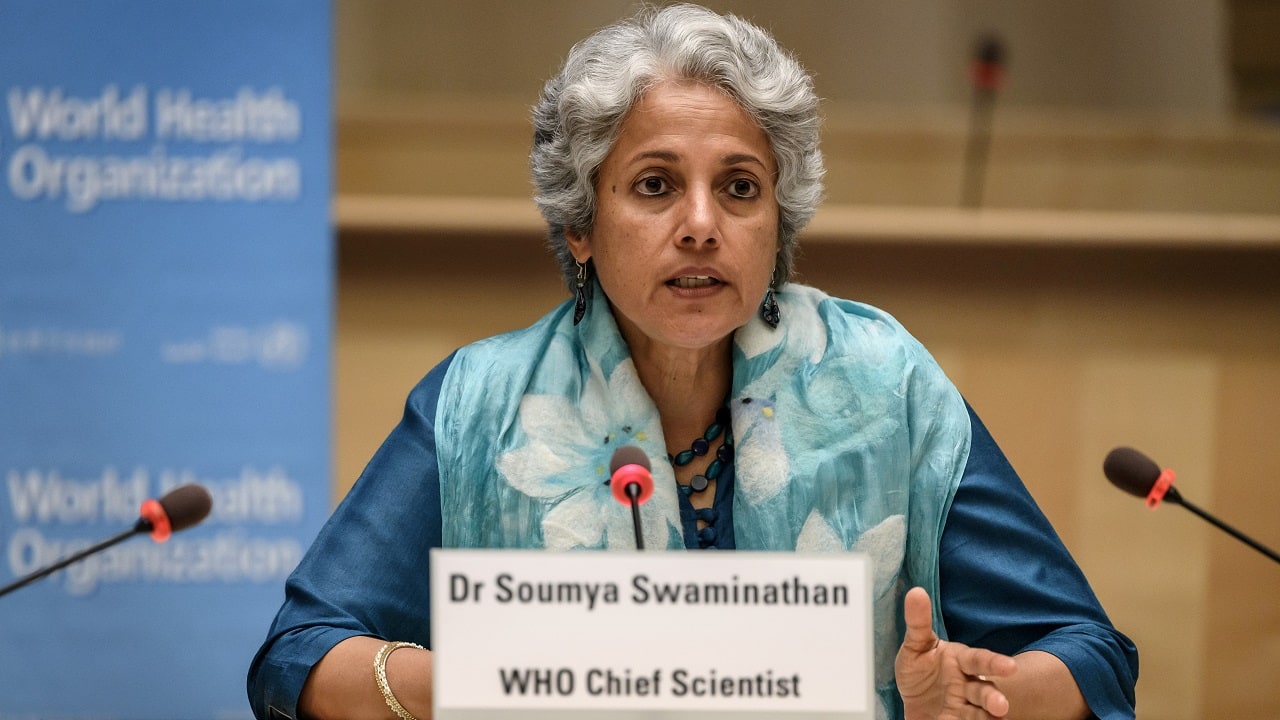 World Health Organization (WHO) Chief Scientist Soumya Swaminathan addressing a news conference in Geneva, Switzerland (File image: Reuters)
Denmark, the first to suspend the jab, said the move was precautionary. The decision, however, triggered a chain reaction with Austria, Italy, Romania, Estonia, Latvia, Lithuania and Luxembourg suspending the jab in the next few days.
The second wave of suspensions began after Germany indicated it would put the shots on hold. Only days after touting the safety of AstraZeneca’s vaccine, Italy’s Health minister, Roberto Speranza, suspended the jab in step with Germany’s decision.
“There is no clear evidence, clear correlation, that these events are linked to the administration of the vaccine,” he had said.
But once Germany hit the pause button, others quickly followed, possibly to present a united front and avoid the political fallout from being an outlier if problems were to emerge later.
Spain joined the decision to suspend AstraZeneca. France also succumbed to pressure and followed suit. French Health Minister Olivier Véran had said only days ago that there was “no reason to suspend.” Later, Véran told the Parliament, “France has to listen to Europe, listen to all the European countries.”
“We got to the point of a suspension because several European countries, including Germany and France, preferred to interrupt vaccinations... to put them on hold in order to carry out checks. The choice is a political one,” Nicola Magrini, director general of Italy’s medicines authority AIFA, told daily la Repubblica.
Also, the decisions revolve around AstraZeneca, a company with which EU has had sour relations since the pharma giant drastically scaled back projected vaccine deliveries for the early part of 2021.
The delay prompted EU to tighten rules on the export of shots. Since January 29, companies seeking to export vaccines from EU have had to seek permission from where the production takes place and European Commission.
The new regulations also empower EU’s members to keep any vaccine doses made within the bloc from being sent abroad if the manufacturer has not yet met its supply obligations to member countries.
On March 4, Italy and EU blocked shipment of 250,000 doses of vaccine to Australia produced by AstraZeneca. Italy’s foreign ministry said the country acted because Australia is regarded as a “non-vulnerable” country under the new regulations; because vaccines are in short supply in Italy and the EU generally; and because of delays in AstraZeneca’s vaccine deliveries to the bloc’s member countries.
The European Commission also plans to launch the dispute settlement process in its coronavirus vaccine contract with AstraZeneca. Commission’s Chief spokesperson Eric Mamer said they were waiting for the go ahead from EU members to write to the firm to demand talks on its alleged failure to honour its contract.
Mamer said the letter "will allow us to start a dialogue with the company as part of a dispute settlement process."
By its own admission, the British-Swedish company has fallen well short of promised deliveries.
AstraZeneca had been expected to deliver 90 million doses of vaccine in the first quarter of 2021, but will likely only be able to supply 30 million, after production delays at its EU plants. In the second quarter, it hopes to deliver 70 million, many fewer than the 180 million initially promised.
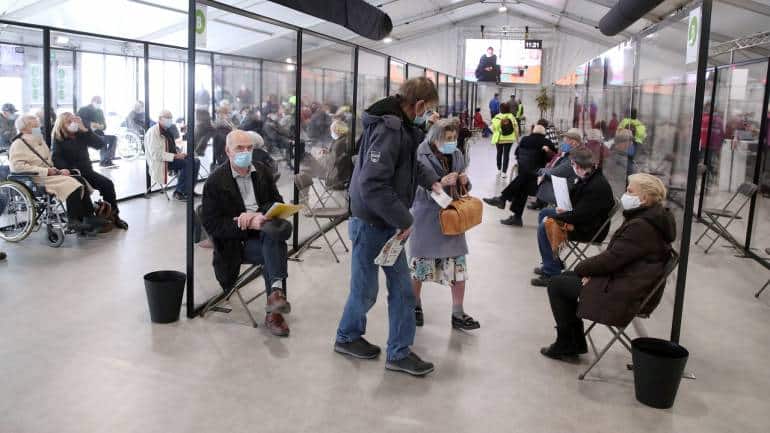
 Empty chairs are seen at a waiting area for people who receive AstraZeneca's vaccine at a vaccination centre, temporarily set up in a hall of the fair, in Cologne, Germany on March 18, 2021. (Image: Reuters/Thilo Schmuelgen)

The furore around the AstraZeneca jab has threatened to fuel skepticism about the shot far beyond Europe, potentially hurting the rollout in dozens of other countries around the world.
AstraZeneca's shot, among the cheapest available, was billed as the vaccine of choice for poorer nations. However, reports of adverse effects prompted countries to delay the rollout.
In the present scenario, for poorer countries, it's either AstraZeneca or nothing as the jab is likely to make up nearly all of the doses shipped in the first half of the year by COVAX, a consortium meant to ensure low- and middle-income countries receive vaccines.
Congo, which was due to start administering doses, postponed its campaign citing precautionary measures. The country is yet to begin vaccination.
Similarly, Indonesia delayed the rollout pending a WHO review but it approved its usage on March 19. In a statement, the agency said that even though vaccination could lead to "adverse events" following immunisation, "the risk of death from COVID-19 is much higher."
Palestine is set to receive over 60,000 coronavirus vaccine doses from the WHO. It would receive 38,000 doses of the Pfizer vaccine and 24,000 doses of the AstraZeneca vaccine. However, it plans to use only Pfizer’s doses initially. “The AstraZeneca vaccines will be kept in storage until the WHO reviews recent safety concerns,” the health ministry spokesperson Kamal al-Shakhra said.
Thailand had also briefly delayed the vaccine rollout, but Premier Prayut Chan-O-Cha took the jab on March 16 as the campaign resumed.
Venezuela said it would not authorize the vaccine developed by AstraZeneca. Its vice-president Delcy Rodriguez cited “complications” in vaccinated patients.
While the AstraZeneca frenzy is nearing its end with countries resuming vaccinations, it is a lesson that medicine regulators and governments must refrain from taking hasty decisions. Any unsubstantiated information around the vaccines can lead to panic among those who have already taken the vaccine and may discourage others who are yet to take it.
And if the pandemic has taught us anything, it is that broad social trust is imperative to successful public health initiatives.
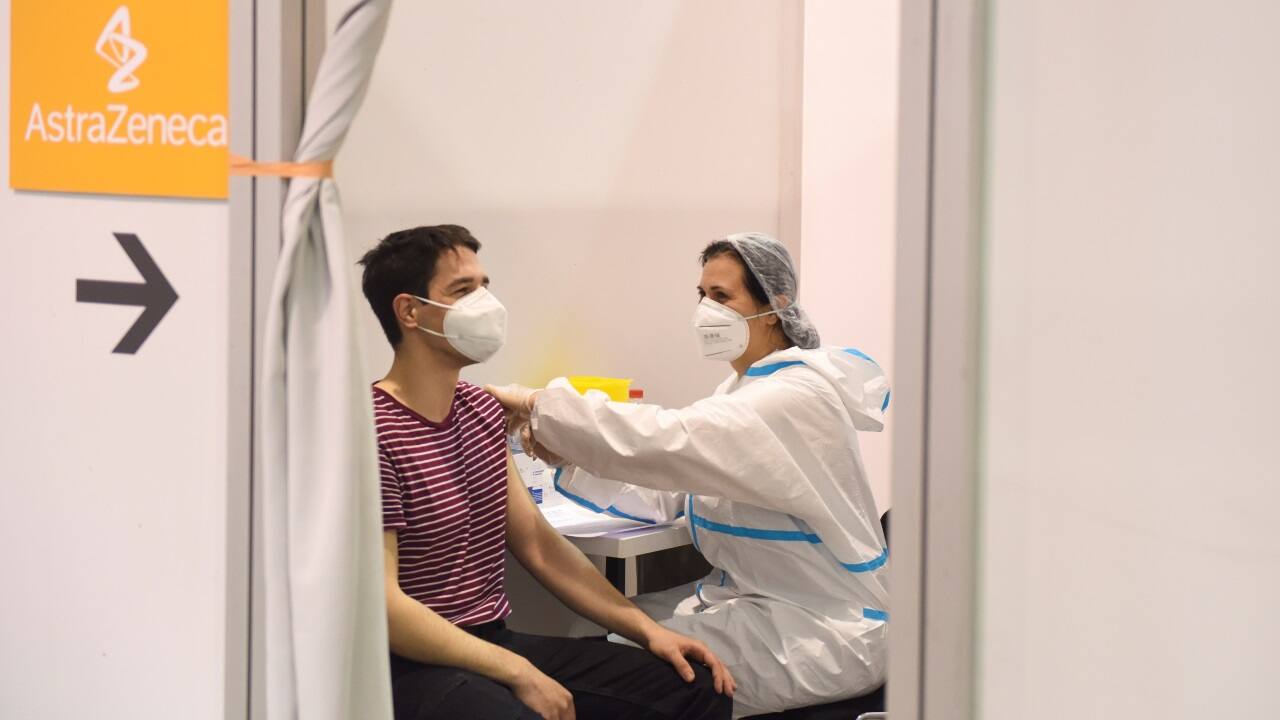 A person receives a dose of AstraZeneca’s COVID-19 vaccine during Serbia’s mass vaccination program in capital Belgrade on March 16, 2021. (Image: Reuters/Zorana Jevtic)


