-
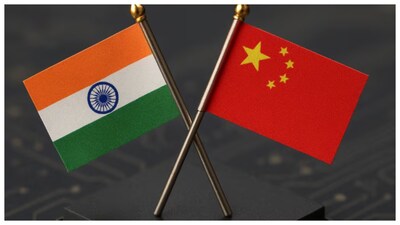
Does China’s WTO stance shift queer India’s pitch?
With Beijing giving up the benefits enjoyed by a developing nation, New Delhi must re-strategise policies to protect trade and retain clout in the Global South
-

Is WTO looking at India to redeem itself?
The WTO chief wants New Delhi to play a leadership role in the multilateral trade body while acknowledging India’s areas of concern
-
India takes Indonesia to WTO's safeguard committee on cotton yarn measure; seeks consultations
The Committee on Safeguards has circulated to WTO Members a notification dated May 24, 2025, by Indonesia concerning the finding of serious injury or threat to the domestic industries producing cotton yarn and a notification of proposed safeguard measures against the importation of the product.
-
Will artificial intelligence help WTO regain its lost glory?
As AI continues to reshape lives and livelihoods, the world trade body pitches for the watchdog role to monitor its impact on global trade
-
World Trade Report highlights dangers of the new power-based world order
The old rules-based system of the global economy, of which the WTO was the lynchpin, is now defunct. It has been replaced by protectionism, geopolitical trade blocs, beggar-thy-neighbour policies and a focus on security
-
China launches appeal at WTO over EU electric vehicle tariffs
In July, the EU slapped extra provisional duties of up to 38 percent on Chinese EVs after its executive arm concluded in an investigation that they were unfairly undermining European rivals.
-
World trade — Uncertainty is the only certainty
The latest WTO update flags risks to the recovery in global shipments of goods, which can be challenging for countries such as India
-
Ecommerce tariffs will kick in from 2026, says WTO chief
Some developing economies such as India, Indonesia and South Africa hope online tariffs will significantly raise their tax revenue
-
WTO Conference: Deadlock on deals raises questions on world body's efficacy
After the failure of this ministerial conference, questions are being asked if WTO’s existence is in danger
-
India opposes China-led investment facilitation proposal at WTO, terms it non-trade issue
A China-led group of over 120 countries are pushing for the Investment Facilitation for Development Agreement (IFD) proposal to become part of the World Trade Organisation (WTO)
-
India raises voice against narrowing down WTO meet focus to agri-exporting nations' interest
During the WTO negotiation session on agriculture here, India also said that without a permanent solution on the public stockholding issue, the most critical and long- pending mandated issue at the WTO (World Trade Organisation), developing countries' fight against hunger cannot be won.
-
WTO Meet: India seeks permanent solution to food security; to protect fishermen, farmers interest
The Indian delegation is led by Commerce and Industry Minister Piyush Goyal. The four-day 13th ministerial conference (MC13) will start on February 26 in Abu Dhabi, the United Arab Emirates (UAE)
-
How well can exports support India’s GDP growth?
With world trade in a slow lane as indicated by the latest WTO update, India needs to integrate with global value chains quickly
-
India brews its own carbon tax on imports to retaliate EU levy: Reports
Several people cited above, both of whom spoke on condition of anonymity, said the finance and commerce ministries are discussing a mechanism to measure carbon content in imported products from Europe.
-
387 products brought under quality control since 2014, 675 more products under consideration: Piyush Goyal
The country has already notified a total of 115 QCOs yet and QCOs on as many as 675 products in 14 ministries are currently under consideration. QCOs under development include norms on drones and electronic vehicles
-
Why have US, Canada, Taiwan questioned BIS norms?
-
Has the WTO ministerial conference met India’s long-term concerns?
India should be disappointed as a permanent solution on public stockholding of food grains was not discussed at the 12th Ministerial Conference
-
India relents, WTO ministerial delivers
The agreement to ban subsidies for illegal, unreported and unregulated fishing or fishing of an overfished stock has the potential to reverse collapsing fishing stocks
-
India fully protected interests of farmers, fishermen at WTO meet: Piyush Goyal
Members of the Geneva-based WTO secured a 'Geneva Package' which included agreements on curbing harmful fishing subsidies and temporary patent waiver for production of COVID-19 vaccines.
-
WTO approves vaccine-patent waiver for Covid vaccines
WTO ministers approved a package of agreements that included the vaccine patent waiver, which Director-General Ngozi Okonjo-Iweala previously said was necessary to end the “morally unacceptable” inequity of access to Covid-19 vaccines.
-
WTO strikes global trade deals on food security, fisheries subsidies deep into overtime
The deals were ground out over five days of bargaining at a conference of more than 100 trade ministers that was seen as a test of the ability of nations to strike multilateral trade deals amid the Russia-Ukraine war
-
WTO agrees on all issues including fisheries subsidies: Report
After a gap of about nine years the WTO members reached a pact — fisheries subsidies agreement. The four-day talks which began on June 12 concluded early Friday.
-
The WTO’s lonely struggle to defend global trade
What role does the organisation have in an era of fracturing multinational alliances and fears of deglobalisation?
-
G-33 members must work together for fair, balanced outcome at WTO: Piyush Goyal
.The G33 group includes 47 developing and least developed countries. The minister said that the Agreement on Agriculture of the WTO — which is already riddled with deep imbalances — favour the developed countries, which have created the rules against many developing countries and that is quite evident from what is happening in different parts of the world today.
-
Fishing Woes | Can WTO Ministerial Conference deliver an equitable outcome?
A balanced agreement that takes into account the genuine concerns of members like India and others will go a long way in demonstrating that the WTO is not a cosy club run by select rich countries