-
China’s playbook in India’s backyard: How Pakistan, Bangladesh and Afghanistan are being roped into Beijing’s designs
China and Pakistan are seeking to pull Dhaka closer, while also tying Kabul into their economic and security frameworks. For India, this evolving alignment is not only concerning but also a clear red flag.
-

Wang Yi’s Delhi visit signals a thaw in Sino-India ties but meaningful progress will depend on political directions of leaders’
A tentative step forward has been taken by both sides but it’s unrealistic to expect quick progress. For now, China holds more cards than India and Delhi will have to move with caution and perspicacity
-
China courts Taliban, Pakistan plays middleman: Why India should be on guard as CPEC game unfolds | Explained
New Delhi also cannot ignore the optics: Wang Yi visiting Kabul after a stop in New Delhi to meet Prime Minister Modi, and then flying on to Islamabad for three days of talks with Pakistan’s deputy prime minister.
-
PM Modi’s First China Visit in 7 Years | India–China Relations Explained
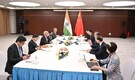
India and China are cautiously warming ties after years of tension. Chinese Foreign Minister Wang Yi met Prime Minister Narendra Modi, External Affairs Minister S. Jaishankar, and National Security Adviser Ajit Doval in New Delhi. The talks covered flights, trade, border security, water issues, and strategic supplies.
The discussions mark the first serious step in years to reset relations. PM Modi is set to travel to China for the SCO Summit, his first visit in seven years. Both sides also spoke about easing cross-border travel, resuming trade, and ensuring stability along the Himalayan frontier. Water security and China’s mega dam project in Tibet were also on the table, as well as assurances on supplies critical to India’s economy.
The big question now is whether these talks signal a lasting change, or simply cautious progress in a fragile relationship.
Stay tuned to Moneycontrol for more global updates.
-
India needs a clear-eyed China policy that serves its own interest, not that of other powers
China’s foreign minister Wang Yi visited India this week, which led to an uptick in the bilateral relationship and the promise of enhanced trade and investment flows. It represents a prudent step as buying-in to the Western narrative of India as a counterweight to China comes with big risks that can undermine the country’s strategic autonomy
-
Border peace, SCO Summit and a tentative thaw: 10 key takeaways from Modi–Wang Yi meeting
After years of confrontation following the Galwan clashes of 2020, both India and China appear willing to reopen channels of political and cultural engagement.
-
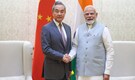
Constructive ties between India and China will aid global peace: PM Modi after meeting Wang Yi
The meeting assumes significance as it is taking place days before PM Modi's planned trip to China to attend the annual summit of the Shanghai Cooperation Organisation (SCO).
-
China, India seek better ties as US tariffs add uncertainty
“Having seen a difficult period in our relationship” both nations “now seek to move ahead,” Jaishankar said in New Delhi on Monday. “Differences must not become disputes, nor competition conflict.”
-
China, India should regard each other as partners, not rivals, says Wang Yi
-
Essential that de-escalation process along LAC move forward: Jaishankar to Wang Yi
In his televised opening remarks at a meeting with Wang, Jaishankar pitched for taking forward the de-escalation process in the border areas along the LAC in eastern Ladakh.
-
After Delhi Stop, China’s Wang Yi to visit Pakistan: Should India read between the lines?
Beijing’s embrace of Islamabad is not new. The so-called “iron brothers” relationship, propped up through loans, weapons transfers and infrastructure projects, has become China’s primary lever in South Asia.
-
‘Terror fight, border peace, multipolar order’: Jaishankar outlines priorities in talks with Wang Yi
Jaishankar noted that this was the first ministerial visit from Beijing since the leaders of the two countries met in Kazan in October 2024, providing a timely opportunity to review bilateral ties.
-
China's Wang Yi arrives in India: Boundary talks, resumption of trade high on agenda
Wang is scheduled to meet Prime Minister Narendra Modi tomorrow. The meeting assumes significance as it is taking place days before Modi's planned trip to China to attend the SCO Summit.
-
Wang Yi in India for border talks: China hopes to build trust, discuss 'issues of mutual interest'
Wang arrived in India for a two-day trip to take part in the 24th round of Special Representatives (SRs) talks on the border issue with National Security Advisor Ajit Doval.
-
'Wheels of history must not be turned back': China slams US tariffs, calls for global pushback against 'power politics'
Wang Yi made the remarks during his meeting with Rafael Mariano Grossi, director general of the International Atomic Energy Agency (IAEA) in Beijing.
-
China calls for all stakeholders in Ukraine war to be in peace process
Speaking at the Munich Security Conference, Wang said "we hope that all parties and stakeholders directly involved participate in the peace talks in due course".
-
India and China should commit themselves to mutual understanding rather than mutual suspicion: Chinese FM Wang Yi
The visit of Vikram Misri, India’s former Ambassador to China, is taking place ahead of the celebrations of China’s Spring Festival and the Chinese New Year, beginning on January 29
-
US' China policy to put America first: Marco Rubio tells Chinese counterpart Wang Yi
"Secretary Rubio emphasised that the Trump administration will pursue a US-PRC (People's Republic of China) relationship that advances US interests and puts the American people first," said the State Department Spokesperson Tammy Bruce.
-
Chinese FM Wang Yi makes surprise visit to Maldives, holds talks with President Muizzu
Muizzu said he was glad to see Chinese people becoming the largest source of tourists for the Maldives in recent months.
-
A day after Ajit Doval-Wang Yi talks, China highlights broader consensus to improve relations
The reaffirmation of their commitment to continuing to seek a fair, reasonable, and mutually acceptable package settlement to the boundary question in accordance with the political parameters
-
India-China Discuss Measures To Maintain Peace On Border At 23rd Special Representatives Meet
India-China discuss measures to maintain peace on border at 23rd Special Representatives meet. The 23rd Meeting of the Special Representatives (SRs) of India and China which was held in Beijing . It was attended by Ajit Doval, National Security Advisor (NSA) and Wang Yi, China's Foreign Minister.
"Over the past five years, with the joint efforts of both sides, relevant issues in the border area have been properly resolved, which is of great significance. India is willing to maintain fruitful communication with China in a pragmatic manner and continuously accumulate conditions for the final resolution of the border issue," said Doval. watch here for more details
-
Ajit Doval, Wang Yi hold talks on border peace; China says ready to work with India
The SRs are expected to explore solutions for managing peace along the border and find a mutually acceptable resolution to the boundary issue, as agreed in the Modi-Xi meeting.
-
China and US progress on climate talks despite 'some differences', says Podesta
US climate envoy John Podesta reported progress in climate talks with China despite ongoing differences, particularly on climate finance and emission targets. Both countries are preparing for COP29 discussions and upcoming climate commitments.
-
China, India should work in same direction, relations have an important impact, says Wang Yi
Wang, in talks with his Indian counterpart, said China-India relations have an important impact beyond the bilateral scope, according to the statement released by the Chinese foreign ministry late on Thursday.
-
EAM Jaishankar holds talks with Chinese counterpart Wang Yi
The two foreign ministers met on the sidelines of the annual summit of the Shanghai Cooperation Organisation (SCO).