-
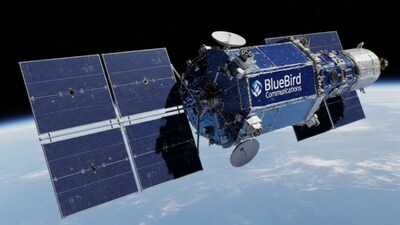
ISRO to lift heaviest 6.5-tonne US satellite BlueBird-6 — What makes it special?
India’s ISRO will launch the 6.5-tonne BlueBird-6 on 15 December, a mission promising new mobile broadband reach. But why does this satellite matter so much for global connectivity?
-

ISRO's successful docking mission sets stage for future space projects - All about SpaDex mission explained
The achievement has placed India alongside the United States, Russia, and China as one of the few nations capable of this advanced space technology.
-
Cabinet nod for 3rd launch pad at Sriharikota as India eyes landing astronaut on Moon
To be constructed at the Satish Dhawan Space Centre in Sriharikota at a cost of Rs 3,985 crore, the new launch pad will be capable of putting 30,000 tonne spacecraft in low earth orbit.
-
Gaganyaan mission: All about TV-D1 test flight and its objectives
The Gaganyaan program's test launches, including TV-D1, TV-D2, LVM3-G1, D3, and D4, alongside LVM3 G2, aim to assess vital technologies and human safety before the 2024 crewed mission.
-
Chandrayaan-3 mission launch on July 14; soft-landing on lunar surface expected on August 23 or 24
ISRO's new heavylift launch vehicle LVM-3 will carry out the Moon mission.
-
Hours ahead of Chandrayaan-3 mission next week, Sriharikota to witness a unique 'launch'
Authored by national award-winning filmmaker-writer Vinod Mankara, 'Prism' is likely the first book to be released from a rocket launchpad anywhere in the world.
-
GSLV-F12 successfully places second generation navigation satellite into intended orbit: ISRO
NVS-01 would augment the country's regional navigation system, providing accurate and real-time navigation.
-
PSLV-C55 successfully places 2 Singapore satellites into intended orbit: ISRO
The 44.4 metre tall rocket blasted off from the first launch pad at the end of a 22.5 hour countdown
-
PM Modi says 'historic' moment as India's 1st privately-developed rocket lifts off from Sriharikota
This accomplishment bears testimony to the immense talent of our youth who took full advantage of the landmark space sector reforms of June 2020, he said.
-
Mission Prarambh: Meet the team firing up India’s first private rocket launch
Pawan Kumar Chandana and Naga Bharat Daka's Skyroot Aerospace is set to launch India's first private rocket on November 18. Chandana recounts to Moneycontrol how they went about the mission that would put their startup in the league of Elon Musk's SpaceX
-
Mission Prarambh: Skyroot Aerospace to launch Vikram-S from Sriharikota on November 18
Named after the father of India's space programme Vikram Sarabhai, the sub-orbital solid-stage rocket, made of carbon composite with 3D-printed motors, would carry three customer payloads.
-
Watch: India launches its heaviest rocket with 36 OneWeb satellites on board
"A huge thanks to the teams at ISRO and NewSpace India Limited for a successful lift off!" London-based company OneWeb tweeted after the liftoff.
-
ISRO all set for maiden commercial launch of 36 broadband satellites
The 43.5 metre tall rocket is scheduled to lift-off from the second launch pad at the Satish Dhawan Space Centre in Sriharikota at 12.07 am on Sunday.
-
In Pics | Chandrayaan 2 launch: When India was over the moon after successful lift-off
Prime Minister Narendra Modi congratulated the scientists at ISRO for the launch of Chandrayaan 2. In a tweet, he said, "Special moments that will be etched in the annals of our glorious history! "
-
GSLV-F11, carrying India's geostationary communication satellite GSAT-7A, lifts off from Sriharikota
The 26-hour countdown for the launch commenced at 2.10 pm Tuesday and the rocket blasted off at 4.10 pm from the second launch pad at the satellite launch site in Sriharikota, over 100 km from here.
-
Countdown for launch of PSLV-C38 begins
Polar Satellite Launch Vehicle, in its 40th flight (PSLV-C38), would launch the 712 kg Cartosat-2 series satellite for earth observation and 30 co-passenger satellites together weighing about 243 kg at lift-off into a 505 km polar Sun Synchronous Orbit (SSO) at 09.20 hours tomorrow, the Indian Space Research Organisation (ISRO) said.
-
ISRO's world record makes Indians proud: Chinese daily
"This is perhaps the first widely followed world record India has made in the field of space technology. The Indians have reason to be proud," state-run Global Times said in its editorial today.
-
Need to be 100% successful in space business: Amitabha Ghosh
Latha Venkatesh of CNBC-TV18 caught up with Amitabha Ghosh, a space scientist who worked closely on NASA's Mars Rover mission.
-
Proud moment for nation: PM on launch of 104 satellites
ISRO chief A S Kiran Kumar said at the mission control centre at Sriharikota that the Prime Minister has congratulated the space agency team for the successful launch.
-
ISRO sets world record, launches 104 satellites
As the scientists at the Mission Control centre broke into cheers, Indian Space Research Organisation (ISRO) Chairman A S Kiran Kumar announced: "All 104 satellites successfully placed in orbit. My hearty congratulations to the entire ISRO team for the wonderful job they have done."
-
India successfully launches its own 'space shuttle'
This is the first time ISRO has launched a winged flight vehicle, which glided back onto a virtual runway in the Bay of Bengal, some 500 kilometres from the coast.
-
Satellite launch shows India's growing capabilities: Prez
Congratulating the Indian Space Research Organisation, the President observed that the successful launch of navigation satellite IRNSS-1G demonstrates India's growing capabilities in space launch technology.
-
India launches fifth regional navigation satellite 'IRNSS-1E'
The 320-tonne 44-metre rocket (PSLV-C31) has lift-off from the second launch pad at the Satish Dhawan space centre at 9:31 AM and deploy the 1,425 kg fifth navigation satellite into as sub-geosynchronous orbit 19 minutes and 20 seconds later at an altitude of 503 kms from above the earth.
-
India readies to launch fifth navigation satellite today
"The countdown (T-48) is going on smoothly since it was started on Monday at 09:30 AM. The launch authorisation board will take the final call on early morning tomorrow for the final countdown (T-10)," Indian Space Research Organisation's (ISRO) satellite director M Annadurai said.
-
ISRO to launch six Singaporean satellites today
To be launched from Satish Dhawan Space Centre in the spaceport of Andhra Pradesh's Sriharikota at 6.00 PM today, the satellites will be put into orbit by Indian Space Research Organisation's (ISRO) Polar Satellite Launch Vehicle (PSLV)- PSLV-C29 on reaching 550 kms from the earth's surface.