At the beginning of all beginnings the Lord said, “Be fruitful and multiply and fill the Earth”. But Adam and Eve probably forgot to ask, “at what rate, father?” Thus, sailing on Noah’s Ark, surviving many a Malthusian calamity, the latest being COVID-19, we have reached the shore on another milestone event: red letter day as they say. But, if Thomas Malthus tried to apply the brakes from time to time, it was his bête noire, Charles Darwin, egged us on to plod along braving the odds. The story of ‘Eight Billion’, however, is not one of god, though religion too has a role in it. For the better part it is a saga of politics and economics — in which Malthus (economics) and Darwin (evolution) play lead roles.
Like any good book the plot is not simple. There are several twists and turns in the tale. Each time Malthus tries to catch up with a pandemic scourge, holocaust, famine, war, or economic recession, Darwin arrives with his of survival theory to keep humankind a step ahead in the race of species. With each unfolding act we realise there are no unmixed blessings, and every curse has a silver lining.
Thus, nations like Japan and Germany have recovered from the ravages of war and come out stronger over time. The United States that enjoyed the spoils of prosperity among a few is suddenly realising the burdens of supporting an ageing population, and start envying the demographic dividend of countries in Asia. China, which for long advocated the one child theory is once again encouraging young couples to make more babies.
Very few countries, even the communist ones or those ruled by dictators, have a political system that allows a proactive population control policy. Nudge strategy through a mix of incentives and disincentives to influence family size have limited impact. Here religion sometimes kicks in. While certain faiths positively encourage its followers to increase their tribe to fill the earth with the faithful, others discourage birth control — as the Roman Catholic Church did with its injunction on abortion. Thus, for all practical purposes, population growth follows the laws of nature as envisaged at the inception of time.
The primary task of all ruling dispensations is how to support the natural demographic patterns. The challenge is not just one of ‘Roti, Kapda, aur Makaan’. It is also about the quality of life, and ease of living in the form of healthcare, education, and jobs. A holistic solution to these basic hygiene needs can propel a country into prosperity just as inability to break the vicious cycle can keep it trapped in poverty as we see in large parts of the less developed economies.
While modern medicine has helped to extend the average longevity of citizens across the globe, it also brings with it new lifestyle ailments such as Alzheimer’s, Dementia, and Cancer, requiring a different order of elder-care, social, and financial safety-net. This creates a dynamic equilibrium between Malthusian economic and Darwinian evolution.
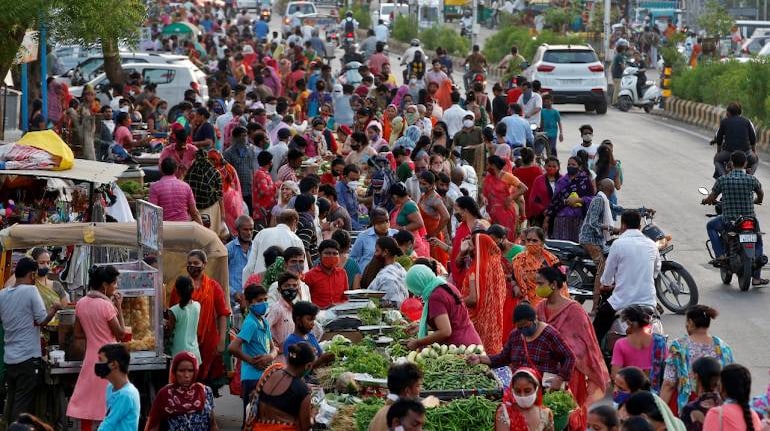
India today stands at the intersection of Malthus and Darwin. What the younger generation needs is opportunity to unleash their immense intellectual, creative, and entrepreneurial potential. Traditional thinking was focussed on jobs and doles that meant distributing the already meagre resources of a developing economy thinly among the population. This was an indirect incentive for increasing the family size to have more earning members and buy insurance against mortality of progenies. Clear Darwinian instincts of survival at work.
The need today is value creation — that is increasing the size of the cake rather than distributing the crumbs among many. The State must be a facilitator in the process by providing social infrastructure, and economic development. As incomes rise, more people move above the poverty line, connectivity, and mobility leapfrogs in a digital world — many of our existential dilemmas will fall in place. All sections of society irrespective of social and religious denomination will join the mainstream to partake in the fruits of progress resolving in the process the demographic fault lines.
Undoubtedly India is on the right track despite distractions and occasional detours. The task before us the people is to ensure political stability, communal harmony, and openness to change for embracing the future. Our children deserve the best, and the elders a life of dignity and security. COVID-19 has been a litmus test of our resilience both in terms of managing the pandemic, and its economic whiplash. India has shown the ability to handle both Malthus and Darwin at the same time. That is what will differentiate us from the rest of the world to make this India’s century.

Discover the latest Business News, Sensex, and Nifty updates. Obtain Personal Finance insights, tax queries, and expert opinions on Moneycontrol or download the Moneycontrol App to stay updated!
Find the best of Al News in one place, specially curated for you every weekend.
Stay on top of the latest tech trends and biggest startup news.