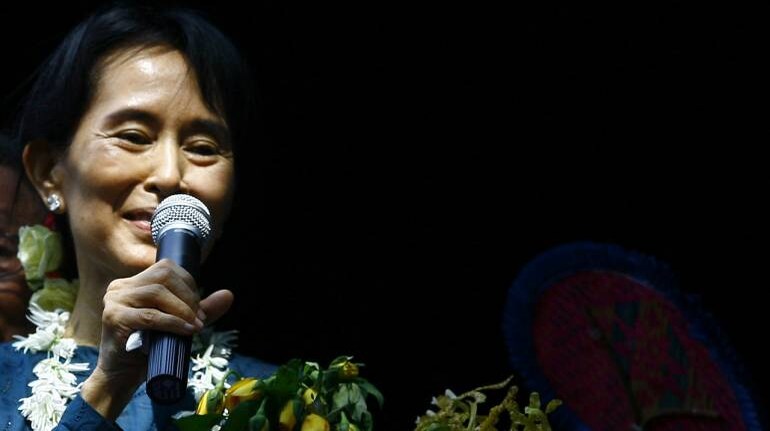
The February 1 pre-dawn coup saw the historic third chapter for building democracy in Myanmar coming to an unceremonious end. At 7AM, all television stations went off air as military-owned Myawaddy TV announced that State Counsellor Aung San Suu Kyi and President Win Myint had been detained and military-appointed first Vice-President Myint Swe (now acting President) had, as per constitution, handed over power to Commander-In-Chief General Min Aung Hlaing.
February 1 was when the newly-elected Parliament was to begin its first session, but 64-year-old Hlaing — commander since 2011 and due to retire in July — was conferred unlimited legislative, administrative and judicial powers with a state of emergency declared for one year. The 24-member council of ministers is replaced by his new 11-member team. Most banks are closed, Internet and phone services are restricted and night curfew is imposed in major towns ensuring no protests, thus portraying it as peaceful transition.
The international community has reacted with muted condemnation. While the world remains preoccupied with COVID-19, the military in Myanmar made advance preparations, including heavy urban deployments, easily upstaging the civilian leadership. Chairing his new administration team Hlaing has pledged to build ‘genuine discipline, flourishing multi-party system’ with a promise of free and fair elections.
Things had been heating up since the November elections, but world powers failed to take note of it. Even the outrage against the military crackdown on the Rohingya — triggering the United States to blacklist Hlaing, or others wanting to strip Suu Kyi of her Noble Peace Prize — had dissipated. But popular mood inside Myanmar chose to strengthen Suu Kyi's National Democratic League (NLD) to outvote Myanmar's military junta.
In the November elections, the military-backed Union Solidarity and Development Party received 33 seats of the total 476, while the NLD won 396, thus threatening the military's hold on power. No doubt the military raised a storm over so-called millions of complaints against elections calling for a re-run. On January 28, the election commission rejected the military's allegations of fraud, pronouncing the elections fair and credible.
On January 27, Hlaing indicated how the constitution could be "revoked" and, the military not ruling out a coup d'état, January 29 saw foreign missions in Myanmar urging the military to "adhere to democratic norms". Few of great powers have mouthed subtle condemnations.
While US President Joe Biden called it "a direct assault on the country's transition to democracy", China merely 'noted' these developments hoping all sides to reconcile their differences.
Starting from the 1988 military takeover, China has been the most influential partner and investor in Myanmar. Last month Chinese foreign minister Wang Yi visited Myanmar and held meeting with Hlaing and praised him.
Since its independence in 1948, Myanmar has mostly been ruled by military. The first military coup was in 1962 when Prime Minister U Nu was replaced by former Prime Minister General Ne Win. The immediate trigger was protests in the Rangoon University that triggered harsh response, including dynamiting the Student Union Building, which today remains an important site for all visitors to this campus.
The predominance of the military was set in stone in Burma's 1974 constitution making it a one-party socialist republic. But, gradual reforms saw General Ne Win losing his grip, though he stayed as President till 1988 and resigned only on the eve of the August 8 massacre.
Things are clearly different today. Compared to the deep-rooted intra-party and popular protests of the 1980s, the sustained democratic struggle by Suu Kyi and constant nudging and co-option by external powers had triggered piecemeal changes. The last two decades have seen the military reticent yet ready for power sharing.
The silence, and even defence, of Suu Kyi over the military crackdown of Rohingya Muslims perhaps most aptly showed the fragility of Myanmar's civilian leadership. Under the wraps, the military still had a tight grip on power and, with Hlaing in command, it is least likely to return to the barracks. This is because the military no longer faces the older limitations of being a pariah or facing the powerful opposition from Suu Kyi as in the early 1990s.
India has gradually engaged Myanmar's military leaders. As its immediate response, India has beefed up security on the border and will further extend the suspension of all transactions from the Morey border trade point that remains closed due to COVID-19 restrictions.
What does this tell us about Hlaing staying in power?
Discover the latest Business News, Sensex, and Nifty updates. Obtain Personal Finance insights, tax queries, and expert opinions on Moneycontrol or download the Moneycontrol App to stay updated!
Find the best of Al News in one place, specially curated for you every weekend.
Stay on top of the latest tech trends and biggest startup news.