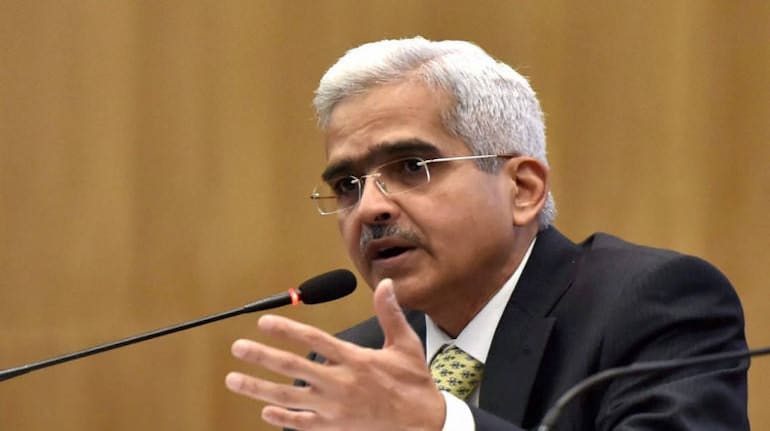
Shaktikanta Das, the new Governor of the Reserve Bank of India (RBI), is taking charge of the central bank in less than propitious circumstances. His predecessor’s resignation was clearly a protest against the government trying to impose its will on the institution. In that context, Das’ most important task is a simple one --he will have to prove that he is his own man.
Admittedly, the new incumbent at Mint Street starts off with a handicap. While his vast experience in managing economic affairs is not in question, he has an unfortunate reputation as the man under whom the government launched its controversial demonetisation programme. The speed with which he has been appointed has also raised questions whether this was the government’s game plan all along.
While several bureaucrats from the Finance Ministry have gone on to become excellent RBI governors and have asserted their independence, they did not assume office in similar circumstances. Simply put, Das will have to prove his independence. The dice is loaded against him, which means that given the circumstances, he will initially be seen to have been appointed to obey the diktats of the Finance Ministry. He will not only have to take an independent line, but must be seen to do so. He will have to work extra hard to show he is no pushover.
To be sure, tensions have always existed between the governor of the central bank and the government. No central bank is fully independent. That is true not just for India, but across the world. But these are not normal times. That two RBI governors have left their posts under the same government is not just unprecedented, but signals that the government does not know how to handle dissent. One could of course argue that is precisely why the soothing hand of a seasoned bureaucrat is needed to soothe tempers and Das fits that requirement.
The question is: what will be the cost of that compromise? Clearly, Urjit Patel thought that what the government was asking would not be in the best interests of the RBI, which is why he took the extreme step of resigning. Compromise cannot be a one way street -- the government too will have to show maturity and a spirit of accommodation. It is in nobody’s interest to squander the reputation of the RBI, carefully built up over decades.
That said, the saving grace is that interest rates decisions are now taken by the Monetary Policy Committee, which insulates it from crises such as the governor suddenly resigning. Continuity of monetary policy is therefore taken care of, although it would be interesting to watch whether the new governor turns out to be a dove.
The immediate issues before Das are the ones that apparently forced Patel to resign -- taking some banks out of the Prompt Corrective Action (PCA) framework, increasing powers of the RBI board, providing a liquidity window to non-banking finance companies, the appropriate level of RBI reserves and the one-day default norm.
How he handles these issues will be crucial for establishing his credibility. And he needs to swiftly earn this credibility, because, as he himself tweeted, "Emerging economies need to be prepared for prolonged global headwinds, emanating from US Fed rate hikes, intensifying trade conflicts, volatile oil prices and sanctions. Fiscal policies should remain prudent and monetary policies in sync with the curve."

Discover the latest Business News, Sensex, and Nifty updates. Obtain Personal Finance insights, tax queries, and expert opinions on Moneycontrol or download the Moneycontrol App to stay updated!
Find the best of Al News in one place, specially curated for you every weekend.
Stay on top of the latest tech trends and biggest startup news.