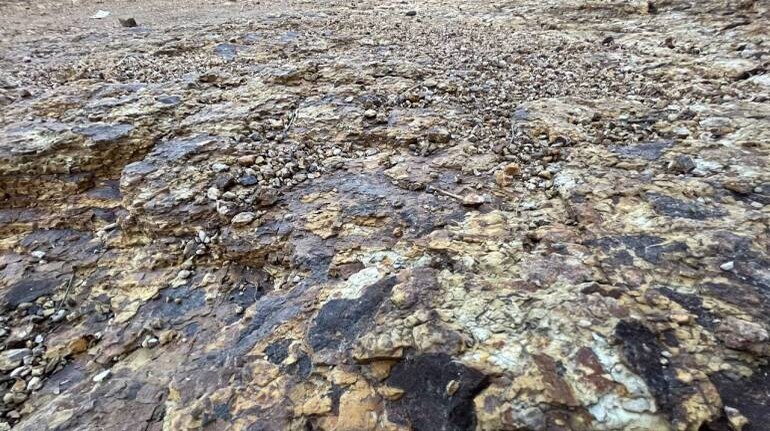
There has been tremendous excitement in India over the recent discovery by the Geological Survey of India of lithium deposits in Jammu & Kashmir. Lithium has an embedded presence all around us. With its high energy density, this silvery-white metal is ideal for batteries in many portable electronics and electric vehicles. In addition, lithium has other industrial uses, including ceramics, pharmaceuticals, and lubricants.
These applications – and the expected exponential demand growth of the mineral as the world transitions to green energy, technology and mobility – are why various major economies consider lithium to be a “critical mineral”.
Breakthrough For IndiaCritical minerals refer to mineral resources, both primary and processed, which are essential inputs in the production process of an economy, and whose supplies are likely to be disrupted due to non-availability or risks of unaffordable price spikes.
One factor that inflates lithium’s criticality is the geographic concentration of extraction and processing – Australia mines 52 percent, and China processes 58 percent of the global lithium supply. India currently has no production or processing facilities in the country.
It relies on imports – along the entire value chain – for its lithium needs, despite having the geological potential to mine the metal. So the J&K discovery provides a spark of hope for India to be ‘Aatmanirbhar’ in meeting its 2070 net-zero emissions.
GSI Must Get CrackingThe Geological Survey of India (GSI) is responsible for the geological mapping of the country, conducting exploration activities and assessments of mineral resources. The GSI adopts various assessment techniques, including ground, airborne, satellite and marine surveys, the results of which are used by the mining industry to guide their exploration and extraction activities.
The GSI, in its 62nd Board meeting held in early February, declared its findings on potash (a fertiliser mineral), molybdenum (used in steel alloys), other base and precious metals, and 5.9 million tonnes of lithium resources, representing the fifth largest inventory in the world. The Department of Atomic Energy has also been undertaking lithium exploration activities and discovered 1,600 tonnes in Karnataka in 2021.
Both these discoveries refer to ‘inferred resources’, or a G3 level under the United Nations Framework Classification, implying that both reconnaissance and prospecting stages have been completed. The process is then followed by general exploration (G2) and detailed exploration (G1) to fully understand the nature of the lithium deposits, including the ore grade. Feasibility and economic viability studies are also simultaneously undertaken. It would thus take time to convert these inferred lithium resources to economically mineable resources – i.e., mineral reserves.
The lithium discovery in J&K builds upon the geochemical mapping conducted by the GSI in the 1990s, which led to a report stating “the prospect for lithium appears to be quite promising” in the area. It is unclear why further exploration work has not taken place since 1999.
Nevertheless, it should not be the sole responsibility of the government organisation to carry out the entire exploration process of all minerals in the country. Globally, a thriving industry of small exploration companies – known as ‘juniors’ – invest their money, time, and expertise to discover and develop mineral deposits. However, India has missed gaining from the expertise of junior explorers due to its policy constraints.
India’s current mineral exploration and allocation policies do not incentivise these juniors to invest in the country’s mining value chain. Good international practice gives explorers the right to mine their discoveries post-mineral discovery. However, in India, a system of auctions was introduced in 2015, replacing the earlier first-come-first-serve system (ostensibly to increase the allocation process’s fairness, objectivity, and transparency), which left little incentive for the junior explorers to practice their expertise. The exploration policy needs amendments to encourage investments from global experts.
From Deposits To Functional MinesWhile the discovery of lithium in India is good news for the country’s future self-reliance, various steps are required to convert the resource into a functioning mine. First, a detailed exploration of the block will be required, which may take several months to years, depending on the complexity of the deposit.
The government has indicated that it is looking to auction the mineral block sometime soon, which will likely grant the winning company a Composite Licence, allowing for both exploration and mining. The processes for further exploration, developing a mining plan, and obtaining clearances can take five years or more, and would depend on several factors, including engineering requirements and other local idiosyncrasies.
Hence, the lithium deposit found in 2023 may only bear its fruit sometime close to 2030. The government, for its part, can help streamline the process by ensuring the timely allocation of the mineral block and provision of the requisite clearances.
Should India Do Lithium Processing?In the meantime, while further exploration work is underway, India must consider what role it would like to play in the downstream lithium value chain. China has developed an efficient domestic lithium processing industry, which benefits from being a part of a larger supply chain, economies of scale, and years of expertise.
If India is to compete in this market, substantive investments and additional skills will be required – perhaps with the help of strategic partners like Australia. Environmental and social externalities must also be considered when setting up mining and processing operations. For example, lithium processing consumes large quantities of water, and the waste streams may contaminate the air, water, or land, which would have adverse health impacts on local communities.
India may simultaneously consider pursuing owning foreign assets of lithium supply chains. With these factors in mind and more significant incentives for the exploration sector, India can use its natural wealth to be self-sufficient in meeting its climate change mitigation targets.
Rajesh Chadha is a Senior Fellow and Ganesh Sivamani is a Research Associate at the Centre for Social and Economic Progress, New Delhi. Views are personal and do not represent the stand of this publication.Discover the latest Business News, Sensex, and Nifty updates. Obtain Personal Finance insights, tax queries, and expert opinions on Moneycontrol or download the Moneycontrol App to stay updated!
Find the best of Al News in one place, specially curated for you every weekend.
Stay on top of the latest tech trends and biggest startup news.