For long, India’s ‘Two-front war’ has been imagined through military terms, i. e., how China and Pakistan simultaneously attack India from the geographic flanks they occupy. Yet, in current circumstances, where conflict has travelled through trade restrictions, the assessment of a two-front conflict needs a review.
Supply chains are now tools of coercive statecraft
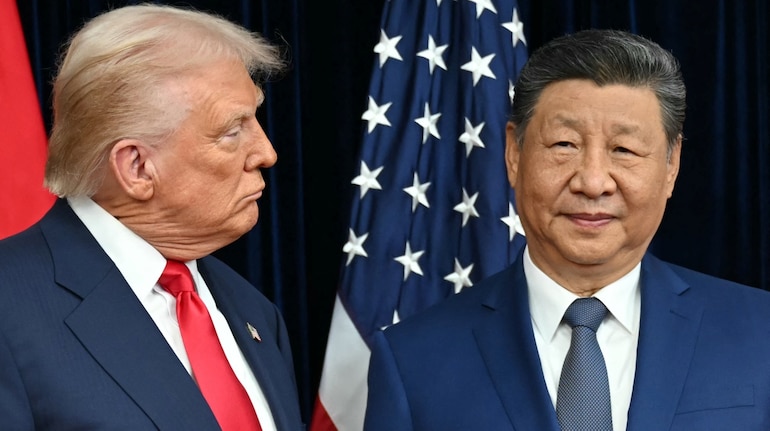
India’s real two-front war is present within regulatory regimes and supply chains, where the two most powerful states of the currently existing rules-based international order-the United States and China- have emerged as the two principal disruptors of the world economy, while being champions of ‘multilateralism’ with their own interpretations.
Tariffs once used to be a legitimate tool to address unfair trade and protect national security imperatives. However, this has steadily been transformed into instruments of coercive statecraft. Trump 2.0 has followed Chinese leadership in using trade as a choke point against other states as famously argued by Abraham Newman and Hery Farrell, that “we are living in the age of weaponized interdependence”.
WTO’s norms have been sidelined
While organizations like the World Trade Organization (WTO) defined tariffs as lawful tools for economic defence, the current world order is beset with examples where tariffs are being used to push countries to choose sides.
Beijing, for its own part, has long used asymmetric market access, opaque regulations and strategic trade restrictions to influence sovereign choices. India right now, like every other middle actor of the system, needs to be more cautious of these disruptive tactics, where both seek to access Indian markets on their own asymmetric terms while denying reciprocity.
The China Front
India’s economic confrontation with China has been largely to resist structural asymmetry in their bilateral trade relations. While Beijing seeks access to Indian markets for its electronics, machinery etc., it simultaneously restricts India’s entry into its own market through tariffs and license regimes. This asymmetry is not accidental in nature. In 2025, China imposed a 117 percent tariff on Indian fertilizers, effectively trying to price them out of the Chinese markets.
By weaponizing access in such critical sectors, Beijing converts trade policy into strategic vulnerability of partner countries. The logical and strategic response for India was to look for diversification. In this context, it signed long-term agreements with Riyadh for the supply of diammonium phosphate (DAP) fertiliser, marking a significant development in efforts to enhance the country’s fertiliser security.
However, these trade challenges also face further spillover from U.S.-China disruptions. As high American tariffs block Chinese access to U.S markets, China looks at destinations like India with high consumption capacity for dumping its goods. In the last five years alone, India in any case has filed significantly more anti-dumping actions against Chinese exports than others, often in sectors like steel, chemicals, textiles, and machinery. Other top initiators against China historically include the United States, the European Union, Argentina, Brazil, but India, also facing severe dumping from China, has sought WTO legal respite.
Consistent with the pattern elsewhere, even in India, Chinese firms export below cost to clear inventories. In one such sector like steel, India recently imposed a 12 percent safeguard duty. While being limited in immediate effect, such measures highlight India’s vulnerability to such market manipulations.
Yet, Beijing seems unhappy with countries like India creating protective measures for their domestic players. Recently China approached the WTO against India’s ‘Make in India’ incentives including Production Linked Incentive (PLI) schemes for batteries, EVs, and automobiles. The contradiction is stark: China resists India’s quest for strategic autonomy even as it maintains rigid protectionism at home.
The US Front
The American model of coercion is even more paradoxical in nature. For nearly two decades India-US relations had deepened across multiple sectors from defence, technology to shared strategic interests like the Indo Pacific.
Yet, in the ‘Donroe Doctrine’, trade has emerged as a major faultline between the two countries. Washington’s diabolical use of tariffs on Indian steel and aluminium under Section 232, the removal of India’s GSP benefits, and creating pressure on India’s pharmaceutical exports reveal a consistent pattern, i.e., the US seeks expanded access to Indian agriculture, dairy, and digital markets, while retaining barriers in its own politically sensitive sectors.
This contradiction is further emboldened under Trump 2.0. In August, Washington imposed a 50 percent tariff on Indian goods citing reasons like India’s continued purchases of Russian oil, despite previously condoning such imports to stabilise global prices.
For New Delhi, the reversal was especially galling, as countries like China faced no comparable penalties. Trump’s claim of using trade pressure to mediate between India and Pakistan further crossed a diplomatic red line, which was a clear indication of trade being weaponised for political signalling.
India’s’ measured response
Yet, India’s response has been largely measured. With exports to the US constituting barely 2 percent of its GDP, New Delhi has sought to absorb the shock through domestic reforms and diversification rather than political escalation. Simultaneously, India has accelerated economic security cooperation with partners like Japan, pursued FTAs with the United Kingdom, and quite recently with the EU and explored supply chain alternatives. Perhaps most starkly, Washington’s inconsistent trade posture has largely weakened its own strategic aims. In this sense, America’s transactional trade diplomacy risks undermining the very partnerships it seeks to build.
India’s playbook
It is quite clear that superpowers behave quite similarly in this context. And the real strategic challenge India fights is a balancing war on these two fronts, where the US and China have presented themselves as two sides of the same coin. The challenge lies in the fact that while Trumpian economics in loud and crass ways try to tear down every threat of economic stability, China, in its very silent and tacit ways, has always done the same, to multiple actors across the world, and India has not been an exception.
Both the leading actors exhibit the same tactic, albeit using different methodologies- loud and crass versus silent and subtle. India’s previous experiences with China and dealing with its tariff and non-tariff barriers, denying Indian goods and services equal market access in China, have been useful in navigating Trump’s ill-placed tariffs. The FTAs with New Zealand, Oman, the United Kingdom and the EU among a list of others, help in navigating the real two front conflict for India. In this epoch of history, economic power has become the real currency of power, and an understanding that both the leading actors are unreliable, and hedging even economically, or playing one against the other, is not really an option. Widening economic multilateralism with other like-minded, middle powers is the only way forward.
(Sriparna Pathak is a Professor of China Studies, and the founding Director of the Centre for Northeast Asian Studies at O.P. Jindal Global University, (JGU) Haryana, India.)
(Upamanyu Basu is an Assistant Professor of Politics and International Relations at Manav Rachna International Institute of Research and Studies.)
Views are personal and do not represent the stand of this publication.
Discover the latest Business News, Sensex, and Nifty updates. Obtain Personal Finance insights, tax queries, and expert opinions on Moneycontrol or download the Moneycontrol App to stay updated!
Find the best of Al News in one place, specially curated for you every weekend.
Stay on top of the latest tech trends and biggest startup news.