

co-presented by
ASSOCIATE SPONSORS
co-presented by


ASSOCIATE SPONSORS







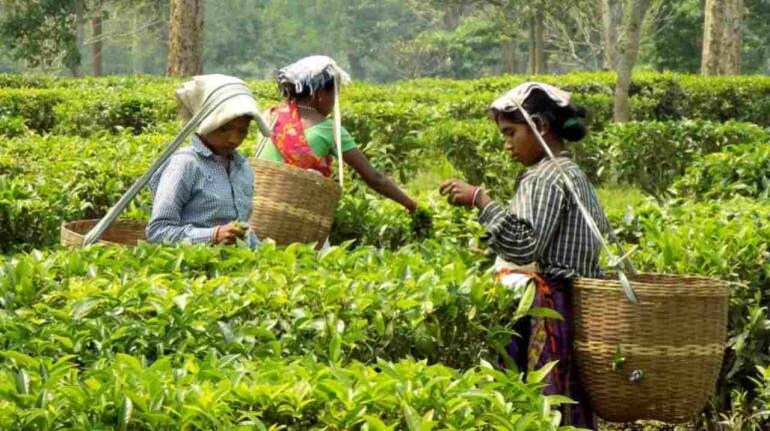
The July 5 decision of the Himanta Biswa Sarma-led government in Assam to accord the status of ‘indigenous Assamese Muslims’ to five communities has evoked sharp reactions, but the development is no surprise to anybody conversant with the ground realities in the state.
To begin with, why was the announcement by the government made at this juncture? The government’s statement on the Assamese Muslim communities — Goria, Moria, Deshi, Jolha, and Syed — comprising around 4 million came on the heels of developments aimed at erecting safeguards for the indigenous communities of Assam. There was a meeting between Sarma and leaders of the All Assam Student’s Union (AASU) last month on implementing Clause 6 of the Assam Accord, which is about granting constitutional safeguards to the indigenous communities.
Ahead of these episodes were the two rounds of talks between the state government and the ULFA (Pro Talks) after a gap of four years. The outfit’s charter of demands also focusses upon the same issue, among others. All these developments point to the conclusion that the government has begun the spadework for a package. The 2024 general elections is approaching and a huge political mileage can be extracted if a policy is implemented in time with a constitutional amendment.
These developments give rise to a kernel question: How can these communities be declared ‘Assamese Muslim’ when there is still no definition of who is an Assamese?
Defining who is an Assamese is fraught with complications. The definition by sub-nationalist groups could be too radical for a national party like the BJP to accept. So it is possible that the BJP could be considering implementation of the safeguards without firming up the definition.
That Assam faces a huge danger from foreign nationals is by now a well-established fact. These constitutional safeguards are meant to be a shield against these threats, but the fear is more for the Bengali Muslim communities in Assam, their rapidly increasing population, and the vast tracts of land occupied by them across Assam. Such a situation could have adverse long-term implications in a border state contiguous to Bangladesh, and a hub to the other states in the Northeast. Keeping the issue on the backburner would only imperil the strategic frontier zone to a point beyond redemption.
The last affidavit to the Supreme Court by the NRC Coordinator Hitesh Dev Sarma indicates that the actual number of illegal migrants in Assam could be much higher than the identified number. At the same time, their deportation to Bangladesh appears unfeasible. So it is necessary to ensure that the frontier region is no longer safe for wannabe migrants, and to deliver the message that encroaching government lands will invite serious legal action. Stringent policies are necessary to prevent more ‘no go zones’ from being established, or the concentration of migrants in contiguous zones which is why the government had carried out the eviction from reserve forests.
There are allegations that the announcement on the five communities is the Bharatiya Janata Party (BJP)’s ploy to divide the Muslims in Assam. The fact is that the three categories of Muslims in Assam — the Assamese speaking, the Bengal-origin, and those hailing from the Hindi heartland — had always existed as distinct social categories in Assam. At many places in the state, there is a deep animosity in the relationship between the Assamese Muslims and Bengal-origin Muslims.
A large section within the Assamese Muslims identifies themselves more as Assamese and less as Muslims, which is the case with many Hindus, Sikhs, and Christians in the state. Radical ideas have certainly attracted members from all the faiths in Assam in recent years, but a fundamentalism discernible in some states in the country is yet to strike roots in Assam.
So the state government’s announcement will further the existing divide between the Bengal-origin Muslims and the Assamese Muslims. However, excluding the Assamese Muslims from the list of communities to be brought within the ambit of the safeguards would be unacceptable in the Assamese heartland.
It could trigger agitations yet again, and strengthen the support base of the sub-nationalist groups, which the BJP wants to weaken. On the other hand, the decision has been welcomed across the Brahmaputra Valley which could strengthen the BJP’s base even if it means another vital step towards fulfilling the party’s agenda of combining linguistic with religious nationalism.
Rajeev Bhattacharyya is a Guwahati-based senior journalist. Views are personal, and do not represent the stand of this publication.
Discover the latest Business News, Sensex, and Nifty updates. Obtain Personal Finance insights, tax queries, and expert opinions on Moneycontrol or download the Moneycontrol App to stay updated!
Find the best of Al News in one place, specially curated for you every weekend.
Stay on top of the latest tech trends and biggest startup news.