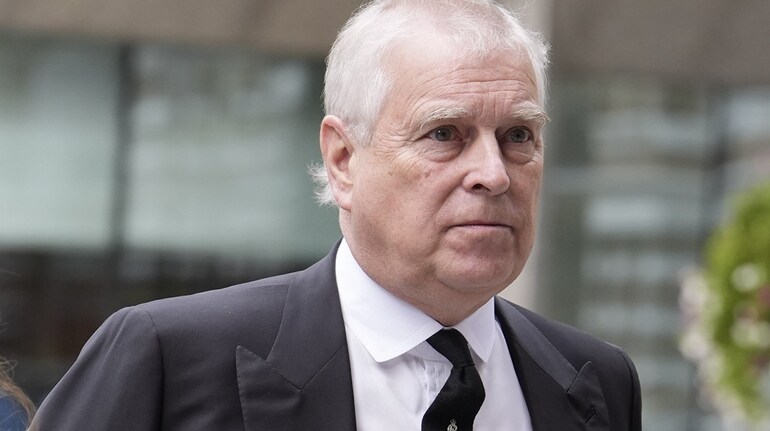
Two high-profile arrests within days of each other have shaken British politics and the establishment to its core. On Monday, former cabinet heavyweight Peter Mandelson was arrested on suspicion of misconduct in public office and later released on bail. The arrest came only days after Prince Andrew was detained and later released under investigation on the same charge. The events have delivered a body blow to public trust.
One case reaches into the heart of the monarchy; the other into the upper tiers of government. Mandelson, a former minister and until recently Britain’s ambassador to Washington, is being investigated over allegations that he passed market-sensitive government information to convicted paedophile Jeffrey Epstein while in office. Andrew’s case relates to the period when he served as a trade envoy.
Both men deny wrongdoing. Both were once central to Britain’s projection of influence abroad. Both now stand accused of abusing positions of public trust.
A Crisis at the Heart of the Crown
It is within this wider collapse of confidence that the drama surrounding Andrew Mountbatten-Windsor must be understood. The focus here is the former British prince.
Stripped of his titles and royal privileges amid the fallout from his alleged ties to the paedophile financier Jeffrey Epstein, Andrew began his 66th birthday on Thursday expecting a quiet celebration but ended it in police custody. The disgraced duke, younger brother of the King, had barely begun the day when officers arrived at his residence and took him in for questioning. He was later arrested on suspicion of misconduct in public office, released without charge and placed under investigation, as searches of his properties continued into the following days. The searches are expected to continue until Monday.
These are deeply troubling times for the British monarchy, one of the oldest surviving institutions in the world. If Princess Diana’s rebellion in the 1990s marked a moment of profound personal and institutional humiliation, the allegations involving the King’s younger brother carry far heavier constitutional, political, diplomatic and moral weight. This is no longer merely a family embarrassment. It is a test of the Crown’s credibility.
What began with slow revelations from the Epstein files could yet become a transatlantic legal and diplomatic headache. Andrew’s reputation is already in tatters. The pressing question is whether he could face legal exposure in the United States or be drawn into testimony before Congress.
Extradition: Theory and Reality
Could Andrew be extradited? In theory, yes. In practice, it is highly unlikely. Under American law, there is nothing to prevent US authorities from arresting him if he sets foot on US soil. The real obstacle is not arrest but jurisdiction. Extradition from the United Kingdom would require a formal request, proof that the alleged conduct constitutes a crime in both countries, and the willingness of the British government to approve it.
The issue is constitutionally and politically fraught. Even after the loss of his titles, the spectacle of a British government authorising the extradition of the King’s brother would be without modern precedent. No administration would take such a step lightly. Legal experts point to a narrower route: under the UK–US mutual legal assistance treaty, Washington could request that London obtain Andrew’s testimony on its behalf. However, the UK could refuse on grounds of public policy or national interest. Britain has a long, unwritten tradition of keeping the monarchy out of foreign legal entanglements.
Speculation that Andrew could be subpoenaed to testify before the US Congress has generated dramatic headlines. Legally, however, such a subpoena applies to US citizens and residents. Andrew is neither. Unless he volunteers to appear, compelling him to testify would be extremely difficult.
Does Andrew have immunity?
Should he choose to travel voluntarily to the United States, even as a witness, he would enter a jurisdiction he has carefully avoided for years. The Prime Minister recently stated that anyone with relevant information in the Epstein case should be prepared to share it “in whatever forum they are asked”. The remark was widely interpreted as increasing pressure on Andrew to co-operate.
Does Andrew enjoy immunity? Not in any automatic sense. Personal immunity in international law generally applies to serving heads of state and certain senior officials while in office. Andrew is neither. Stripped of his formal roles and entitlements, he is now a private citizen. Royal status does not in itself confer legal protection.
The more immediate legal danger lies closer to home. There is an ongoing police investigation into alleged misconduct in public office, an offence that can carry a life sentence. It is rare, difficult to prove and reserved for serious abuses of public trust. Yet its very existence in this context is significant. For the first time, Andrew is being treated like any other former public official under criminal scrutiny. That represents a notable constitutional shift.
Parliament gets involved
Parliament is also entering the picture. The government is considering legislation to remove Andrew from the line of succession. That is no minor administrative adjustment. Altering the succession requires the consent of Parliament and of each Commonwealth realm where the monarch remains head of state. The last comparable moment was the abdication crisis of 1936. That such measures are being discussed again underscores the seriousness of the situation.
The Monarchy’s Real Concern
What, then, is at stake for the monarchy? Legally, it may remain insulated. Andrew’s alleged conduct is framed as private behaviour rather than actions undertaken on behalf of the Crown. That distinction shields the institution from direct liability. The greater risk is reputational.
Monarchies endure through public consent, and consent depends on perception. A prolonged criminal investigation, the possibility of parliamentary intervention, and police searches of royal properties all erode the carefully maintained image of a monarchy standing apart from scandal.
What are Andrew’s options?
Andrew’s options are narrowing. He cannot easily be compelled to testify in the United States, but refusal to co-operate carries political and reputational costs. In British criminal law, silence does not establish guilt, yet it may influence how a case is perceived. In the court of public opinion, prolonged non-co-operation has already deepened suspicion.
Three broad scenarios present themselves.
First, the slow domestic route: a lengthy British investigation, no extradition and no appearance in Washington. The monarchy maintains institutional distance, and Parliament quietly resolves the question of succession. It is the most controlled outcome and, critics would argue, the most familiar.
Second, voluntary co-operation with the United States. Testifying before American investigators could be presented as transparency. In reality, it would expose Andrew to substantial personal legal risk and transform a contained British crisis into an international spectacle.
Third, a domestic prosecution. This would amount to a constitutional shock. A full criminal trial in a British court would shift the matter from reputational scandal to formal legal confrontation. The image of a senior royal in the dock would be deeply damaging, not only to Andrew but to the Crown itself.
Law, Legitimacy and the Crown
What happens next will be shaped by legal developments and political calculation. For Andrew, the path forward will depend on evidence and prosecutorial judgment. For the monarchy, the priority is distance and continuity. For the British state, the episode serves as a reminder that even its oldest institutions operate within the same legal framework as everyone else.
The immediate drama concerns subpoenas, extradition treaties and lines of succession. The deeper story is the gradual erosion of any assumption that royal status provides practical insulation from legal accountability. That shift is not occurring in a single dramatic rupture. It is unfolding through investigations, legislative debate and the steady insistence that the law applies equally to all.
Ultimately, the future of this crisis will not be determined solely in Washington or in a British courtroom. It will be settled in the slower arena where law, politics and public legitimacy intersect. That is where modern monarchies are judged — and where their survival is decided.
(Syed Zubair Ahmed is a London-based journalist of Indian origin with over 30 years of experience in the Western media.)
Views are personal and do not represent the stand of this publication.
Discover the latest Business News, Sensex, and Nifty updates. Obtain Personal Finance insights, tax queries, and expert opinions on Moneycontrol or download the Moneycontrol App to stay updated!
Find the best of Al News in one place, specially curated for you every weekend.
Stay on top of the latest tech trends and biggest startup news.