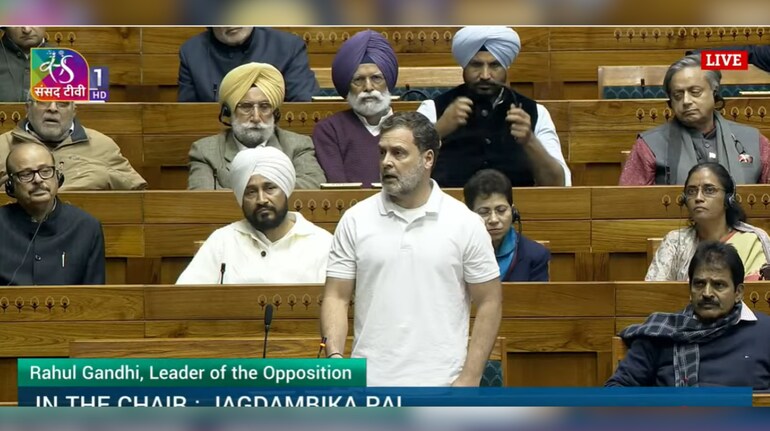

Rahul Gandhi’s reference to the unpublished memoir of former Army Chief General M M Naravane triggered repeated disruptions in the Lok Sabha, but the core of the controversy lay in a lesser-known parliamentary provision -- Rule 349 of the Rules of Procedure and Conduct of Business in the Lok Sabha.
The rule governs what members are allowed to read or cite while speaking in the House and became the basis for objections raised by senior ministers and the Speaker’s intervention.
What is Rule 349 of the Lok Sabha?
Rule 349 lays down behavioural and procedural norms that Members of Parliament must follow during debates. Clause (i) of this rule specifically states that “a member shall not read any book, newspaper or letter except in connection with the business of the House.”
In practice, this means MPs cannot casually quote from external material unless it is directly linked to the subject under discussion and is considered appropriate under parliamentary conventions.
The rule is meant to prevent the House from turning into a platform for unverified claims, private publications or politically sensitive material that has not been formally tabled.
Why was Rule 349 invoked in Rahul Gandhi’s speech?
During the debate on the President’s Address, Rahul Gandhi cited passages from an unpublished memoir titled Four Stars of Destiny, attributed to former Army Chief General M M Naravane, and also referred to a magazine article based on the book.
Treasury bench members objected, arguing that quoting from an unpublished work violated parliamentary norms.
Speaker Om Birla invoked Rule 349(i) and directed Gandhi not to read from the book unless it was authenticated or formally tabled. Senior ministers including Rajnath Singh and Amit Shah maintained that unpublished material could not be cited, while the Opposition argued that magazine articles and external sources had often been quoted in past debates. The disagreement led to repeated adjournments of the House.
Does Rule 349 completely ban books and newspapers?
No. The rule does not impose an absolute ban. Members can refer to books, reports or newspapers if the material is clearly connected to the business being discussed and does not breach privilege, national security concerns or established parliamentary conventions. The Speaker ultimately decides whether a reference is admissible.
Why is Naravane’s memoir under scrutiny?
The controversy also raised questions about why the former Army Chief’s book had not been published yet. Under Section 21 of the Army Rules, 1954, serving military personnel are barred from publishing or communicating service-related or political information without permission. However, the rules are less explicit about retired officers.
In practice, manuscripts by senior defence officials often undergo an internal review process to ensure that no sensitive operational or classified information is disclosed. An Indian Express report citing officials have indicated that informal guidance is sometimes drawn from the Central Civil Services (Pension) Rules, though the armed forces are not directly governed by them.
Why Rule 349 matters
Rule 349 is rarely in the public spotlight, but incidents like this highlight its importance in maintaining order, authenticity and decorum in parliamentary proceedings. It gives the Speaker discretionary authority to regulate what material can be quoted on the floor, especially when national security, unpublished documents or politically sensitive sources are involved.
Discover the latest Business News, Sensex, and Nifty updates. Obtain Personal Finance insights, tax queries, and expert opinions on Moneycontrol or download the Moneycontrol App to stay updated!
Find the best of Al News in one place, specially curated for you every weekend.
Stay on top of the latest tech trends and biggest startup news.