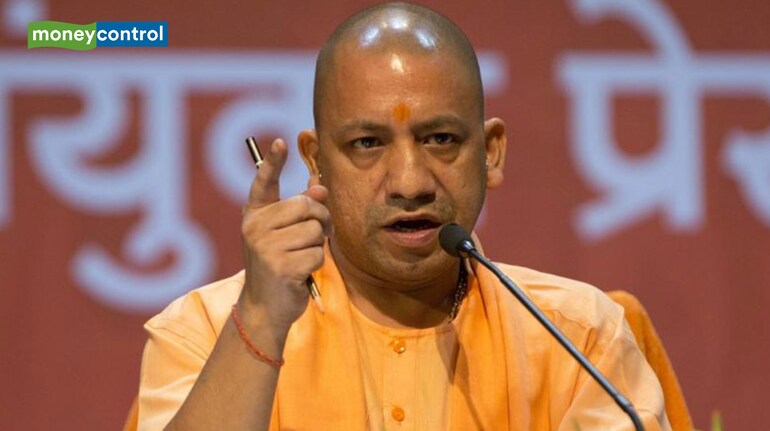

The standoff between Shankaracharya Swami Avimukteshwaranand and the Yogi Adityanath government has deepened into a major political and administrative challenge in Uttar Pradesh. What began as a dispute at the Magh Mela has now expanded into a broader confrontation, drawing in senior BJP leaders, triggering resignations within the bureaucracy, exposing sharp divisions among religious figures, and sharpening political fault lines.
Senior BJP leader and former Union minister Uma Bharti has come out in open support of the Shankaracharya, criticising the Magh Mela administration for seeking proof from him and accusing officials of undermining the dignity traditionally accorded to seers.
She said the administration had crossed established limits in its handling of the matter and added that Chief Minister Yogi Adityanath should be made aware of the Shankaracharya’s concerns. Her remarks have added political weight to the controversy and intensified pressure on the state government.
The political divide has also been underlined by the opposition. Samajwadi Party president Akhilesh Yadav said in a statement that every disciple and follower of the Jagat Guru Shankaracharya was saddened and hurt by what he described as the insult meted out to the seer and the disrespect the incident had shown to Sanatan Dharma.
The confrontation has already spilled into the administration, creating visible unease within government ranks. In Bareilly, City Magistrate Alankar Agnihotri resigned on January 26, citing support for the Shankaracharya and opposition to the new UGC regulations. The state government later rejected his resignation, placed him under suspension, and ordered a departmental inquiry.
On Tuesday, Prashant Singh, deputy commissioner in the state GST department posted in Ayodhya, also resigned, saying he was hurt by the Shankaracharya’s repeated remarks against Chief Minister Yogi Adityanath and Prime Minister Narendra Modi. In his resignation statement, Singh said he could no longer remain silent over what he described as irresponsible and derogatory comments against the constitutional system and the country’s elected leadership.
The back-to-back resignations have underlined growing discomfort within the bureaucracy, even as confusion prevails within sections of the Magh Mela administration over how to handle the escalating standoff.
Only after the dispute began to reverberate through the administration did the sequence of events at the Magh Mela move into the public spotlight. The confrontation traces back to January 18, during the Mauni Amavasya ritual in Prayagraj, when police personnel stopped Swami Avimukteshwaranand from proceeding in a palanquin and asked him to walk instead. An argument followed, and his disciples alleged that police personnel pushed them. Angered by the incident, the Shankaracharya staged a sit-in protest outside his camp, accusing the administration of insulting religious traditions.
Within the next 48 hours, the Magh Mela administration issued two notices to him. One questioned his use of the Shankaracharya title, while the other sought an explanation over the Mauni Amavasya incident. He was also warned that he could be barred from the Magh Mela area. Swami Avimukteshwaranand later submitted replies to both notices.
Tensions escalated further late Saturday night when a group of youths allegedly created a disturbance at his camp. According to camp officials, eight to ten youths carrying saffron flags and raising pro-government slogans tried to force their way into the camp, leading to a brief scuffle with disciples. A complaint has been submitted to the police, alleging that the group arrived with sticks and attempted to assault those present. The camp has demanded enhanced security, warning that the situation could have turned serious.
After the incident, Swami Avimukteshwaranand claimed he was being targeted for raising issues related to cow protection and alleged that attempts were being made to intimidate him. He said pressure tactics would not force him to retreat and accused the ruling establishment of acting against him because he had become inconvenient.
Saints divided over the issue
The controversy has also divided religious figures. Dinesh Phalahari Baba, the main petitioner in the Shri Krishna Janmabhoomi temple case, wrote a letter to Chief Minister Yogi Adityanath in his own blood, demanding that the Shankaracharya be treated with due respect and that proper arrangements be made for his ritual bath. He also sought action against officials involved in the January 18 incident.
In contrast, Ayodhya Chhawani Dham head Paramhans Maharaj accused Swami Avimukteshwaranand and another seer of maligning the Magh Mela and demanded a complete ban on their entry into the Mela area. He went further, calling for strict action against the Shankaracharya under national security laws.
Adding another layer to the dispute, Ashutosh Brahmachari, a disciple of Jagadguru Rambhadracharya and associated with the Shri Krishna Janmabhoomi case, has filed two complaints against Swami Avimukteshwaranand. One complaint alleges that minors are being kept at his camp and made to perform various services, while the second accuses him of using misleading letterheads and projecting himself as the Shankaracharya of Jyotish Peeth. Police officials said all complaints and recent incidents are under examination.
With senior BJP leaders backing the seer, opposition parties stepping in, officials publicly taking sides, and saints divided, the standoff has moved far beyond a dispute over Magh Mela protocol. It has now emerged as a sensitive political test for the Yogi Adityanath government, balancing administrative authority, religious sentiment, and growing internal unease.
Discover the latest Business News, Sensex, and Nifty updates. Obtain Personal Finance insights, tax queries, and expert opinions on Moneycontrol or download the Moneycontrol App to stay updated!
Find the best of Al News in one place, specially curated for you every weekend.
Stay on top of the latest tech trends and biggest startup news.