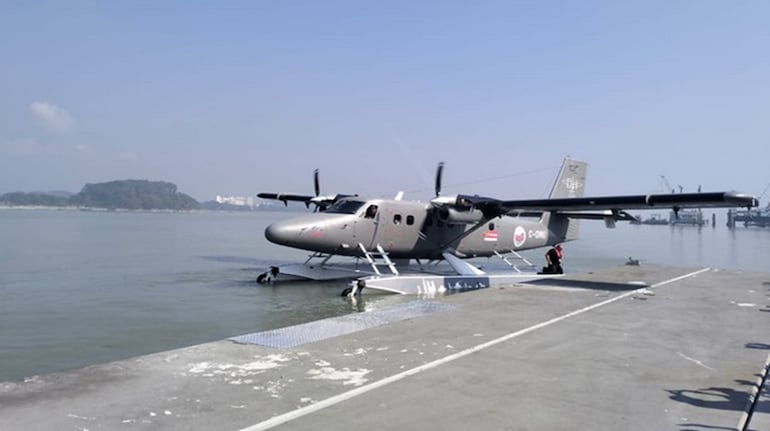

Seaplanes may finally be poised for a comeback in India. According to a report by The Economic Times, fresh government subsidies, regulatory easing and private sector interest are breathing new life into a sector that has seen multiple false starts over the years.
Seaplanes have made fleeting appearances across India, undertaking trials, and in some cases operating briefly in Maharashtra, the Andaman and Nicobar Islands, Kerala and Goa. The most notable run came in 2020 and 2021 on the Ahmedabad–Kevadia route, linking the Sabarmati riverfront with the Statue of Unity in Gujarat. Each experiment generated headlines, but none endured long enough to establish a sustainable network.
The initiative was later aligned with the government’s regional connectivity scheme, UDAN (Ude Desh Ka Aam Nagrik), in an effort to integrate seaplanes into the broader aviation ecosystem. On paper, progress appeared tangible. In a written reply in the Lok Sabha in July last year, the government said 32 seaplane routes had been awarded, connecting 25 water aerodromes across the country.
Now, the sector is back on the policy radar.
Avani Singh, founder and CEO of SkyHop Aviation, told The Economic Times that her company is preparing for takeoff, and “in the next few weeks”, it will launch seaplane services from Kochi to five islands in Lakshadweep—Agatti, Kavaratti, Kalpeni, Kiltan and Kadmat—using a 19-seater Twin Otter.
“Beyond Lakshadweep, we see strong potential in regional routes across Andhra Pradesh, the Andaman and Nicobar Islands, Northeast and other strategic locations,” she says.
Fresh optimism gathered momentum after Finance Minister Nirmala Sitharaman, in her recent Union Budget speech, announced the rollout of a viability gap funding (VGF) scheme to support the sector. The proposal also promises incentives aimed at encouraging indigenous manufacturing—a dual push intended to make seaplane services both operationally and economically viable.
VGF, a financial instrument commonly used to support infrastructure projects in public-private partnerships (PPP), is designed to bridge the funding gap for ventures that are socially, economically and strategically important but financially unviable on their own. In sectors such as roads and ports, VGF grants can cover up to 40% of project costs. However, the precise contours of support for seaplane operations are yet to be detailed.
“India is made for seaplanes,” says Manish Sharma, partner and leader—infrastructure, transport and logistics at PwC India. With an 11,000-km coastline, numerous islands and remote routes where building runways is prohibitively expensive, seaplanes could be transformative, he argues. “They can turn four-hour ferry rides into 30-minute flights, boost tourism and enable rapid medical evacuation and disaster response. UDAN demand is proven, and countries like the Maldives show that the model works.”
Regulatory changes may also smooth the runway for revival. The Directorate General of Civil Aviation (DGCA) last year eased norms related to seaplane operations under the government’s flagship regional air connectivity scheme UDAN.
The revised norms will streamline infrastructure procedures, pilot training requirements and regulatory compliances, paving the way for seaplane services to reach remote areas, the regulator said in a statement.
The updated regulations incorporate easier training requirements and simplified approval processes for seaplane operations.
"Pursuant to a DGCA Working Group recommending rationalisation and revision of the said regulatory framework, revised regulations have been promulgated," it said.
Under the updated norms, pilots with a Commercial Pilot License (CPL) can now qualify as seaplane-rated pilots by training at any ICAO-recognised training organisation globally.
Additionally, new training opportunities for support roles are set to enhance employment potential at seaplane hubs nationwide.
Initially established in 2008, the regulatory framework for seaplane operations was long due for a review, the regulator said, adding that collaborative efforts with stakeholders have ensured that the new regulations address key concerns.
While past attempts have faltered, a combination of policy backing, financial support and private sector readiness could determine whether seaplanes finally find a lasting foothold in India’s aviation landscape.
Discover the latest Business News, Sensex, and Nifty updates. Obtain Personal Finance insights, tax queries, and expert opinions on Moneycontrol or download the Moneycontrol App to stay updated!
Find the best of Al News in one place, specially curated for you every weekend.
Stay on top of the latest tech trends and biggest startup news.