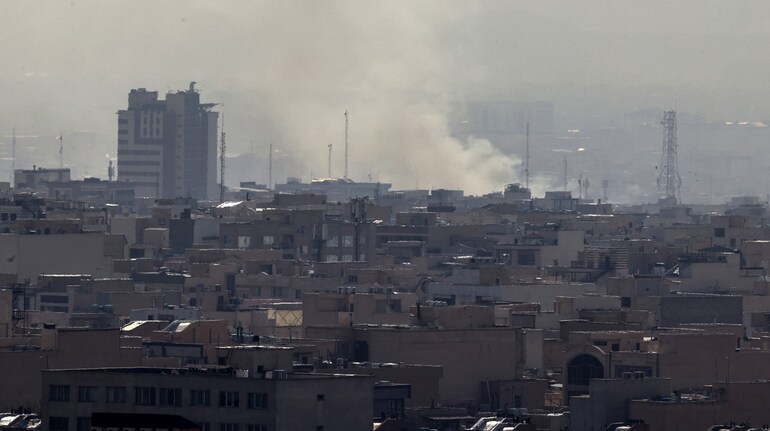

Escalating tensions between Iran and Israel are beginning to cast a long shadow over India’s vast overseas community, with more than a quarter of the Indian diaspora now located in countries directly exposed to the unfolding conflict.
Iran launched retaliatory strikes targeting US military bases across Bahrain, Abu Dhabi, Doha, Kuwait and Riyadh following coordinated strikes by the United States and Israel on February 28, raising fears of a wider regional confrontation. The escalation triggered immediate disruptions, with global airlines cancelling flights across large parts of West Asia amid growing security concerns.
For India, the risks extend far beyond geopolitics.
The Gulf region hosts one of the largest concentrations of overseas Indians anywhere in the world. A Moneycontrol analysis of official diaspora data shows that about 9 million Non-Resident Indians (NRIs) and Persons of Indian Origin (PIOs) live in countries now directly affected by the conflict.
The United Arab Emirates alone is home to over 3.4 million overseas Indians, followed by Saudi Arabia (2.59 million), Kuwait (1.03 million), Oman (0.78 million) and Qatar (0.75 million). Smaller but strategically important communities also live in Bahrain (326,658), Israel (97,467) and Iran (4,337), according to government diaspora estimates.
Taken together, these populations represent a significant share of India’s global diaspora, highlighting how deeply the country’s economic and human links are tied to West Asia.
Beyond immediate safety concerns, prolonged instability could disrupt remittance flows, aviation connectivity and labour mobility—three pillars that underpin India’s economic engagement with the Gulf.
“We have stakes in the Middle East and a large diaspora and we will have to continue our strategic partnerships. We hope things will settle down, both for our own interest from point of oil supplies and also for people in those countries,” Rajesh Kumar Singh, India’s defence secretary said on February 28 at News18’s Rising Bharat Summit.
Remittances from the region account for a substantial portion of India’s annual inward transfers, making stability in West Asia critical for household incomes back home.
Gulf countries account for 38% of India’s remittances, with nearly half of this flowing from the United Arab Emirates.
Discover the latest Business News, Sensex, and Nifty updates. Obtain Personal Finance insights, tax queries, and expert opinions on Moneycontrol or download the Moneycontrol App to stay updated!
Find the best of Al News in one place, specially curated for you every weekend.
Stay on top of the latest tech trends and biggest startup news.